No electricity to the boiler? Learn the common causes, simple checks, and practical fixes to restore power safely and know when to call an electrician or engineer.
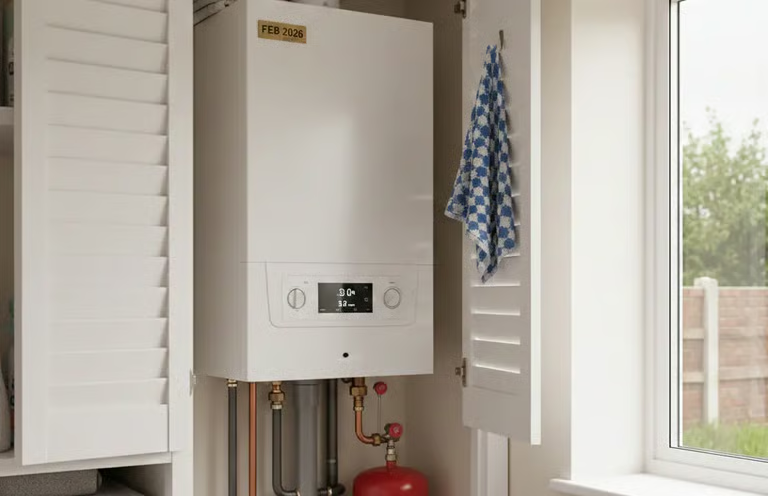
No Electricity to the Boiler usually means the boiler is not getting power, so it cannot turn on. This can happen due to a tripped circuit breaker, a blown fuse in the boiler spur, or a recent power cut. Check the fused spur switch near the boiler and make sure it is switched on.
Look inside the spur for a blown 3-amp fuse and replace it if needed. Also check the consumer unit for any tripped breakers. If power keeps cutting out or nothing restores the supply, contact our qualified electrician or Gas Safe engineer.
Common Signs Your Boiler Has No Electrical Supply
One of the clearest signs of an electrical issue is when your boiler suddenly stops responding. Homeowners often notice this problem without any warning, especially during colder months. Understanding these signs helps you act quickly and avoid unnecessary stress.
A very common symptom is a completely blank boiler screen. This usually indicates no power to boiler control panel, meaning electricity is not reaching the unit at all. The boiler may look fine externally, but internally it is inactive.
Another sign is when the thermostat is calling for heat, yet nothing happens. In these cases, the issue could be no power to boiler or thermostat, where the thermostat has power but the boiler does not. This mismatch often causes confusion.
Power issues are also common after electrical interruptions. If your heating stopped after an outage, no power to boiler after power cut is a likely cause. Circuit breakers or fuses may have tripped to protect the system.
Some homeowners ask where is boiler fuse located when this happens. The fuse is usually inside the fused spur switch near the boiler and may need checking.
If the fuse has blown, boiler fuse replacement may restore power. However, repeated fuse failures suggest a deeper electrical fault.
Certain brands, including Worcester Bosch, may display no lights at all. This often points to no power to boiler Worcester Bosch rather than a boiler breakdown.
Issues can also involve controls, such as no power to boiler or programmer, where timers stop working entirely.
For rural homes, no power going to oil boiler systems is common, as oil boilers rely heavily on electrical components to operate safely.
What Should You Check If Your Boiler Still Has No Power?
If your boiler remains completely dead after checking the fused spur and consumer unit, the next step is to determine whether the problem is with the electrical supply, heating controls or the boiler itself. A blank display, no indicator lights and no response from the controls can all point to an interrupted electrical supply, but they can also occur because of an internal boiler fault.
Is the Boiler Getting Power But Not Turning On?
First, check whether the boiler display or indicator lights come on when the boiler switch is turned on. If the display remains completely blank, there may be an issue with the electrical supply reaching the appliance.
If the boiler has power but does not fire when heating is requested, the problem may instead involve the thermostat, programmer, timer, wiring or an internal boiler component.
This distinction is important because replacing a fuse will not fix a faulty thermostat or internal boiler component.
What If the Boiler Fuse Keeps Blowing?
A boiler fuse that blows once may have failed because of a temporary electrical fault. However, if the replacement fuse blows again shortly afterwards, do not continue replacing it.
Repeated fuse failure can indicate a fault within the boiler, pump, fan, wiring or another connected component. Installing a larger fuse is not a safe solution because the fuse rating is part of the electrical protection provided to the appliance.
Switch the boiler off and arrange for the fault to be investigated by a suitably qualified professional.
What If the Boiler Circuit Breaker Keeps Tripping?
If the boiler circuit breaker or RCBO trips repeatedly, there may be an electrical fault, overload or leakage to earth. Do not repeatedly reset the protective device in an attempt to keep the boiler running.
A qualified electrician can investigate the circuit, connections and protective devices to determine why the breaker is operating. If the electrical supply is confirmed to be satisfactory, a heating engineer may then need to investigate the boiler itself.
Could the Thermostat or Programmer Be the Problem?
Yes. A boiler can appear to have no power when the actual problem is with the heating controls.
Check whether the programmer, timer or thermostat has a display and whether it is requesting heat. If the programmer is completely blank, this could indicate a control power issue. If the controls appear to work but the boiler does not respond, the fault could be related to the control signal, wiring or boiler.
Do not remove electrical covers or attempt to bypass heating controls yourself. These components can involve mains voltage.
What If There Was a Recent Power Cut?
A power cut can interrupt the boiler supply and may cause a protective device to trip when electricity returns. Check whether other electrical equipment in the property is working and whether the boiler spur and consumer unit are switched on.
Some boilers may also require a normal reset after a power interruption. Only use the manufacturer’s reset procedure and do not repeatedly reset the boiler if it immediately develops another fault.
Is It an Electrical Problem or a Boiler Problem?
A useful way to understand the situation is to separate the fault into two areas:
-
No electrical supply: Check the boiler spur, fuse, circuit breaker and relevant controls.
-
Electrical supply present but boiler inactive: The fault may involve the thermostat, programmer, wiring or an internal boiler component.
-
Power repeatedly trips: There may be an electrical fault requiring investigation.
-
Boiler displays a fault code: Follow the manufacturer’s guidance and contact an appropriate heating professional if the issue does not clear.
-
Gas-related symptoms: A Gas Safe registered engineer should investigate gas and combustion-related faults.
This distinction helps prevent homeowners from assuming every heating failure is caused by a faulty boiler.
When Should You Call an Electrician?
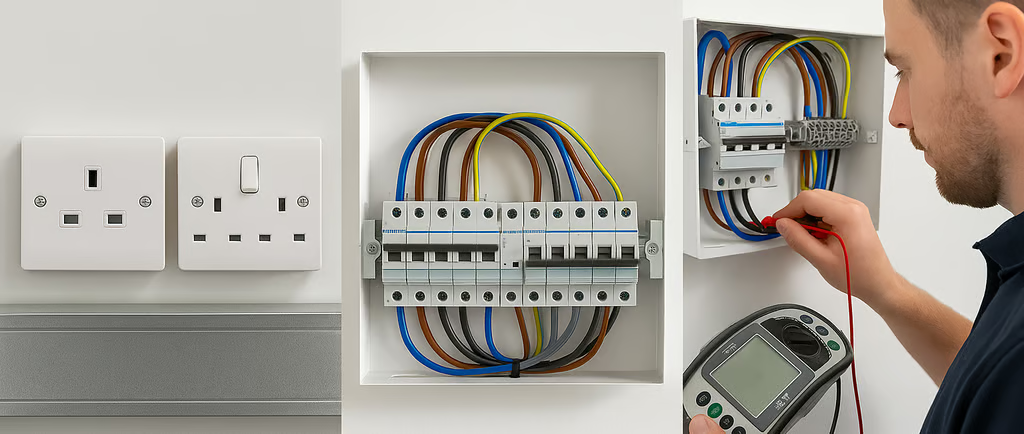
Contact a qualified electrician if you suspect a problem with the boiler’s electrical circuit, fused spur, wiring, consumer unit, circuit breaker or RCBO. An electrician can test the electrical supply and establish whether the boiler is receiving power correctly.
For faults involving gas, combustion, internal boiler operation or components that require work inside the appliance, a Gas Safe registered engineer is the appropriate professional.
If you are unsure which professional you need, explain the symptoms clearly—for example, no electricity to boiler after power cut, repeated fuse failure, a blank display or a tripping circuit breaker.
Local Electrical Solution can investigate electrical supply problems affecting a boiler, including the associated circuit, protective devices and connections, where appropriate.
Can You Safely Leave the Boiler Switched Off?
Yes. If the boiler is repeatedly blowing fuses, tripping the circuit breaker, producing unusual smells, showing signs of damaged wiring or behaving unexpectedly, leave it switched off until the fault has been professionally assessed.
Do not remove the boiler casing, bypass the fuse, increase the fuse rating or interfere with fixed wiring to restore heating.
If you need help determining whether no power to boiler is caused by the electrical supply, Local Electrical Solution can assess the relevant electrical installation and explain the next appropriate step.
Where the issue is confirmed to be within the gas appliance itself, an appropriate Gas Safe registered heating engineer should carry out the boiler diagnosis or repair.
Understanding whether the problem is a power supply fault, heating-control issue or boiler fault makes it easier to choose the right professional and avoid unnecessary repairs. For electrical supply concerns, Local Electrical Solution can provide professional assistance while keeping the focus on safe diagnosis rather than repeated resets or temporary fixes.
First Things to Check Before Panicking
Before assuming your boiler has failed, carry out a few quick electrical checks. Many cases of no electricity to the boiler are caused by simple issues.
- Check if other appliances in your home are working to confirm whether there is a wider power issue
- Look for a recent power cut in your area by checking with neighbours or your energy supplier
- Inspect the boiler spur switch near the unit and ensure it is switched on
- Check inside the fused spur for a blown fuse that may need replacing
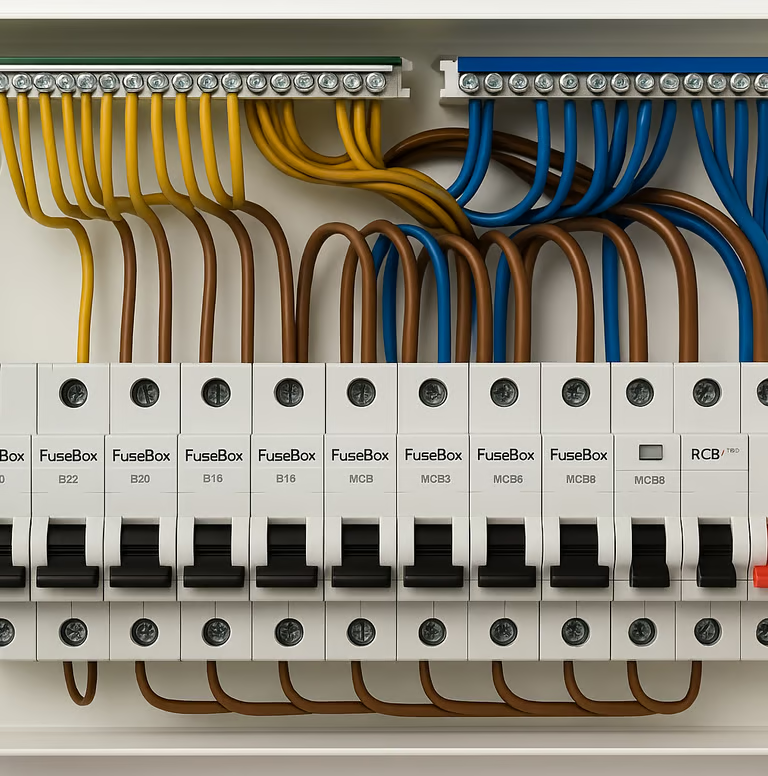
- Open the consumer unit and look for any tripped circuit breakers
- Reset any tripped breakers safely and see if the boiler powers back on
These basic checks help you quickly identify whether the problem is local to the boiler or affecting the whole property, saving time, stress, and unnecessary call-outs.
Where Is Boiler Fuse Located?
Many homeowners ask where is boiler fuse located when heating suddenly stops working. This usually happens during unexpected faults or after power interruptions. In most UK homes, the boiler fuse is not inside the boiler casing.
The boiler fuse is normally found inside the boiler fused spur, which is a small white switch mounted on the wall near the boiler. This spur contains a 3-amp fuse boiler that protects the appliance from electrical damage. If this fuse blows, it can cause No Electricity to Boiler issues instantly.
In some properties, the fuse may also be located in a wall-mounted boiler isolation switch or, less commonly, inside the consumer unit. The boiler switch fuse or boiler fuse switch should always be clearly labelled for safety.
Before checking the fuse, it’s important to know how to turn boiler off safely. Switch off the spur and isolate the power before opening it. Once replaced, you can follow the correct steps on how to turn on a boiler or how to turn a boiler on using the same switch.
If the fuse continues to blow, it indicates a deeper electrical fault and professional help is required to restore power safely.
Boiler Fuse Replacement – What You Need to Know
Boiler fuse replacement can be a quick fix, but it must always be done with care. When there is No electricity to boiler, a blown fuse inside the fused spur is often the cause. Replacing it correctly can restore power within minutes.
Before starting, always isolate the power supply at the boiler spur or consumer unit. Never attempt fuse replacement while the power is live, as this can be dangerous. Most UK boilers are protected by a 3-amp fuse, designed to prevent electrical damage to the boiler’s internal components.
It is very important never to fit a higher-rated fuse. Using anything above 3 amps can remove vital protection and increase the risk of electrical faults or fire. Only replace the fuse if you are confident and familiar with basic electrical safety.
If the boiler powers up after replacement, the issue is usually resolved. However, if No electricity to boiler happens again and the fuse keeps blowing, this indicates an underlying electrical problem. In such cases, further replacements will not solve the issue.
Repeated fuse failure means you should contact a qualified electrician or Gas Safe engineer to identify and repair the fault safely and permanently.
Final Thoughts
Experiencing no electricity to the boiler can be worrying, especially when it happens without warning. Losing heating and hot water can quickly cause stress, particularly during colder months. However, in most cases, the issue is not a serious boiler fault but a straightforward electrical problem.
Common causes include a blown fuse, a tripped circuit breaker, or a recent power cut that has interrupted the electrical supply. Carrying out calm and simple checks, such as inspecting the boiler fused spur and consumer unit, can often resolve the problem quickly. Using the correct 3-amp fuse is essential, as it protects the boiler from electrical damage.
Understanding how your boiler receives power helps you respond confidently rather than panicking. Knowing when to reset a breaker, when to replace a fuse, and when to stop and seek professional help can save both time and money.
If no electricity to the boiler continues after basic checks, or if fuses repeatedly blow, this usually indicates an underlying electrical issue. In these cases, contacting a qualified electrician or Gas Safe engineer is the safest and most reliable solution to restore heating and ensure long-term safety.