In an emergency? Call our team for a quick response +447544005547
VIR– Vulcanised Indian Rubber Electrical Cables
VIR– Vulcanised Indian Rubber Electrical Cables explained in simple terms, including uses, age issues, safety risks, UK regulations, and EICR inspection concerns.
Local Electrical Solution
2/9/20263 min read
VIR– Vulcanised Indian Rubber Electrical Cables were once a standard choice for electrical wiring in homes, shops, and industrial buildings, especially in older installations. While modern wiring materials have replaced them today, understanding VIR– Vulcanised Indian Rubber Electrical Cables is still extremely important—particularly for inspections, rewiring projects, and safety assessments.
If you own or work on an older property, chances are you may still come across VIR– Vulcanised Indian Rubber Electrical Cables hidden behind walls or within conduit systems.
What Are VIR– Vulcanised Indian Rubber Electrical Cables?
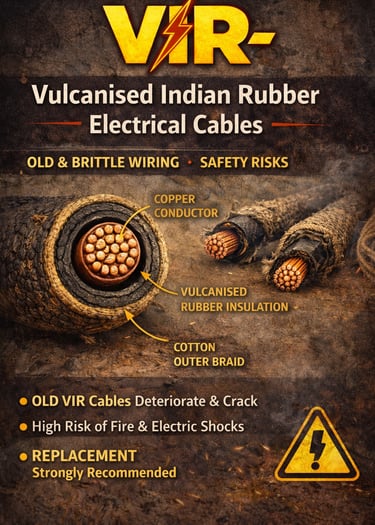
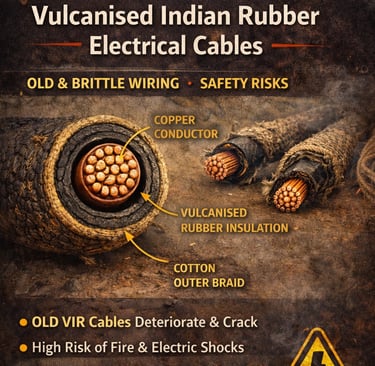
VIR– Vulcanised Indian Rubber Electrical Cables are electrical conductors insulated with rubber that has been vulcanised to improve strength and flexibility.
In simple words:
The copper conductor sits at the centre
It is insulated using vulcanised rubber
The outer layer is usually protected by cotton braid
This type of wiring was widely installed before PVC cables became popular.
VIR– Vulcanised Indian Rubber Electrical Cables were known for flexibility
They were easy to install in tight spaces
They performed well when new but degraded over time
Related Articles
VIR Cable Meaning and Full Form
To fully understand these cables, it helps to know their terminology.
Vir cable meaning: A rubber-insulated electrical cable used in older wiring systems
Vir cable full form: Vulcanised Indian Rubber cable
The term “Indian” refers to the rubber material source historically used, not the location of installation.
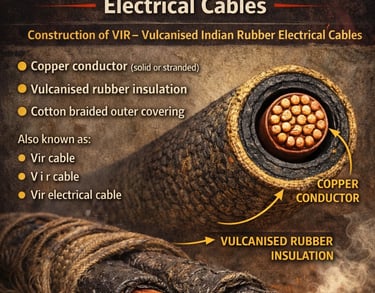
Construction of VIR– Vulcanised Indian Rubber Electrical Cables
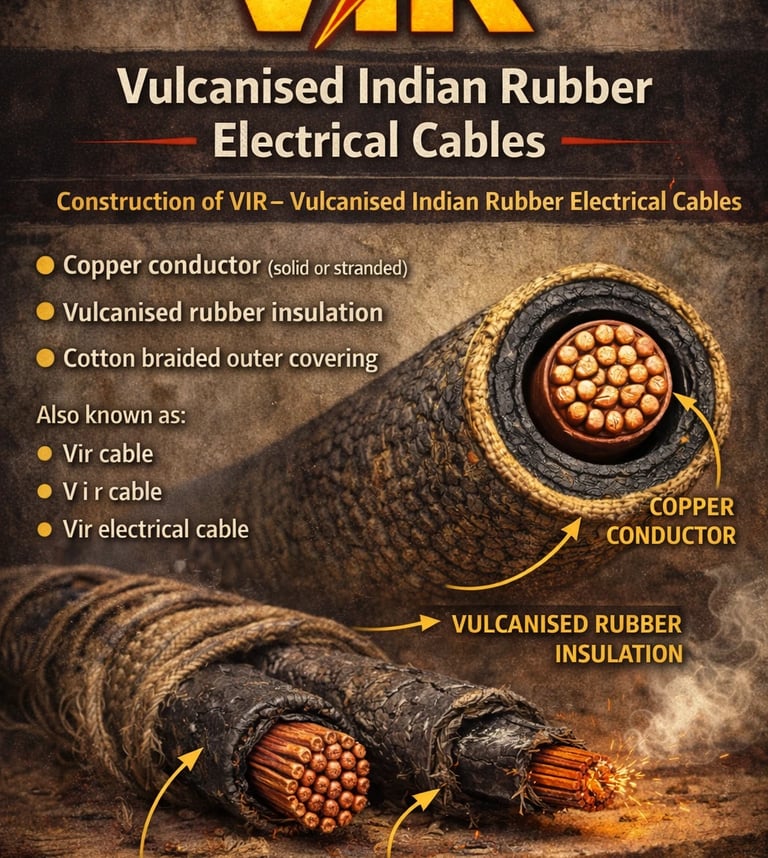
VIR– Vulcanised Indian Rubber Electrical Cables are designed with a simple yet reliable structure that suited older electrical installations. The construction focuses on basic insulation and mechanical protection, which worked well at the time but is now considered outdated.
Main construction elements include:
Copper conductor at the centre, either solid or stranded, used to carry electrical current
Vulcanised rubber insulation surrounding the conductor to prevent electric shock and short circuits
Cotton braided outer covering that provides light mechanical protection and helps hold the insulation in place
Beyond the physical structure, these cables are commonly known by different names in the electrical trade. Electricians may refer to them as Vir cable, V i r cable, or Vir electrical cable.
Despite the variation in wording, all of these terms describe the same type of cable. Understanding this construction is important when inspecting older properties, as the materials used can deteriorate with age and may no longer meet modern electrical safety standards.
VIR Cable Uses in the Past
When they were first introduced, VIR– Vulcanised Indian Rubber Electrical Cables were widely trusted.
Common vir cable uses included:
Domestic lighting circuits
Socket outlets
Small commercial buildings
Early industrial wiring systems
At the time, vir cables were considered durable and reliable.
Cotton VIR Cable and Its Role
One unique feature of VIR– Vulcanised Indian Rubber Electrical Cables is the outer cotton layer.
Known as cotton vir cable, this braid:
Provided mechanical protection
Reduced wear during installation
Helped hold insulation together
However, cotton also absorbs moisture, which later became a serious drawback.
VIR Cable Age and Deterioration
One of the biggest concerns today is vir cable age.
Over time:
Rubber insulation becomes hard and brittle
Cracks appear in the insulation
Copper conductors may become exposed
Most old vir cables found today are well beyond their safe service life.
Safety Risks of Old VIR Cables
Using VIR– Vulcanised Indian Rubber Electrical Cables today can pose serious risks.
Common problems include:
Insulation breakdown
Increased fire risk
Electric shock hazards
Failure under modern electrical loads
This is why electricians treat vir cables with caution during inspections.
VIR Cable UK – Is It Still Allowed?
In the vir cable UK context, these cables are no longer considered suitable for new installations.
VIR– Vulcanised Indian Rubber Electrical Cables are:
Not compliant with modern wiring standards
Often flagged during safety inspections
Considered obsolete under current regulations
While not automatically illegal, they are strongly discouraged.
VIR Cable EICR Code and Inspection Results
During an Electrical Installation Condition Report (EICR), VIR– Vulcanised Indian Rubber Electrical Cables are usually highlighted.
Typical vir cable eicr code outcomes:
C2 (Potentially dangerous)
C3 (Improvement recommended)
Cracked insulation or exposed conductors almost always result in urgent remedial action.
Final Thoughts on VIR– Vulcanised Indian Rubber Electrical Cables
VIR– Vulcanised Indian Rubber Electrical Cables played an important role in the history of electrical installations. However, time has not been kind to them.
If your property still contains VIR Cables, it’s a clear sign that an electrical upgrade should be considered. Replacing them with modern wiring not only improves safety but also ensures compliance with today’s electrical standards.
In short, VIR Cables belong to the past—but understanding them is essential for protecting the present.
Services
Reliable electrical solutions for homes and businesses.
Contact
Support
+447544005547
© 2026. All rights reserved.
99 Delamere Rd, Bedworth CV12 8SG, United Kingdom
Local Electrical Solution