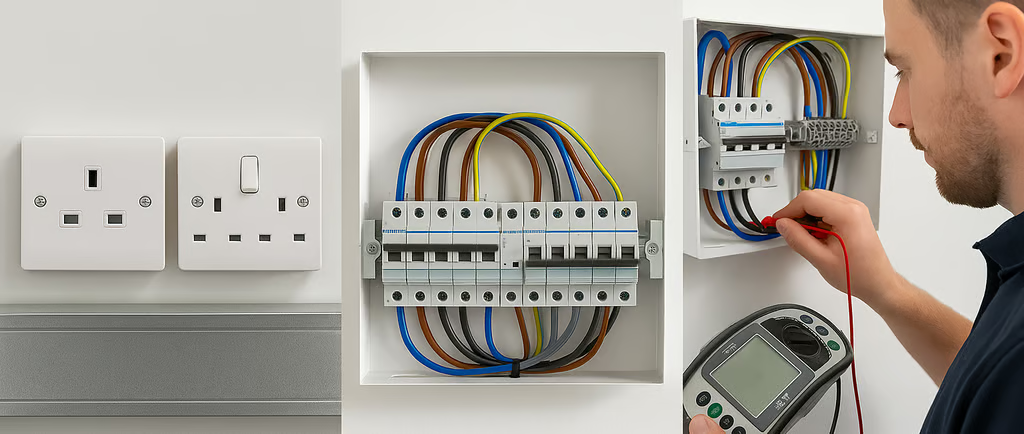
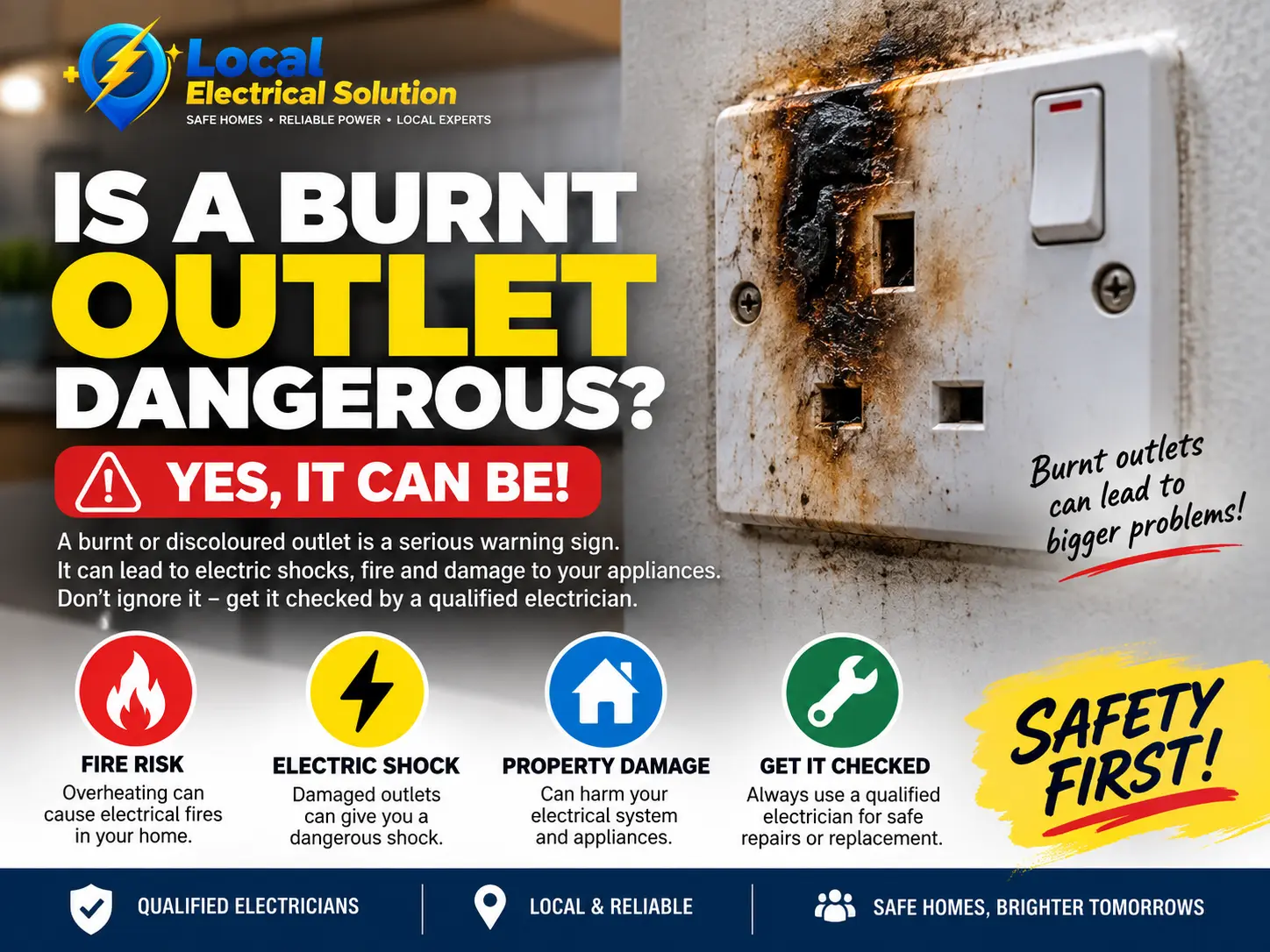
Short answer: Yes, a burnt outlet can be dangerous. A black, brown or melted outlet can be a sign of overheating, a loose connection, an overloaded circuit, damaged wiring, a faulty plug or an electrical arc. A damaged outlet should not be used until the cause has been checked.
Do not treat a burnt outlet as only a cosmetic problem. Electrical Safety First advises people not to ignore burn marks, hot sockets, buzzing or crackling sounds, blown fuses or repeated circuit-breaker trips.
If you see smoke, active sparking or flames, move away from the area and call the emergency services. Do not touch the damaged outlet.
If there is no immediate fire, stop using the outlet and arrange an inspection by a competent electrician.
Quick answer: Is a burnt outlet dangerous?
Yes. A burnt outlet is a warning sign that something has become too hot or that an electrical fault may be present.
The damage can come from:
- A loose electrical connection
- An overloaded circuit
- A damaged plug
- A faulty appliance
- Old or damaged wiring
- Poor electrical connections
- High electrical load
- Arcing inside the socket
- A worn or damaged outlet
A socket can sometimes continue to provide power even after it has been damaged. This does not mean it is safe.
A burnt socket can also have hidden damage behind the faceplate. Electrical Faults Fixed notes that a socket can continue to function even when wiring or earthing is not correct, which is why testing is important.
Burnt electrical outlet fire risk
The biggest concern with a burnt electrical outlet is fire.
When a connection becomes loose or a circuit is carrying too much current, heat can build up. Continued heating can damage the plastic around the socket and surrounding wiring.
In some cases, electrical arcing can also create very high temperatures.
This means a small brown mark should not automatically be dismissed as old dirt.
| What you see | What it may mean | What to do |
|---|---|---|
| Light brown mark | Heat or early damage | Stop using and arrange an inspection |
| Black scorch mark | Significant overheating or burning | Do not use the outlet |
| Melted plastic | Serious heat damage | Switch off the circuit if safe and call an electrician |
| Smoke or active sparking | Possible active electrical fault | Leave the area and seek emergency help |
| Burning smell | Possible overheating or burning insulation | Stop using the outlet immediately |
Electrical Safety First recommends having sockets with burn marks or signs of heat checked by a competent registered electrician.
Is Your Outlet Burnt or Scorched?
Black marks, melted plastic, a burning smell or a hot socket can be signs of an electrical problem. Don't ignore it.
Need an Electrician?
Send us your postcode and tell us what is happening. We'll get back to you on WhatsApp.
Are outlet burn marks dangerous?
Yes, outlet burn marks should be treated as a warning sign.
The important question is not only, “How bad does the mark look?”
The more important question is:
Why did the outlet get hot enough to burn?
For example, the mark could have come from:
- A loose connection.
- A damaged plug.
- A faulty appliance.
- Too much electrical load.
- An internal socket fault.
- Damaged wiring.
- Arcing.
A professional inspection can help find the real cause instead of simply covering the mark or replacing the plastic faceplate.
Can a burnt outlet cause a house fire?
Yes, a damaged outlet can contribute to an electrical fire if the underlying fault continues.
A burnt outlet does not mean that a house fire will definitely happen. However, it means there has already been enough heat or electrical damage to leave visible evidence.
This is why continuing to use the outlet is a poor safety choice.
For example, imagine a socket becomes hot because of a poor connection. You replace the socket face but do not find the damaged connection behind it. The new face may look fine, but the fault may still be present.
This is why a burnt outlet should be investigated, not simply covered up.
Is it safe to use a scorched outlet?
No. Do not use a scorched outlet until it has been checked.
This applies even when:
- The socket still works.
- Only one side looks damaged.
- The smell has stopped.
- The breaker has not tripped.
- The mark is small.
- The plug still fits.
- The appliance still works.
Electrical Safety First gives similar advice for damaged or hot socket-outlets: stop using them and have them checked.
A working socket is not necessarily a safe socket.
What to do if an outlet burns
If you notice a burning smell, smoke, black marks or melted plastic, follow these simple safety steps.
1. Stop using the outlet
Do not plug another appliance into it.
2. Unplug the appliance if it is safe
If the plug is hot, melted, sparking or stuck, do not pull it out. Move away and get professional help.
3. Switch off the circuit if you can do so safely
Use the consumer unit only if you can safely identify and operate the correct breaker without touching damaged electrical equipment.
4. Do not remove the socket yourself
A burnt socket may have damaged wiring behind it.
5. Call a competent electrician
The electrician should investigate both the socket and the circuit.
6. Do not use another nearby socket as a workaround
If the same appliance is faulty, moving it to another socket may simply move the problem.
How to safely replace a burnt outlet
A burnt outlet should not be treated as a simple DIY replacement.
The safe approach is for a competent electrician to:
- Isolate the relevant circuit.
- Confirm that the circuit is safely isolated.
- Inspect the socket and connections.
- Check the wiring for heat damage.
- Check the plug and appliance.
- Check the condition of the circuit.
- Replace damaged components.
- Carry out appropriate electrical tests.
- Restore the circuit only when it is safe.
Electrical Safety First recommends using registered electricians for installation and repair work, with work carried out to BS 7671 where applicable.
Do not copy online DIY instructions for live electrical work. The important part is not just fitting a new socket. It is finding out why the old socket burnt.
How much does an electrician charge to fix a burnt outlet?
The price depends on what caused the damage.
A simple like-for-like socket replacement is usually much cheaper than repairing damaged wiring or investigating a wider circuit fault.
Current 2026 UK pricing guides put a standard socket replacement broadly around £50–£120 outside London, with London and the South East commonly higher. Other current guides give wider ranges depending on the electrician, location and job scope.
| Work needed | Typical 2026 UK situation |
|---|---|
| Simple socket replacement | Lower-cost repair |
| Burnt socket + fault finding | Higher cost |
| Damaged cable repair | Depends on access and damage |
| Appliance fault investigation | Depends on appliance |
| Circuit repair | Depends on the fault |
| Consumer unit work | Much higher than a socket replacement |
A burnt outlet should not be priced only as “the cost of a new socket”. The electrician may need to test the circuit and find the reason for the overheating.
Why did my outlet burn black?
A black outlet can have several possible causes.
Loose connection
A loose connection can create resistance and heat. Over time, this may damage the socket.
Overloaded circuit
Too many high-power appliances can put heavy demand on a circuit.
Faulty appliance
A faulty appliance can cause excessive current, heat or other electrical problems.
Damaged plug
A damaged plug or plug connection can create heat at the socket.
Old socket
Repeated use, mechanical wear and age can damage socket contacts.
Faulty wiring
A problem behind the socket can cause overheating.
Electrical arcing
Arcing can create intense heat and may leave black or carbonised marks.
Electrical Safety First also warns against overloading sockets and extension leads.
Electrical outlet safety warning signs
Do not wait for a socket to become completely black.
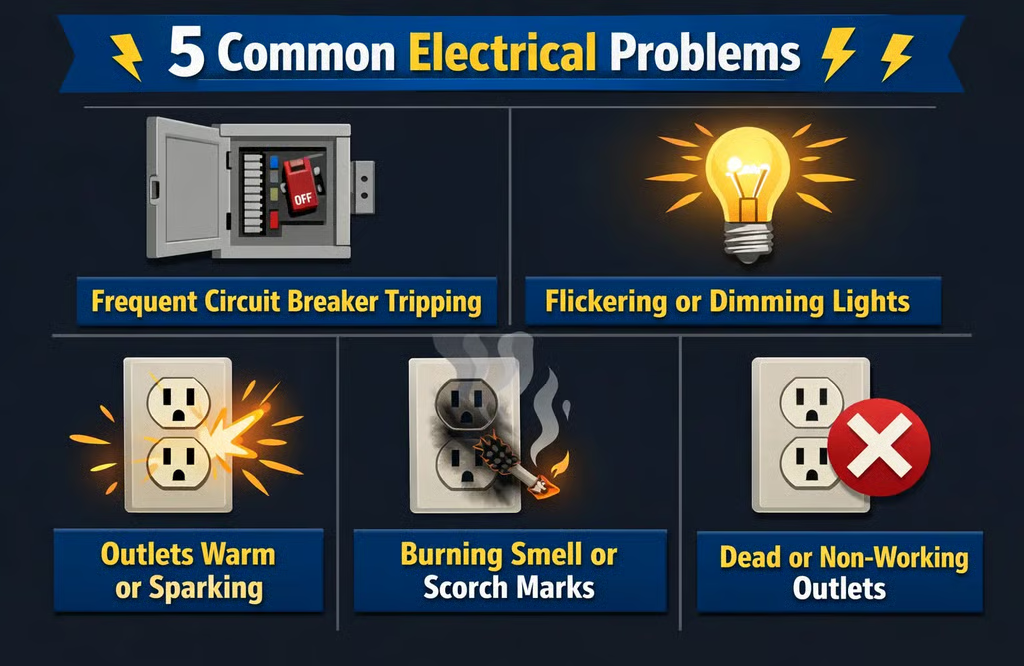
Look for these warning signs:
- Black or brown marks
- Melted plastic
- Burning smell
- Buzzing
- Crackling
- Sparking
- A hot socket
- Loose plugs
- Flickering power
- Repeated breaker trips
- Repeated blown fuses
- Discolouration around the wall
- A plug that feels unusually hot
These signs can point to electrical faults that need investigation.
Home electrical fire hazards
A burnt socket is only one possible electrical fire warning.
Other home electrical fire hazards include:
- Overloaded sockets
- Damaged extension leads
- Damaged plugs
- Loose connections
- Faulty appliances
- Damaged cables
- DIY electrical work
- Poor-quality electrical products
- Old electrical installations
- Appliances drawing more power than the circuit can safely supply
Do not connect multiple extension leads together to create a longer extension. Electrical Safety First specifically warns against “daisy chaining” extension leads.
Signs of bad home wiring
A burnt outlet may sometimes be a local socket problem. It can also be a clue that other electrical problems need checking.
Possible warning signs include:
- Repeated circuit-breaker trips
- Flickering lights
- Buzzing from switches or sockets
- Burning smells
- Hot sockets
- Repeated blown fuses
- Electric shocks or tingling
- Old or damaged cables
- Loose sockets
- Multiple electrical faults in one area
If several of these happen together, an electrical inspection may be useful.
For owner-occupied homes, Electrical Safety First says periodic inspection and testing is generally recommended every 10 years, while rented homes are generally checked every 5 years.
Power outlet troubleshooting guide
Use this simple guide before deciding what to do.
| Problem | Possible cause | Safe response |
|---|---|---|
| Socket is black | Overheating/arcing | Stop using it |
| Socket is hot | Excess heat or fault | Stop using it |
| Burning smell | Overheating/burning material | Isolate if safe and call electrician |
| Socket sparks | Possible arcing/fault | Stop using it |
| Breaker trips repeatedly | Circuit/appliance fault | Do not keep resetting it |
| Plug is melted | Plug or socket overheating | Stop using both until checked |
| Socket works but is damaged | Hidden electrical damage possible | Arrange inspection |
This type of table is particularly useful for AEO because it gives a direct answer to several related searches without forcing the reader to search through a long paragraph.
Burnt two prong outlet melted plastic smell
If you have a two-prong plug or socket with melted plastic and a burning smell, treat it as a serious warning.
Do not assume that the smell is coming only from the plastic.
The heat may have come from:
- The plug
- The socket
- A loose connection
- The appliance
- The wiring
- An overloaded circuit
Do not use the appliance again until the cause has been checked.
Space heater burnt outlet wall switch
A space heater can place a high electrical load on a socket.
If a space heater has caused a burnt outlet, melted plug, hot socket or wall discolouration, stop using the heater and the damaged outlet.
Do not simply move the heater to another socket and assume the problem is solved.
The heater itself may need inspection, and the circuit should also be checked.
High-load appliances should be used according to the manufacturer’s instructions and should not overload socket-outlets or extension leads.
Bottom plug burnt on outlet, top plug still works
This can be confusing.
You may see:
Bottom socket is black, but the top socket still works.
That does not mean the top socket is safe.
Both outlets can be part of the same electrical circuit. Damage around one outlet can indicate a problem with the socket, connection, plug, appliance or circuit.
Do not use the working half simply because it still supplies power.
Have the entire outlet and relevant circuit checked.
Black soot around outlet screws but no smell
Black soot is not something you should automatically ignore just because there is no burning smell.
Possible explanations include:
- Previous overheating
- Electrical arcing
- Heat damage
- Carbon deposits
- Dirt or dust
The appearance alone cannot tell you the exact cause.
If the black material is around electrical connections or the socket has other signs of damage, stop using it and arrange an inspection.
Burnt outlet vs tripped circuit breaker
These are different warning signs, but they can sometimes be connected.
| Burnt outlet | Tripped circuit breaker |
|---|---|
| Visible heat damage | Power has been interrupted |
| May have black marks | May have no visible damage |
| May smell of burning | May happen after a fault or overload |
| Can indicate loose connection | Can indicate overload or fault |
| Should be inspected | Repeated trips need investigation |
A breaker is a protective device. It should not be treated as something to repeatedly reset until the electricity stays on.
If a breaker keeps tripping, find the cause rather than repeatedly switching it back on.
Replace burnt outlet yourself vs hire electrician
For a normal undamaged socket, electrical work may have different legal requirements depending on the type of work and location.
A burnt outlet is different because you do not yet know why it burnt.
The key question is not:
“Can I fit another socket?”
It is:
“What caused the socket to overheat?”
For that reason, a competent electrician should investigate a burnt outlet, particularly when there is melted plastic, black carbon, damaged wiring, burning smell, repeated tripping or evidence of arcing.
Electrical Safety First recommends using registered electricians for repair and installation work.
Scorch mark on outlet vs dust buildup
Not every dark mark is electrical burning.
Dust can collect around sockets and switches. A true scorch mark may have:
- Brown or black discolouration
- Melted plastic
- A burnt smell
- Heat damage
- Cracking
- Soot
- Evidence of arcing
If you cannot tell the difference, do not scrape, clean or open the socket to investigate while it is connected to power.
Get it checked.
Melted outlet vs burnt plug prongs
It is useful to look at both the socket and plug.
| Damage | What it may indicate |
|---|---|
| Melted socket | Socket, connection, wiring or load problem |
| Black plug prongs | Heat, poor contact or plug/socket problem |
| Melted plug body | Plug or appliance fault |
| Burnt socket + burnt plug | Possible overheating at the connection |
| Only appliance plug damaged | Appliance or plug fault may be involved |
Replacing only one damaged part may not solve the underlying problem.
An electrician should determine what caused the heat.
Best arc fault circuit breakers for home safety
Arc-fault protection is designed to detect certain dangerous electrical arcing conditions.
In the UK, the terminology and installation requirements differ from North American AFCI systems. AFDDs (Arc Fault Detection Devices) are the relevant UK technology to discuss with an electrician where appropriate.
They are not a universal replacement for normal circuit protection, RCD protection or good wiring.
The correct protective arrangement depends on the property, circuit and electrical installation.
A competent electrician can assess whether additional protection is suitable for your home.
How to shut off power to a single outlet breaker
Many UK homes have a consumer unit where circuits are protected by individual circuit breakers.
The important point is:
Do not guess which breaker supplies a damaged socket if you are going to work near the socket.
If there is an immediate electrical hazard, the safest response may be to isolate the relevant circuit or, where necessary and safe, the wider electrical supply and get professional assistance.
Turning off a breaker does not mean that you should open a damaged socket and begin working on it yourself.
Electrical work should only be carried out by someone with the appropriate knowledge and competence.
Thermal camera inspection for home electrical panel
Thermal cameras are becoming a useful tool for electrical inspections.
A thermal camera can show heat patterns that may not be visible to the naked eye.
For example, an electrician may use thermal imaging to look for unusual heat around:
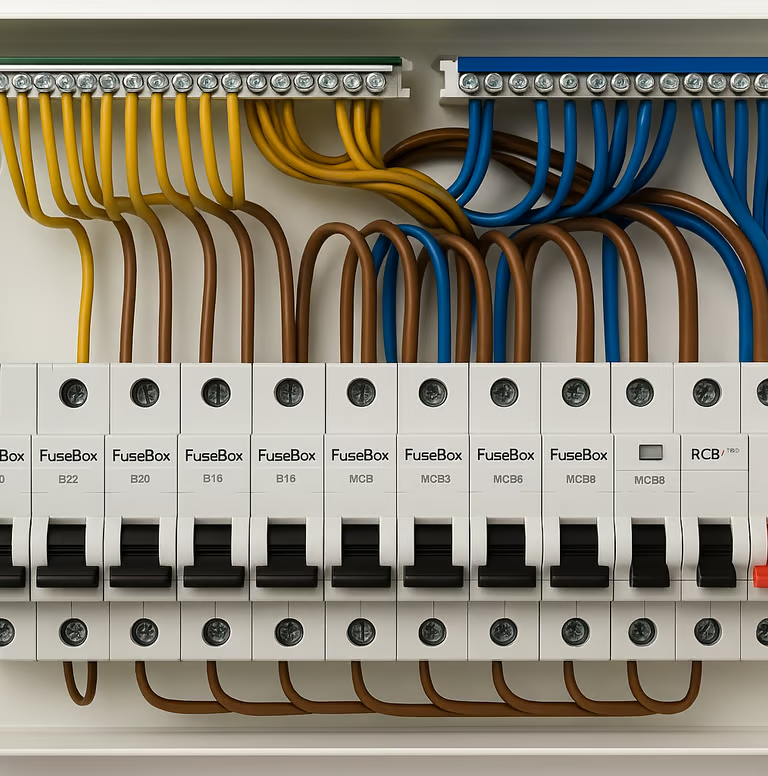
- Consumer unit connections
- Circuit breakers
- Distribution equipment
- Electrical connections
- High-load equipment
However, thermal imaging is not magic.
A thermal camera does not automatically tell you why a component is hot. It is one inspection tool that should be used with other electrical tests and professional knowledge.
This is an important future direction for electrical safety: finding abnormal heat before visible burning happens.
How future electrical tools can help prevent burnt outlets
Electrical safety is moving towards more proactive fault detection.
Future tools may combine:
Smart temperature sensors
Small sensors could monitor temperature around high-load electrical points and send an alert when abnormal heat is detected.
AI electrical fault detection
AI systems may compare electrical readings, temperature changes and historical patterns to identify unusual behaviour earlier.
Advanced thermal cameras
Portable thermal cameras can help electricians find unusual heat patterns without relying only on visible damage.
Smart consumer units
Future consumer units may provide more detailed information about individual circuits, helping homeowners and electricians understand unusual electrical activity.
Arc-fault monitoring
Improved arc detection technology may help identify dangerous electrical patterns earlier.
Remote electrical monitoring
A smart electrical monitoring system could alert a homeowner or electrician when a circuit shows unusual behaviour.
These tools will not replace qualified electricians. Instead, they can help electricians find problems earlier and make inspections more precise.
How Local Electrical Solution can help with a burnt outlet
Local Electrical Solution can investigate a burnt socket instead of simply replacing the visible damaged part.
The process can include:
- Looking at the visible damage.
- Identifying possible causes.
- Checking the affected socket.
- Inspecting relevant wiring.
- Checking the circuit for related faults.
- Testing where appropriate.
- Replacing damaged components.
- Advising on steps to reduce the chance of the problem happening again.
Local Electrical Solution can also help identify whether the problem is isolated to one socket or may be part of a wider electrical issue.
If you notice black marks, melted plastic, a burning smell, unusual heat or repeated electrical faults, contact Local Electrical Solution for professional electrical fault investigation.
The aim is not only to make the socket look new. The aim is to understand why it failed and whether anything else needs attention.
Frequently Asked Questions
Is a burnt outlet dangerous?
Yes. A burnt outlet can indicate overheating, arcing, a loose connection, faulty wiring, an overloaded circuit or another electrical fault. Do not use it until it has been checked.
Can I use the other socket if only one side is burnt?
It is better not to use the outlet until it has been inspected. Both sides may be connected to the same circuit.
Can a burnt socket start a fire?
A damaged socket can be part of an electrical fire risk, especially if overheating or arcing continues.
Why does an outlet turn black?
Common causes include overheating, loose connections, arcing, faulty appliances, damaged plugs and excessive electrical load.
Should I replace a burnt socket?
A damaged socket will normally need replacement, but the cause of the damage should also be investigated.
Is a burning smell from an outlet an emergency?
A burning smell should be treated seriously. Stop using the outlet. If there is smoke, fire or active sparking, move away and call emergency services.
Does a tripped breaker mean the socket is burnt?
No. A tripped breaker can have many causes, including overloads and electrical faults. A burnt socket can also exist without a breaker trip.
Should I call an electrician for a black socket?
Yes. A competent electrician can determine whether the damage is limited to the socket or whether wiring, the circuit or an appliance is involved.
How much does it cost to replace a burnt outlet?
A straightforward UK socket replacement may be around £50–£120 in many areas in 2026, but a burnt socket may require fault finding or additional repairs, which can increase the final price.
Can a thermal camera find electrical problems?
Thermal cameras can identify unusual heat patterns, but they should be used as part of a proper electrical inspection rather than as the only test.
Final answer: Is a burnt outlet dangerous?
Yes. Treat a burnt outlet as an electrical warning sign.
Do not use it just because:
- It still works.
- The breaker has not tripped.
- The smell has disappeared.
- Only one plug position is damaged.
- The black mark looks small.
Stop using the damaged outlet and arrange a professional inspection.
The most important thing is to find the cause of the burning, not just replace the visible socket.
For UK homes, Electrical Safety First advises having damaged or hot socket-outlets checked by a competent registered electrician.
Local Electrical Solution can help investigate burnt sockets, electrical faults and other warning signs before a small problem becomes a larger electrical safety issue.