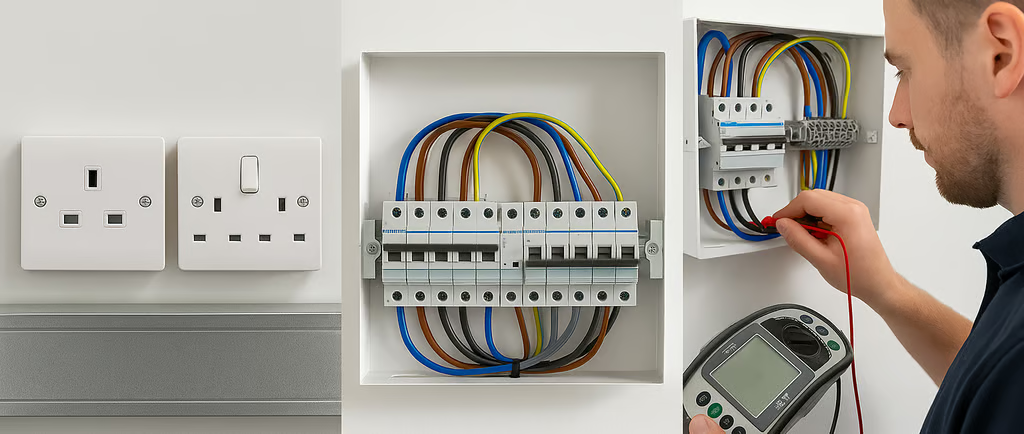

EICR stands for Electrical Installation Condition Report. It is a written report prepared by a qualified electrician after inspecting and testing the fixed electrical system in a property.
Many people call it an EICR certificate. However, it is more accurate to call it a report because it explains the condition of the electrical installation and lists any problems found.
Book Your EICR Certificate
Need an Electrical Installation Condition Report? Fill in the form and our team will contact you.
An EICR checks whether the electrical system is safe to use and whether it meets the relevant safety standards.
It normally covers:
Electrical wires and cables.
Sockets and plug outlets.
Light fittings and switches.
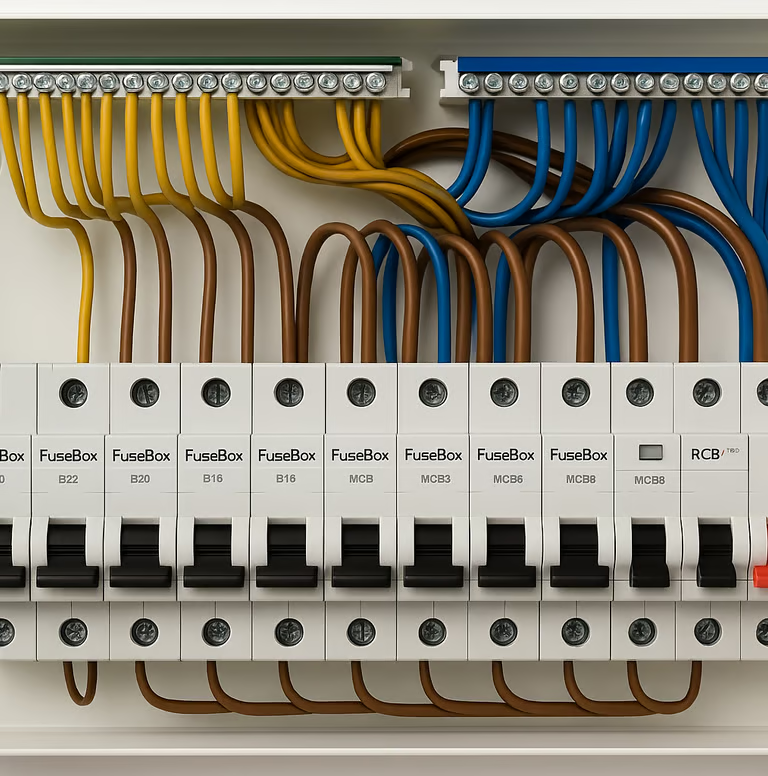
Consumer unit or fuse board.
Earthing and bonding.
Circuit breakers and RCD protection.
Fixed electrical equipment.
Signs of overheating or damage.
The condition of visible electrical parts.
The electrician will also carry out electrical tests to find problems that cannot be seen during a normal visual check.
Example: Imagine you live in a house built in 1985. The lights and sockets work normally, but some wires may have become damaged over time. An EICR can help find these hidden problems before they become dangerous.
Why Do You Need an EICR Certificate?
An EICR is important because electrical faults can cause serious accidents and property damage.
Here are six important reasons to arrange an electrical inspection.
1. Protect Your Family and Tenants
Damaged wires, loose connections and faulty sockets can cause electric shocks and fires.
An EICR helps identify these problems so they can be repaired by a competent electrician.
2. Meet Landlord Legal Requirements
Landlords must follow electrical safety rules when renting out properties.
In England, Scotland, Wales and Northern Ireland, there are requirements for electrical inspections in rented homes.
The exact rules and paperwork deadlines can differ between regions.
3. Find Hidden Electrical Problems
Some electrical faults are difficult to see.
For example:
Damaged cable insulation.
Loose electrical connections.
Overloaded circuits.
Poor earthing.
Missing or unsuitable safety protection.
Signs of overheating inside a consumer unit.
An EICR helps an electrician find these problems.
4. Help When Buying or Selling a Property
If you are buying an older house, you may want to know whether its electrical system is safe.
An EICR can provide useful information about the condition of the wiring and electrical equipment.
It can also help sellers provide information to potential buyers.
However, an EICR is not a replacement for a full property survey.
5. Protect Your Business
Commercial properties use electrical systems every day.
Offices, shops, restaurants and warehouses may have computers, machinery, lighting and other electrical equipment.
Regular inspections help identify electrical risks and support safer working conditions.
6. Plan Electrical Repairs
An EICR explains which electrical problems need attention.
This helps property owners plan repairs and understand which improvements may be useful.
Who Needs an EICR Certificate: Homeowners, Landlords or Tenants?
The need for an EICR depends on who owns, manages or occupies the property.
Are You Looking Into an EICR as a Homeowner?
If you own and live in your home, an EICR is a useful way to check your electrical installation.
There is generally no legal requirement for an owner-occupied private home to have an EICR every five years.
However, an electrical inspection is recommended at least every ten years.
You should consider an earlier inspection if:
You have bought an older property.
Your wiring has not been checked for many years.
Your circuit breakers trip regularly.
You notice burning smells near sockets.
You are planning a major renovation.
You are adding new electrical equipment.
Are You a Landlord?
If you rent out a property, you must follow the electrical safety rules that apply to your region.
Landlords covered by the relevant regulations must arrange inspections by a qualified person and keep the required reports.
They must also arrange necessary repairs and provide the report to tenants within the applicable deadline.
Are You a Tenant?
Tenants should ask their landlord or letting agent for a copy of the latest EICR.
Check the following information:
Date of the last inspection.
Recommended next inspection date.
Whether the report is satisfactory.
Whether repairs were required.
Whether the required repairs have been completed.
If you notice sparks, damaged sockets or burning smells, tell your landlord immediately.
EICR Requirements by Property Type: Rental, Commercial or Owner-Occupied Home
Different properties have different electrical safety needs.
An inspection should consider how the property is used and how much electrical equipment it contains.
| Property type | Why an EICR is important | Inspection guidance |
|---|---|---|
| Rental property | Protects tenants and helps landlords meet legal duties | At least every 5 years under applicable rules |
| Owner-occupied home | Helps find hidden electrical faults | Recommended at least every 10 years |
| Commercial property | Checks electrical systems used by workers and customers | Based on risk and inspection recommendations |
| HMO property | Checks electrical safety in shared and private areas | Follow applicable rental and HMO requirements |
| Industrial property | Helps identify risks from machinery and heavy electrical use | Based on electrical risks and system condition |
The inspection period for commercial and industrial properties is not automatically the same as the legal five-year requirement for rented homes.
The inspection frequency should be based on the electrical risks, the type of building and the advice given by the competent person.
EICR Rules in England, Scotland, Wales and Northern Ireland
Electrical safety rules are not exactly the same across the UK.
Landlords should understand which rules apply to their properties.
EICR Requirements in England
In England, electrical safety regulations cover private and social rented properties.
Landlords must:
Arrange electrical inspections at least every five years.
Use a qualified person.
Obtain an electrical safety report.
Give existing tenants a copy within 28 days of the inspection.
Give new tenants a copy before they move in.
Provide a report to a prospective tenant within 28 days of a request.
Complete required remedial work within 28 days or sooner if the report specifies a shorter period.
The social rented sector was brought into these requirements through the 2025 amendment, with transitional arrangements for existing tenancies in 2026.
EICR Requirements in Scotland
In Scotland, landlords must arrange electrical safety inspections before a property is first let and at intervals of no more than five years.
The inspection requirements include:
An Electrical Installation Condition Report for fixed electrical installations.
An in-service inspection and testing report for portable electrical appliances supplied by the landlord. This is commonly called PAT testing.
Landlords must provide tenants with the relevant reports.
If the electrician recommends a shorter inspection period, the landlord should follow that recommendation.
EICR Requirements in Wales
In Wales, landlords must follow the Renting Homes (Fitness for Human Habitation) (Wales) Regulations 2022.
The requirements include:
An electrical inspection at least every five years.
An inspection by a qualified person.
An earlier inspection if the previous report recommends one.
Providing the current EICR to the contract-holder within 14 days of the occupation date.
Providing the required written confirmation of remedial work.
EICR Requirements in Northern Ireland
Northern Ireland introduced the Electrical Safety Standards for Private Tenancies Regulations 2024.
Private landlords must:
Arrange electrical inspections at least every five years.
Use a qualified person.
Obtain an electrical safety report.
Give existing tenants a copy within 28 days.
Provide the report to new tenants before occupation.
Complete required remedial work.
Provide reports to the local council when requested.
Comparison of EICR Rules Across the UK
| UK region | Rental inspection period | Report deadline |
|---|---|---|
| England | At least every 5 years | Existing tenant: 28 days; new tenant: before occupation |
| Scotland | At least every 5 years | Provide the required reports to tenants |
| Wales | At least every 5 years | Within 14 days of occupation |
| Northern Ireland | At least every 5 years | Existing tenant: 28 days; new tenant: before occupation |
Always check the current regional requirements before arranging an inspection or starting a new tenancy.
How Does the Age of Your Building and Wiring Affect an EICR?
The age of your building and electrical wiring can help an electrician understand what problems may be present.
Older electrical systems may have different cable types, consumer units and safety features.
However, an old property does not automatically need a complete rewire.
The electrician must inspect the actual condition of the electrical installation.
Common Electrical Problems in Older Buildings
Old rubber or fabric-insulated wiring.
Damaged cable insulation.
Old fuse boards.
Missing or unsuitable RCD protection.
Poor earthing and bonding.
Loose electrical connections.
Previous DIY electrical work.
Overloaded circuits.
Building Age and What an Electrician May Check
| Approximate building age | Possible electrical concerns | What the electrician may check |
|---|---|---|
| Before 1960 | Very old wiring and fittings | Cable condition, earthing and protection |
| 1960–1980 | Ageing cables and older consumer units | Insulation and connections |
| 1980–2000 | Older wiring and electrical upgrades | RCD protection and bonding |
| 2000–2015 | Wear and installation changes | Consumer unit and circuit condition |
| After 2015 | Changes and additional electrical loads | Protection devices and modifications |
These are general examples. The actual condition of the wiring is more important than the building’s age.
Does the Number of Bedrooms or Electrical Circuits Affect an EICR?
Yes. The size of your property and the number of electrical circuits can affect the inspection time and cost.
A one-bedroom flat may have fewer circuits than a four-bedroom house.
A larger property may also have electric showers, outdoor lighting, heating systems and other electrical equipment.
The trusted electrician needs enough time to inspect and test the relevant circuits.
Property Size and Circuit Numbers
| Property type | Approximate bedrooms | What can affect inspection time |
|---|---|---|
| Small flat | 1 bedroom | Consumer unit and fewer circuits |
| Standard flat | 2 bedrooms | Lighting and kitchen circuits |
| Family home | 3 bedrooms | More sockets and electrical equipment |
| Large house | 4–5 bedrooms | More circuits and additional systems |
| Large property | 6+ bedrooms | Multiple consumer units and complex installations |
These bedroom categories are examples only. There is no fixed number of circuits for each bedroom size.
Why does this matter?
Imagine two three-bedroom houses.
One has a simple electrical system with a single consumer unit. The other has an extension, an electric shower, outdoor lighting and additional circuits.
Both properties have the same number of bedrooms, but the second property may require more inspection time.
When booking an EICR, tell the electrician about your property size and any additional electrical systems.
What Does an Electrician Check During an EICR Inspection?
An electrician checks different parts of the electrical installation to find faults and safety risks.
The inspection normally includes a visual assessment and electrical testing.
1. Consumer Unit or Fuse Board
The electrician checks the consumer unit for signs of damage, overheating and poor connections.
They also check whether suitable protective devices are installed.
2. Sockets and Switches
The electrician checks sockets and switches for:
Cracks and damage.
Loose fittings.
Burning marks.
Signs of overheating.
Unsafe connections.
3. Electrical Wiring
The electrician checks accessible wiring and carries out suitable tests to assess the condition of the installation.
They look for damaged insulation, poor connections and other problems.
4. Earthing and Bonding
Earthing and bonding are important parts of electrical safety.
They help reduce the risk of electric shock when an electrical fault occurs.
5. RCD Protection
An RCD is a safety device that can disconnect the electrical supply when it detects certain electrical faults.
The electrician checks the relevant protective devices and their operation.
6. Electrical Circuits
The electrician identifies and tests the circuits in the property.
They check whether the circuits have suitable protection and whether the test results are within the required limits.
7. Signs of Electrical Damage
The electrician also looks for visible signs of problems, such as:
Burn marks.
Melted plastic.
Exposed cables.
Water damage.
Loose electrical fittings.
The results are recorded in the EICR.
What Do EICR Codes C1, C2, C3 and FI Mean?
After the inspection, the electrician records problems using different classification codes.
These codes help the property owner understand how serious an electrical problem is.
| EICR code | Meaning | What should happen? |
|---|---|---|
| C1 | Danger present | Immediate action to remove the danger |
| C2 | Potentially dangerous | Urgent remedial work |
| C3 | Improvement recommended | Improvement is advised |
| FI | Further investigation required | Further investigation without delay |
What Happens If Your EICR Shows C1?
C1 means the electrician has found a danger that could cause injury.
For example, there may be an exposed live wire or another dangerous electrical condition.
The electrician should make the danger safe where possible.
What Happens If Your EICR Shows C2?
C2 means the electrician has found a potentially dangerous problem.
For example, there may be unsuitable electrical protection or a serious wiring defect.
The problem needs urgent repair.
What Happens If Your EICR Shows C3?
C3 means the electrician recommends an improvement.
For example, an installation may benefit from an upgrade to improve its safety.
A C3 code alone does not make an EICR unsatisfactory.
What Does FI Mean?
FI means further investigation is required.
The electrician has found something that needs more checking before its safety can be confirmed.
For landlords covered by the relevant regulations, C1, C2 and FI findings require appropriate action.
What Happens If Your EICR Certificate Is Unsatisfactory?
An unsatisfactory EICR does not always mean that the entire property needs rewiring.
It means the electrician has found one or more problems that need attention.
Here is what you should do:
Read the report carefully.
Identify the C1, C2 or FI findings.
Ask the electrician to explain the problems.
Arrange the required repair work.
Keep invoices and electrical certificates.
Obtain written confirmation that the required work has been completed.
For landlords covered by the relevant regulations, required remedial work or further investigation must normally be completed within 28 days, or within a shorter period if the report specifies one.
A new EICR is not automatically needed after every repair. The electrician should provide suitable evidence of the completed work.
How Long Does an EICR Inspection Take?
The time depends on the size of the property, number of circuits, access and condition of the electrical system.
A small flat may take a few hours, while a larger property may require more time.
| Property size | Approximate inspection time |
|---|---|
| 1-bedroom flat | 2–3 hours |
| 2-bedroom flat | 2–4 hours |
| 3-bedroom house | 3–5 hours |
| 4-bedroom house | 4–6 hours |
| Large house | 5–8 hours or more |
| Commercial building | Depends on size and circuits |
These are planning estimates, not guaranteed appointment times.
During the inspection, the electrician may need to switch off the electricity supply for short periods.
Make sure the electrician can access the consumer unit, sockets and other electrical equipment.
What Does an EICR Certificate Cost in the UK in 2026?
The cost of an EICR depends on the property size, location, number of circuits and complexity of the electrical system.
A small flat will normally cost less to inspect than a large house or commercial building.
An indicative price range for a standard domestic EICR is around £150–£300, although prices vary by location and property.
Estimated EICR Costs in 2026
| Property type | Approximate EICR cost |
|---|---|
| 1-bedroom flat | £100–£180 |
| 2-bedroom property | £130–£220 |
| 3-bedroom house | £150–£280 |
| 4-bedroom house | £180–£350 |
| 5-bedroom house | £250–£400 |
| Commercial property | £250–£2,000+ |
These are indicative planning ranges, not fixed prices or formal quotations.
What Factors Affect EICR Pricing?
1. Number of electrical circuits
More circuits can mean more testing time.
2. Property size
A larger building usually has more electrical equipment and wiring to inspect.
3. Age of electrical installation
Older installations may need more investigation.
4. Location
Prices may be higher in London and parts of the South East than in some other areas.
5. Additional electrical systems
Electric showers, electric heating and outdoor circuits may increase the work involved.
6. Remedial work
If the electrician finds faults, repair costs will normally be charged separately from the inspection.
Always ask whether the quotation includes the inspection, written report, VAT and any additional testing.
How Often Is an EICR Required?
The inspection frequency depends on the property type, its use and the applicable regulations.
For rental properties, the usual legal inspection period is five years. For owner-occupied homes, a ten-year inspection is recommended.
| Property type | Recommended or required interval |
|---|---|
| Private rental property | At least every 5 years under applicable rules |
| Social rented property | At least every 5 years where covered by the regulations |
| Owner-occupied home | At least every 10 years recommended |
| Commercial property | Based on risk and inspection recommendations |
| Caravan | Every 3 years recommended |
| Swimming pool | Every year recommended |
An electrician may recommend a shorter inspection period.
If your report gives an earlier date, follow that date rather than automatically waiting five or ten years.
You should also arrange an inspection sooner if you notice:
Burning smells.
Sparks from sockets.
Repeated circuit breaker trips.
Damaged electrical cables.
Flickering lights.
Buzzing sounds from electrical fittings.
Do not wait for the next scheduled inspection if you notice these warning signs.
What Are the New Requirements for EICR Renewals and Rules in 2026?
There are important electrical safety updates to understand in 2026.
Landlords and property managers should check the latest requirements before arranging an inspection or starting a new tenancy.
1. Social Rented Properties in England
The 2025 amendment extended electrical safety requirements to the social rented sector in England.
The requirements started in stages:
New social housing tenancies granted after 1 December 2025 are covered from the applicable commencement date.
Existing social housing tenancies became covered from 1 May 2026.
Transitional arrangements require the first inspections and relevant equipment checks for existing tenancies to be completed before 1 November 2026.
Social landlords must also check relevant electrical equipment that they provide as part of a tenancy.
2. Proposed Changes Starting on 30 November 2026
A 2026 amendment to the Electrical Safety Standards in the Private and Social Rented Sectors (England) Regulations is scheduled to come into force on 30 November 2026.
As of 15 November 2026, the changes have not yet come into force.
The draft amendment includes:
Updating the referenced wiring standard to BS 7671:2018+A4:2026.
Clarifying when an existing inspection report can be accepted before a new tenancy.
Explaining that another inspection may not be required before a new tenancy if the previous inspection took place within the last five years and the recommended next inspection date has not passed.
This does not remove the landlord’s duty to maintain safe electrical installations or complete required repairs.
3. Does Every Landlord Need a New EICR in 2026?
No. There is no general rule requiring every landlord to replace an otherwise valid EICR simply because the calendar year has changed.
Check:
The date of your last inspection.
The next inspection date stated in the report.
Whether the report is satisfactory.
Whether required repairs have been completed.
Whether the report meets the rules for your region and property type.
If the next inspection is due, arrange a new inspection with a qualified electrician.
Where Can I Get an EICR Certificate?
You can get an EICR from a suitably qualified and competent electrician who has the skills to carry out electrical inspection and testing.
When choosing an electrician, check the following:
Electrical qualifications: Ask whether they have suitable inspection and testing qualifications.
Registration: Check whether they are registered with a recognised electrical competent person scheme.
Experience: Choose someone who has experience inspecting your type of property.
Written quotation: Ask for a clear price before booking.
Report details: Make sure you receive the complete EICR, including circuit schedules and test results.
Do not choose an electrician only because they offer the cheapest inspection. The quality of the inspection and report is important.
How Can You Prepare Your Property for an EICR Inspection?
Preparing your property can help the electrician complete the inspection without unnecessary delays.
Here are some simple steps:
Make sure the electrician can reach the consumer unit.
Move furniture away from important electrical access points.
Make sure rooms and electrical areas are accessible.
Keep previous electrical reports available.
Tell the electrician about known electrical problems.
Explain any recent electrical installation work.
Inform tenants about the inspection date and possible power interruptions.
If you manage a rental property, arrange access with your tenants before the appointment.
A little preparation can help make the inspection easier.
What Is the Difference Between an EICR and an EIC Certificate?
An EICR and an EIC are two different electrical documents.
An Electrical Installation Certificate (EIC) is normally issued after new electrical installation work, such as a new circuit or a complete rewire.
An EICR is used to inspect and report on the condition of an existing electrical installation.
| Feature | EIC | EICR |
|---|---|---|
| Full name | Electrical Installation Certificate | Electrical Installation Condition Report |
| Main purpose | Records new electrical installation work | Reports on an existing electrical installation |
| When issued | After new installation work | After a periodic inspection |
| Example | Complete house rewire | Checking existing house wiring |
| Main information | Installation details and test results | Existing faults, test results and safety recommendations |
A new installation certificate does not automatically replace an EICR in every situation. Whether it can be used to meet a landlord’s inspection duty depends on the applicable rules and whether it covers the whole installation.
What Is the Future of EICR Inspections and Electrical Safety in the UK?
Electrical systems are changing as more UK homes and businesses use modern technology.
In the coming years, electricians may need to pay more attention to the electrical demands created by new equipment and energy systems.
Here are five important changes that property owners should understand.
1. Electric Vehicle Charging Points
More homeowners are installing EV charging points at their properties.
These systems can add extra electrical demand. Electricians may need to check circuit capacity, protective devices and the suitability of the existing installation.
2. Solar Panels and Battery Storage
Solar panels and home battery systems are becoming more common.
Electrical inspections may need to consider connections, isolation arrangements and safety protection associated with these systems.
3. Smart Consumer Units
Modern consumer units can offer improved monitoring and protection features.
Smart electrical monitoring may help property owners identify unusual electrical activity earlier.
4. More Electrical Equipment in Homes
Modern homes use more electrical equipment than older properties.
Electric showers, induction cookers, heat pumps, EV chargers and home office equipment can increase electrical demand.
The electrical installation must be suitable for the equipment connected to it.
5. Better Electrical Safety Records
Digital reports and electronic records may make it easier for landlords, homeowners and property managers to store inspection information.
They may also help property owners track inspection dates, completed repairs and future electrical maintenance.
The future of EICR inspections will focus on safer electrical installations, better records and the changing needs of modern properties.
Frequently Asked Questions About EICR Certificates
1. What is an EICR certificate?
An EICR certificate is a report prepared by a competent electrician after inspecting and testing a property’s fixed electrical installation. It identifies electrical faults, damage and safety concerns.
2. How often is an EICR required?
Rental properties generally require an inspection at least every five years under the applicable rules. Homeowners are advised to arrange an inspection every ten years. Commercial properties should follow a suitable inspection schedule based on risk.
3. Where can I get an EICR certificate?
You can get an EICR from a qualified and competent electrician who has experience in electrical inspection and testing.
4. What are the new requirements for EICR renewals and rules in 2026?
The 2025 amendment extended electrical safety requirements to social rented properties in England. Further amendments are scheduled for 30 November 2026, including an update to the referenced wiring standard and clarification of when an existing inspection report can be used before a new tenancy.
5. What does an EICR certificate cost?
An EICR for a typical UK home may cost around £100–£350, depending on property size, location and number of circuits. Remedial work is normally charged separately.
6. Is an EICR legally required for homeowners?
There is generally no legal requirement for an owner-occupied private home to have an EICR. However, an inspection is recommended at least every ten years.
7. Can a property fail an EICR?
Yes. An EICR can be marked unsatisfactory if the electrician finds C1 or C2 problems or requires further investigation under FI.
8. Does a C3 code mean my EICR has failed?
No. C3 means an improvement is recommended. A C3 code alone does not make an EICR unsatisfactory.
9. How long does an EICR certificate remain valid?
For a rental property, the usual maximum inspection interval is five years, or sooner if the report recommends an earlier inspection. For an owner-occupied home, ten years is the recommended interval, not a legal expiry period.
10. Does an old house always need rewiring?
No. An old house does not automatically need a complete rewire. An electrician must inspect the wiring and decide whether repairs, improvements or replacement are necessary.
11. Can I rent out my property without an EICR?
Landlords must meet the applicable electrical safety requirements before and during a tenancy. A valid qualifying electrical report must be available where required.
12. Does an EICR include PAT testing?
No. An EICR checks the fixed electrical installation. PAT testing checks portable electrical appliances. Some landlord requirements also cover electrical equipment supplied with a tenancy.
13. Can tenants ask for an EICR copy?
Yes. Tenants can ask their landlord or letting agent for a copy of the current electrical safety report.
14. Can an EICR be completed without switching off the electricity?
Some parts of the inspection can be completed without switching off the supply. However, certain electrical tests require circuits to be isolated. Short power interruptions may therefore be necessary.
15. Is an EICR the same as an electrical safety certificate?
The term electrical safety certificate is often used informally to describe an EICR. However, an EICR is specifically a report about the condition of an existing electrical installation.
Final Thoughts
An EICR is an important part of electrical safety for UK properties.
It helps homeowners understand the condition of their wiring, helps landlords meet their responsibilities and supports businesses in maintaining safer electrical systems.
Do not wait until an electrical fault becomes a serious problem. Arrange an inspection with a competent electrician, understand the report and complete any required repairs.
Keeping your electrical installation safe today can help protect your property and the people who use it in the future.