
Lighting a loft can make a dark and difficult space much safer, easier to use and more practical. Whether your loft is used for storage, a boarded attic, a home office or a full loft conversion, the right lighting should provide enough brightness without creating glare, excessive heat or electrical hazards.
The best loft lighting is not simply about fitting one bright bulb in the middle of the ceiling.
You need to think about the size of the loft, roof shape, insulation, access hatch, walkways, storage areas, headroom and how often you use the space.
If you are planning electrical work, always use a suitably competent electrician and follow the regulations that apply to your property.
In England and Wales, electrical work in dwellings is covered by Building Regulations, including Part P requirements. Scotland has its own building standards system.
Always check the requirements applicable to your location and the specific work before starting.
This guide explains how to light a loft, which lights are best, where to install spotlights, how many lights you may need, how to avoid common safety problems and what future loft lighting could look like.
Quick Answer: What Is the Best Way to Light a Loft?
The best loft lighting depends on how you use the space.
For a simple storage loft, LED batten lights, LED bulbs or battery-powered lights can provide practical illumination. For a boarded loft used regularly, several LED fittings or carefully positioned spotlights can provide better coverage. A converted loft room may need a complete lighting design with ceiling lights, task lighting, wall lighting and controls.
For most modern lofts, energy-efficient LED loft lights are a strong choice because they provide good brightness with relatively low energy consumption.
If you use the loft regularly, consider dividing the lighting into zones rather than relying on one fitting.
What Should You Consider Before Lighting a Loft?
Before choosing any light, look at the space first.
A loft can contain insulation, timber rafters, roof trusses, electrical cables, ventilation equipment, water pipes and other services. The available headroom can also change dramatically across the room.
Think about:
- Loft size
- Ceiling height
- Roof pitch
- Available natural light
- Existing electrical wiring
- Insulation depth
- Loft boarding
- Position of the loft hatch
- Location of storage
- Walking routes
- Stairs or ladders
- Whether the loft is for storage or living
- How frequently you will use the space
A small loft that is visited twice a year does not need the same lighting design as a large boarded loft used every week.
Need an Electrician for Lighting a Loft?
Need new loft lights, LED spotlights or additional lighting? Send us your postcode and phone number and our electrician will contact you to discuss your loft lighting requirements.
- ✓ Professional loft lighting assistance
- ✓ LED and spotlight installation options
- ✓ Suitable lighting for storage lofts and conversions
- ✓ Advice on lighting placement and electrical safety
Get a Quick Call Back
Enter your details below and our electrician will contact you about your loft lighting needs.
Loft Lighting Planning Table
| Loft situation | Suitable lighting approach | Main priority |
|---|---|---|
| Small storage loft | LED bulb or battery LED | Simple illumination |
| Medium boarded loft | LED battens or multiple LED fittings | Even coverage |
| Large storage loft | Multiple LED fittings | Reduce dark areas |
| Loft with sloping roof | Adjustable LEDs or suitable spotlights | Direct light correctly |
| Loft conversion | Layered fixed lighting | Comfort and appearance |
| Loft office | Ceiling + task lighting | Low glare |
| Loft with limited wiring | Battery or professionally installed lighting | Practicality |
| Frequently accessed loft | Zoned LED lighting | Convenience and safety |
Best Types of Loft Lighting
There is no single light that is perfect for every attic. Different fittings work better in different situations.
1. LED Loft Lights
LED lights are one of the most practical choices for modern lofts.
They can provide strong illumination while using less electricity than older types of lighting. LED fittings are available in bulbs, battens, panels, downlights, spotlights and strip lights.
For a storage loft, a simple LED batten can provide broad illumination. For a converted room, recessed or surface-mounted LED fittings may provide a cleaner appearance.
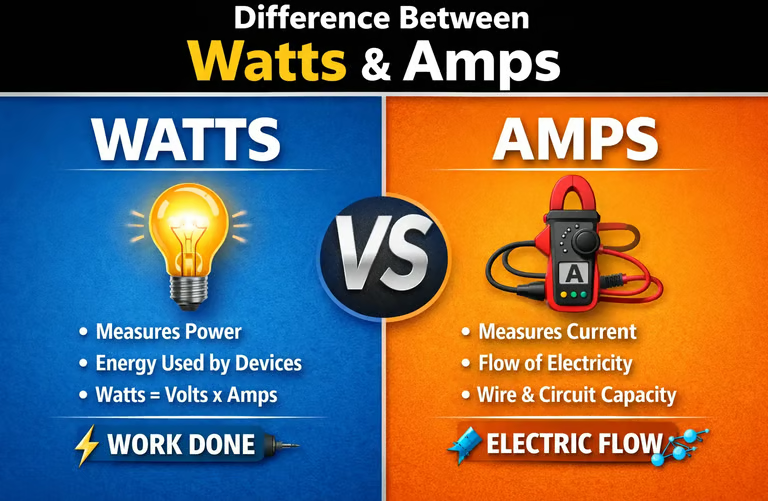
When choosing an LED fitting, do not look only at wattage. Lumens measure light output, while watts describe electrical power consumption.
For example, a low-wattage LED can produce considerably more useful light than an old incandescent lamp using much more electrical power.
2. LED Batten Lights
LED battens are particularly useful in larger lofts.
Their long shape can spread light across a wider area than a single bulb. They can be useful where you need to see boxes, shelves, stored items, insulation areas or working surfaces.
They can also work well in lofts with exposed roof structures where recessed fittings would be difficult to install.
3. LED Spotlights
LED spotlights for lofts are useful when you want to direct light towards particular areas.
For example, a spotlight can illuminate:
- A storage shelf
- A walkway
- Loft stairs
- A workbench
- A desk
- A reading area
- A dark corner
- A wardrobe or storage unit
However, recessed spotlights need careful planning around insulation and heat dissipation.
Electrical Safety First advises that downlights should have adequate clearance for heat dissipation and should not be covered with loft insulation or combustible materials unless the fitting is specifically designed and rated for that installation.
4. Battery-Powered Loft Lights
Battery-powered LED lights can be useful where you do not want to modify fixed wiring.
They are particularly suitable for:
- Occasional storage access
- Small lofts
- Areas without an existing lighting circuit
- Temporary lighting
- Additional illumination around storage
Some include motion sensors, pull cords or remote controls.
However, battery lighting should not automatically be treated as the best option for a loft that is used frequently. For a regularly occupied or converted space, a properly designed fixed installation may be more suitable.
5. LED Strip Lighting
LED strip lighting can provide attractive indirect illumination.
It can be installed beneath shelving, around storage areas or along suitable architectural features, subject to the product manufacturer’s instructions and appropriate installation.
Strip lighting can be particularly effective in a converted loft where you want decorative lighting rather than purely functional illumination.
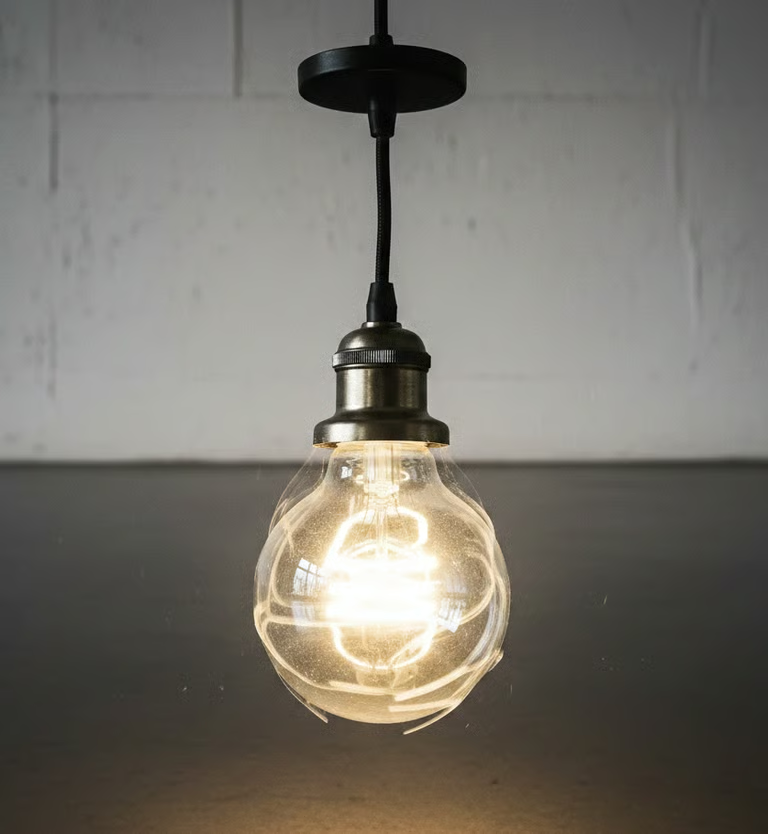
6. Pendant or Bulb Lighting
A simple pendant or bulb holder can work in some lofts.
It is inexpensive and straightforward, but hanging fittings can become inconvenient where headroom is limited.
If people regularly walk underneath the fitting, consider a lower-profile solution.
Where Should You Put Lights in a Loft?
This is one of the most important parts of loft lighting design.
Do not automatically place every fitting in the centre of the room.
Instead, think about where people actually walk and work.
A good layout should illuminate the main access route, storage zones, working areas and darker corners.
Loft Hatch and Entrance
The area around the loft hatch should be properly illuminated.
This is important because entering a dark loft while standing on a ladder or moving through a small opening can be awkward.
A light near the access point can help you see:
- The ladder
- The floor
- Nearby obstructions
- Stored boxes
- Handholds
- The immediate walking route
A switch or suitable automatic control near the access point can make the lighting easier to operate.
Walkways
If your loft is boarded, identify the main walking routes.
Position lights so that the route is clearly visible.
Avoid creating a situation where a bright fitting produces a large shadow directly over the walkway.
Storage Areas
Storage shelves can block light from a central fitting.
If your loft contains shelving, boxes or cupboards, use additional directional lights where appropriate.
A spotlight can be aimed towards the storage wall, while another fitting illuminates the walkway.
Loft Stairs
Stairs need special attention because poor lighting can increase the risk of trips.
Lighting should allow you to see each step clearly without producing uncomfortable glare.
For a converted loft, consider controlling the stair lighting from appropriate locations.
Where Can You Use Spotlights in a Loft?
Where to use spotlights in a loft depends on the shape and purpose of the space.
1. Above Storage Shelves
Use directional spotlights to illuminate shelving rather than pointing them directly into your eyes.
2. Along Walkways
A row of suitably spaced directional fittings can help illuminate a long boarded walkway.
3. Near the Loft Hatch
A spotlight can illuminate the entry zone and reduce shadows around the ladder.
4. Under Sloping Roofs
Adjustable fittings can be useful where the roof angle makes normal downlights less effective.
5. Above a Desk
If your loft becomes a home office, a directional fitting can provide additional task illumination.
6. Around a Hobby Area
For crafting, repairs or DIY activities, task-focused lighting can be more useful than one general ceiling light.
7. Near Storage Cupboards
Use directional light to illuminate cupboard fronts and shelving.
8. Around Architectural Features
In a loft conversion, spotlights can highlight beams, exposed brick, roof structures or feature walls.
Important Spotlight Safety Point
Never choose a spotlight only because it looks attractive.
Check the fitting’s installation requirements, heat output, fire rating, insulation compatibility, IP rating where relevant and manufacturer’s instructions.
Particularly with recessed fittings, the relationship between the fitting and loft insulation is important.
How Many Lights Do You Need in a Loft?
There is no universal number.
The required number depends on:
- Floor area
- Ceiling height
- Roof shape
- Light output
- Beam angle
- Wall colour
- Storage layout
- Intended use
- Natural daylight
- Type of fitting
A small storage loft may need only one fitting.
A large boarded loft may need several.
A loft conversion used as a bedroom or office needs a more carefully designed lighting system.
Example Loft Lighting Layout
| Loft size/use | Possible approach | Why |
|---|---|---|
| Small storage area | 1 LED fitting | Basic access |
| Small boarded loft | 1–2 fittings | Better coverage |
| Medium boarded loft | 2–4 fittings | Reduce shadows |
| Large storage loft | Multiple LED battens/fittings | Even illumination |
| Home office | General + task lighting | Better working conditions |
| Bedroom conversion | General + decorative/task lighting | Comfort |
| Hobby room | General + directional lighting | Detailed tasks |
These figures are planning examples rather than fixed electrical requirements. A lighting designer or electrician should assess the actual space.
Lumens, Watts and Colour Temperature: What Should You Choose?
Many homeowners look only at wattage when buying lights.
That can be misleading.
Lumens tell you approximately how much visible light a lamp produces.
Watts tell you how much electrical power it consumes.
Kelvin (K) describes colour temperature.
A cooler light can feel more crisp and functional, while a warmer light can create a more relaxed atmosphere.
Loft Light Selection
| Feature | What it means | Why it matters |
|---|---|---|
| Lumens | Light output | Determines brightness |
| Watts | Power consumption | Helps assess energy use |
| Kelvin | Colour appearance | Changes atmosphere |
| Beam angle | Spread of light | Controls coverage |
| CRI | Colour rendering | Important for accurate colours |
| IP rating | Protection level | Important in suitable environments |
| Dimmability | Ability to adjust brightness | Useful in living spaces |
| Sensor compatibility | Works with automatic controls | Improves convenience |
For a storage loft, functional visibility is usually more important than creating a dramatic atmosphere.
For a converted loft, colour temperature and dimming can become more important.
Warm White or Cool White for a Loft?
The right colour temperature depends on how you use the space.
For storage, many homeowners prefer a neutral or cooler white because it can make boxes, labels and stored objects easier to distinguish.
For a bedroom or living area, a warmer white may create a more comfortable atmosphere.
If the loft is a home office, neutral lighting can provide a useful balance between comfort and visibility.
There is no single colour temperature that is correct for every loft.
Should You Use Motion Sensor Loft Lights?
Motion sensors can be extremely useful in lofts.
You enter the loft, the sensor detects movement and the light turns on automatically.
This can be useful when your hands are occupied with:
- Boxes
- Suitcases
- Christmas decorations
- Tools
- Storage containers
A motion sensor can also reduce the chance of leaving the light switched on accidentally.
For occasional-access storage, this can be particularly convenient.
However, sensor placement matters. A poorly positioned sensor may switch off while someone is sitting still or working in one area.
Loft Lighting and Insulation
Lighting must be planned together with insulation.
This is especially important with recessed downlights.
Do not assume that every LED downlight can safely be buried under insulation.
Some fittings are designed for insulation contact, while others require clearance.
Electrical Safety First recommends ensuring adequate clearance around downlights for heat dissipation and avoiding covering fittings with insulation unless they are specifically designed and rated for that situation.
This is one reason why surface-mounted LED fittings or LED battens can sometimes be a simpler solution for a storage loft.
Loft Lighting and Loft Boarding
If you are boarding your loft, plan the lighting before completing the boarding work.
Consider:
- Where people will walk.
- Where storage will be positioned.
- Where the hatch will be located.
- Where cables need to travel.
- Where insulation will remain.
- Where fittings will be fixed.
- Whether future access to cables will be required.
Good lighting and safe flooring should work together.
A beautifully lit loft is not very useful if the walking route is unsafe.
Electrical Safety When Lighting a Loft
Electrical work should never be treated as a simple DIY decoration project.
A loft can contain hidden electrical cables, insulation, timber structures and other services.
Before any electrical installation:
- Identify existing wiring.
- Check the proposed cable route.
- Consider insulation.
- Keep fittings secure.
- Follow manufacturer instructions.
- Protect cables from damage.
- Avoid creating trip hazards.
- Use appropriate electrical protection.
- Ensure connections are suitably enclosed.
- Test the completed installation.
- Obtain required certification or Building Control approval where applicable.
In England, Approved Document P provides guidance on electrical safety in dwellings and explains when electrical work requires notification.
In Wales, official guidance also advises that electrical work should follow BS 7671 and explains the role of competent-person schemes and Building Control.
Scotland operates under its own Building Standards system. Its domestic technical guidance requires electrical installations to be designed and constructed so they do not threaten health and safety or become a source of fire.
Therefore, do not assume that a rule applying in one part of the UK automatically applies in exactly the same way elsewhere.
Should You Install Loft Lights Yourself?
The answer depends on what you are doing.
Replacing a lamp is very different from installing a new fixed lighting circuit.
Fixed electrical work requires proper knowledge and testing.
If you are unsure about:
- Circuit design
- Cable selection
- Protective devices
- Earthing
- Bonding
- Connections
- Testing
- Building Regulations
use a qualified and competent electrician.
A professional installation can also help identify problems with old wiring before new lighting is connected.
For homeowners searching for loft lighting installation, Local Electrical Solution can assess the existing electrical installation, discuss suitable lighting options and advise on the appropriate approach for the property.
What UK Electrical Rules Apply to Loft Lighting?
There is not one single “loft lighting rule”.
Different requirements can apply depending on the country, property and type of work.
In England, Approved Document P addresses electrical safety in dwellings.
Wales publishes its own building regulation guidance and also references Part P and BS 7671.
Scotland uses the Building (Scotland) Regulations and its technical handbooks.
Northern Ireland has its own building regulations framework, so homeowners should check the requirements applicable to their property.
BS 7671, commonly known as the IET Wiring Regulations, is an important technical standard used for electrical installation work. It should not be confused with Building Regulations themselves.
Regulatory Planning
| Location | Main framework to check | Important consideration |
|---|---|---|
| England | Building Regulations / Approved Document P | Electrical safety and notification |
| Wales | Building Regulations / Approved Document P | Electrical safety and competent installation |
| Scotland | Building (Scotland) Regulations | Electrical safety and lighting standards |
| Northern Ireland | Northern Ireland Building Regulations | Check local requirements |
| All locations | BS 7671 | Technical electrical installation practice |
Always check current requirements before starting electrical work because regulations and guidance can change.
How Much Does Loft Lighting Cost?
The total price can vary considerably.
A battery-powered light may be inexpensive.
A new fixed lighting installation can cost considerably more because the electrician may need to:
- Inspect the existing circuit
- Install cables
- Add switches
- Install multiple fittings
- Work around insulation
- Create new connections
- Test the installation
- Provide appropriate documentation
A loft conversion can require a completely different lighting design.
Instead of choosing a fitting purely because it is cheap, compare the total installation cost and long-term usefulness.
Cost Factors For Loft Lighting In United Kingdom
| Cost factor | Can increase cost when… |
|---|---|
| Number of fittings | More lights are required |
| Wiring | New cable routes are needed |
| Switches | Multiple control points are wanted |
| Access | Loft is difficult to reach |
| Insulation | Existing insulation complicates installation |
| Roof structure | Fittings require special mounting |
| Smart controls | Additional control equipment is required |
| Testing/certification | Electrical installation work requires formal inspection |
Prices vary by location, access, specification and installer, so a site-specific quotation is more useful than relying on a generic online price.
Natural Light Versus Artificial Loft Lighting
Natural light can transform a loft.
Roof windows, skylights and sun tunnels can reduce dependence on artificial lighting during daylight hours.
However, natural light is not available at night and may not reach every part of the loft.
The best approach can therefore be a combination of natural and artificial light.
For example:
Roof window → daylight
LED ceiling lighting → general illumination
Spotlights → storage/task areas
Sensor → automatic control
This layered approach can make the loft more flexible.
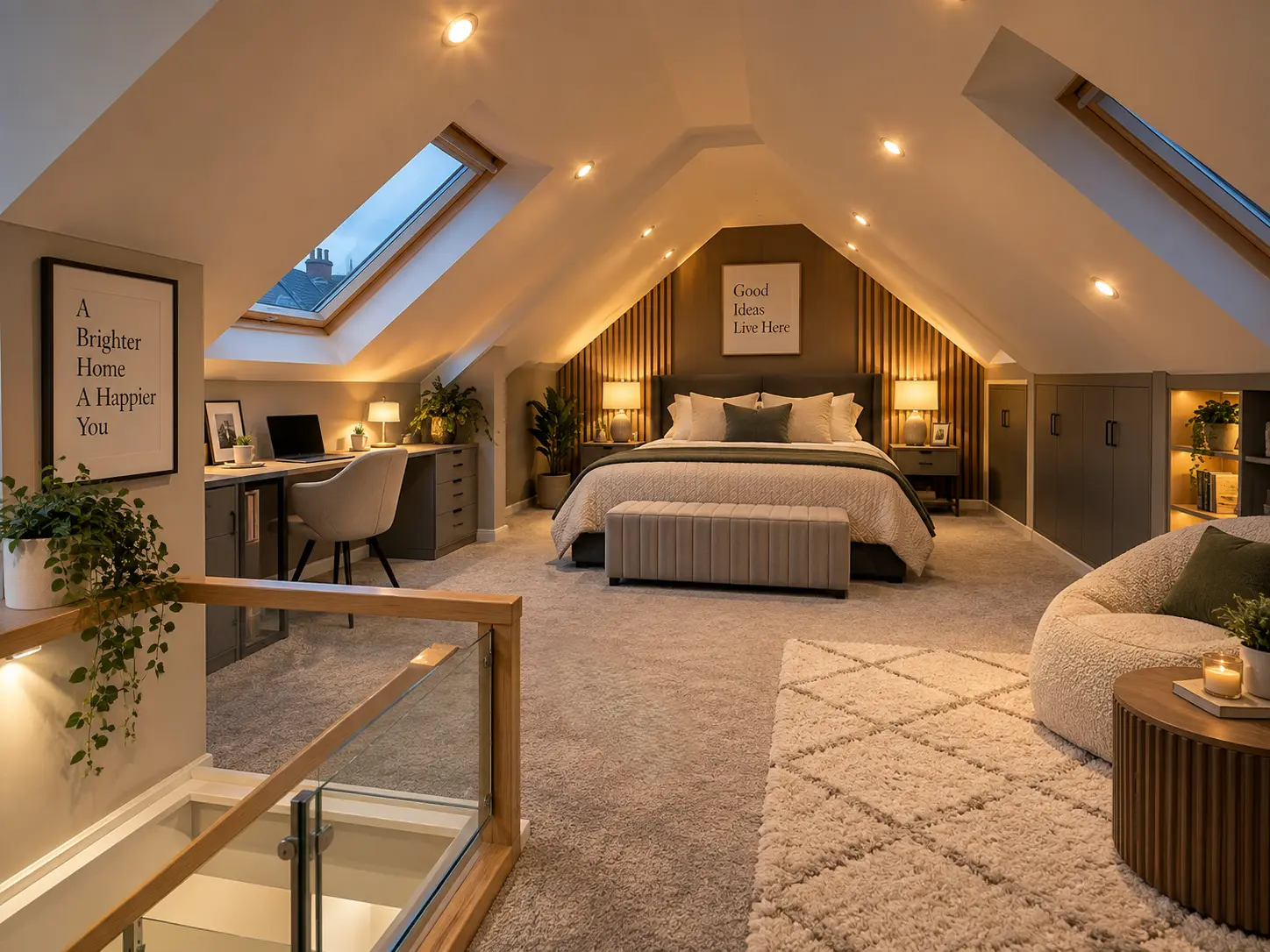
Lighting a Loft Conversion
A loft conversion is different from a storage loft.
Once a loft becomes a bedroom, office, studio or living area, lighting becomes part of the room’s interior design.
Consider:
- Main ceiling lighting
- Reading lights
- Desk lighting
- Wall lights
- Accent lighting
- Bedside lighting
- Stair lighting
- Dimmers
- Smart controls
- Emergency considerations where applicable
- Natural daylight
Sloping ceilings can make standard downlights difficult to position.
Adjustable fittings can help direct light towards the floor and walls.
Lighting a Loft With Sloping Ceilings
Sloping roofs create a common lighting problem.
A downlight installed on an angled surface may direct light in an unexpected direction.
Instead, consider:
- Adjustable spotlights
- Surface-mounted LED fittings
- Track lighting where appropriate
- Wall lighting
- LED strips
- Directional fittings
The objective is to put the light where it is needed rather than simply placing fittings at equal distances.
Common Loft Lighting Mistakes
Mistake 1: Installing Only One Light
One central light can leave storage areas dark.
Mistake 2: Ignoring the Loft Hatch
The entrance area should be easy to see.
Mistake 3: Covering Unsuitable Downlights
Never cover a fitting with insulation unless it is designed and rated for that application.
Mistake 4: Choosing Lights Only by Wattage
Look at lumens, beam angle and intended use.
Mistake 5: Creating Glare
Very bright fittings can become uncomfortable, especially in a low-ceiling loft.
Mistake 6: Forgetting Storage
Shelves and boxes can create shadows.
Mistake 7: Poor Cable Management
Loose cables can create damage and safety risks.
Mistake 8: Treating a Conversion Like a Storage Loft
A habitable room needs a more complete lighting design.
Mistake 9: Ignoring Future Requirements
You may later install shelving, a desk, smart controls or additional electrical equipment.
Mistake 10: Attempting Electrical Work Without the Required Competence
When in doubt, use a competent electrician.
The Future of Loft Lighting in the United Kingdom
The future of loft lighting is likely to move beyond simply installing a bulb and switch.
Modern homes are becoming more connected, and lofts are increasingly being used as organised storage areas, offices, hobby rooms and additional living spaces.
Future systems can combine:
- LED technology
- Motion sensors
- Occupancy sensors
- Smart switches
- App control
- Voice control
- Automatic dimming
- Daylight sensors
- Energy monitoring
- Zoned lighting
In the United Kingdom, homeowners may increasingly treat the loft as a useful part of the home rather than an inaccessible storage void.
For example, a homeowner could walk into the loft and have the correct lighting zone automatically activated. A storage area could use low-level lighting, while a desk could have brighter task lighting.
Smart controls can also make it easier to turn lights off when the loft is empty.
Energy efficiency is another important direction. Scotland’s building guidance recognises the importance of energy-efficient artificial lighting and appropriate control, particularly in relevant building work.
The latest energy-efficiency guidance in England has also continued to develop, with Approved Document L 2026 now published.
How British Homeowners Could Use Loft Lighting in the Future
A future-ready loft might include:
| Future feature | Possible benefit |
|---|---|
| Motion detection | Lights activate automatically |
| Smart dimming | Adjust brightness for different activities |
| Zoned lighting | Only occupied areas are illuminated |
| Daylight sensors | Reduce unnecessary artificial lighting |
| App control | Control lights remotely |
| Voice control | Hands-free operation |
| Energy monitoring | Understand lighting consumption |
| LED technology | Efficient general illumination |
| Smart scheduling | Automatic control at selected times |
| Integrated sensors | Better convenience and automation |
The important point is not to install technology simply because it is new.
The lighting system should solve a real problem and remain safe, maintainable and compatible with the electrical installation.
Why Choose Local Electrical Solution for Loft Lighting?
If you are looking for professional loft lighting installation, Local Electrical Solution can help you plan a practical lighting arrangement based on the space and its intended use.
The right solution may be a simple LED fitting, multiple ceiling lights, spotlights, sensor-controlled lighting or a more complete lighting design for a loft conversion.
Local Electrical Solution can also help homeowners identify potential issues before electrical work begins.
A professional assessment can consider the existing wiring, access, fitting locations, insulation and the type of lighting required.
If you are unsure whether your loft needs one light or several, Local Electrical Solution can help you choose a suitable approach rather than installing unnecessary fittings.
For homeowners planning a larger project, Local Electrical Solution can also discuss how lighting can be integrated with other electrical requirements.
Loft Lighting Installation Checklist
Before the work begins, check the following:
Identify how the loft will be used.
Measure the loft.
Identify the main walking routes.
Locate the loft hatch.
Identify storage areas.
Check the existing electrical installation.
Check insulation locations.
Decide between general and task lighting.
Choose suitable LED fittings.
Consider sensor controls.
Consider future use.
Plan cable routes.
Check fitting manufacturer’s instructions.
Use appropriate professional expertise for fixed electrical work.
Arrange inspection/testing where required.
Keep relevant documentation.
Frequently Asked Questions About Lighting a Loft
1. What is the best lighting for a loft?
LED lighting is usually a practical choice for a loft because it can provide strong illumination with relatively low energy consumption. LED battens work well for larger storage areas, while LED spotlights can direct light towards particular zones. Battery-powered LED lights may suit occasional-access storage lofts where fixed wiring is not required. The best choice ultimately depends on the loft’s size, purpose, insulation and existing electrical installation.
2. How do you light a loft without electricity?
A loft can be illuminated without connecting new fixed wiring by using battery-powered LED lights. Options include pull-cord lights, rechargeable lights and motion-sensor LED fittings. These can be useful for small storage lofts or areas visited occasionally. However, if the loft is regularly used or converted into a living space, a properly designed fixed electrical lighting system may provide a more reliable and appropriate solution.
3. Where should spotlights be placed in a loft?
Spotlights should be positioned according to how the loft is used rather than simply being installed in a symmetrical pattern. Useful locations include walkways, storage areas, desks, stairs and darker corners. Adjustable fittings can help direct light around sloping roofs. Avoid aiming powerful lights directly towards people’s eyes. Recessed fittings must also be installed according to their manufacturer’s requirements, particularly where insulation is present.
4. Can you put spotlights in a loft ceiling?
Yes, suitable spotlights can be installed in some loft ceilings, but the fitting must be appropriate for the construction and installation conditions. Recessed downlights require particular care because heat needs to dissipate safely. Insulation must not cover a fitting unless the manufacturer specifically permits that arrangement. A competent electrician should assess the proposed locations, wiring and fitting requirements before fixed installation work begins.
5. How many lights should a loft have?
There is no universal number of lights for every loft. A small storage loft might work with one fitting, while a larger boarded loft may require several fittings to prevent shadows. The number depends on floor area, ceiling height, light output, beam angle, storage arrangement and intended use. A loft conversion used as an office or bedroom usually needs a more detailed lighting plan.
6. Are LED lights good for lofts?
Yes. LED lights are widely used for loft applications because they are available in many forms, including bulbs, battens, panels, spotlights and strip lighting. They can provide useful brightness without requiring the electrical power associated with older incandescent lamps. When selecting an LED fitting, consider its lumen output, colour temperature, beam angle, physical size and compatibility with the installation environment.
7. Can loft lights be covered with insulation?
You should never assume that a loft light can safely be covered with insulation. Some fittings are specifically designed and rated for insulation contact, while others require clearance. Covering an unsuitable fitting can create overheating and fire risks. Electrical Safety First advises maintaining suitable clearance around downlights and avoiding contact with insulation or combustible materials unless the fitting is designed for that application.
8. Do loft lights need a switch?
A fixed loft lighting system will normally need an appropriate method of control, but the exact arrangement depends on the design. A switch near the loft entrance can be convenient because you can turn the light on before entering. Motion sensors and smart controls are other possibilities. The control system should be selected alongside the lighting design and installed safely as part of the electrical installation.
9. Can I install loft lighting myself?
Some simple lighting products are designed for user installation, but fixed electrical work is different. Installing new wiring, modifying circuits or adding permanent lighting requires suitable technical knowledge and compliance with applicable regulations. If you are uncertain about electrical safety, stop and contact a competent electrician. Electrical work should be designed, installed, inspected and tested appropriately for the type of work being undertaken.
10. What colour temperature is best for loft lighting?
The best colour temperature depends on the purpose of the loft. A neutral or cooler white can be useful for storage because it can provide a clear, functional appearance. Warmer light can be more comfortable in a bedroom or living space. A home office may benefit from a neutral balance. Rather than choosing colour temperature by trend, consider the activity, surfaces and natural daylight.
11. Are motion sensor loft lights worth it?
Motion sensor lights can be very useful in storage lofts because people often enter with both hands occupied. The lights can switch on automatically when movement is detected, reducing the need to find a switch. They can also help prevent lights being left on. Sensor performance depends on positioning, detection range and settings, so the sensor should be installed where it can reliably detect movement.
12. Are battery-powered loft lights safe?
Battery-powered LED lights can be a practical option for occasional loft use, particularly where no fixed lighting is available. They avoid the need to modify the fixed electrical installation. However, the product should be installed according to its manufacturer’s instructions and batteries should be maintained properly. Rechargeable or replaceable batteries should be monitored for damage, leakage or deterioration, particularly in environments with large temperature changes.
13. Can I use LED strip lights in a loft?
LED strip lighting can be useful for decorative or supplementary illumination, particularly around shelving and suitable architectural features. The strip, power supply and control equipment must be compatible and installed according to manufacturer instructions. It should not be treated as automatically suitable for every loft environment. For permanent electrical installations, use appropriate equipment and professional advice where required.
14. What is better for a loft, spotlights or batten lights?
The better option depends on the purpose of the loft. LED battens can provide broad, even illumination and are useful for larger storage areas. Spotlights provide more directional light and can be useful for desks, shelves and specific zones. A converted loft may benefit from both. Instead of choosing one type automatically, consider where light is needed and whether the ceiling structure supports the chosen fitting.
15. How can I make a dark loft brighter?
Start by improving the distribution of artificial light rather than simply buying a brighter bulb. Use multiple fittings where appropriate, illuminate storage areas and avoid large shadow zones. Light-coloured surfaces can also help reflect light. If practical, natural daylight from a suitable roof window or sun tunnel can improve daytime illumination. The final design should consider access, insulation, roof structure and electrical safety.
16. Can a loft have smart lighting?
Yes, a loft can potentially use smart bulbs, smart switches, motion sensors or other compatible controls. Smart lighting can allow homeowners to automate lights, control zones and switch lights remotely. However, smart features should not replace basic electrical safety. The equipment must be compatible with the existing installation and used according to manufacturer instructions. Fixed electrical modifications should be carried out by someone suitably competent.
17. Does loft boarding affect lighting?
Loft boarding can affect lighting because boards, storage boxes and shelving can change how light travels through the space. Before boarding, identify the main walking routes and storage positions. This makes it easier to position fittings correctly. Lighting should also be planned around insulation, cables and access. A boarded loft may require several fittings because storage structures can create shadows.
18. Do I need an electrician to install loft lights?
Whether an electrician is legally required depends on the nature and location of the work and the regulations applicable to the property. Simple replacement work is different from installing a new fixed circuit. If new wiring, circuit modifications or permanent fittings are involved and you are not suitably competent, use a qualified or competent electrician. Check the relevant Building Regulations and local requirements before starting.
19. What are the main safety risks when lighting a loft?
Common risks include electric shock, damaged cables, overheating fittings, poor connections, fire risk, trip hazards and unsafe access. Downlights also require careful consideration where insulation is present. People working in lofts can additionally fall through ceilings if they step away from supported flooring. Good lighting should therefore be combined with safe access, suitable flooring and careful electrical planning.
20. How can I future-proof my loft lighting?
Future-proofing starts with planning more than today’s immediate requirement. Consider where future storage, a desk, hobby area or additional equipment might be located. Zoned LED lighting, sensor controls, suitable switch positions and accessible installation arrangements can make future changes easier. Discuss possible future uses with an electrician before completing the installation so that the system does not unnecessarily restrict later improvements.
Final Thoughts on Lighting a Loft
Good loft lighting is about much more than making a dark room brighter.
The best system combines safe electrical installation, sensible light placement, suitable fittings, good visibility, insulation awareness and future flexibility.
For a small storage loft, a simple LED or battery-powered solution may be enough. For a large boarded loft, multiple LED fittings can create better coverage. For a loft conversion, layered lighting with general, task and accent illumination can produce a much more comfortable room.
The most important step is to design the lighting around how the space will actually be used.
If fixed electrical work is required, obtain appropriate professional advice and make sure the installation complies with the regulations and standards applicable to your property.
For professional advice and loft lighting installation, Local Electrical Solution can help homeowners assess their requirements and choose a practical lighting approach for their loft.