Learn how an outdoor passive infrared sensor works, where to install it, wiring tips, and how it improves security, saves energy, and detects motion accurately.
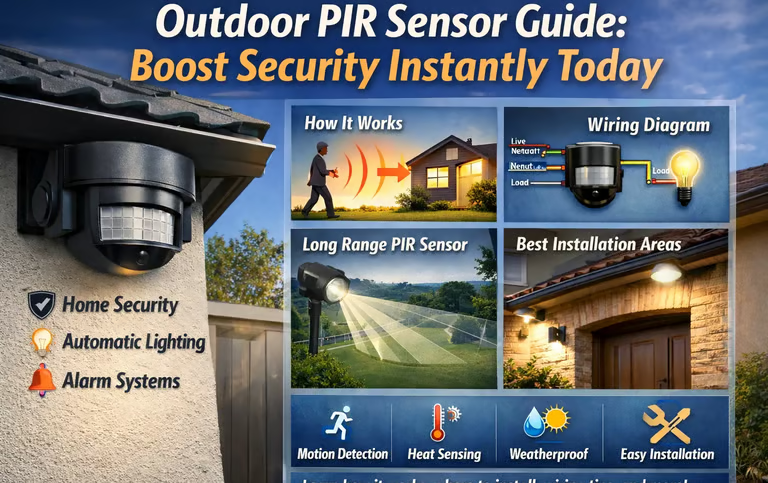
An outdoor passive infrared sensor helps detect movement by sensing body heat. It is widely used in security lights, alarms, and smart home systems. This guide explains how it works, where to use it, wiring basics, and real-life examples so you can choose and install the right sensor easily.
What Is an Outdoor Passive Infrared Sensor?
A outdoor passive infrared sensor is a motion detection device that senses infrared heat changes outdoors.
- It does not emit signals — it only detects heat.
- Often called a passive infrared sensor or infrared passive sensor.
- Used in security lighting, alarms, and automation.
Simple Example
- When someone walks into your driveway at night, the outdoor passive infrared sensor detects heat and turns on the light automatically.
What Is Passive Infrared Sensor Technology?
The term what is passive infrared sensor refers to a device that detects heat radiation.
- Humans and animals emit infrared energy.
- The sensor watches for temperature changes.
- Movement across detection zones triggers a response.
This is why passive infrared movement sensors are ideal for outdoor security.
How Do You Wire an Outdoor Passive Infrared Sensor?
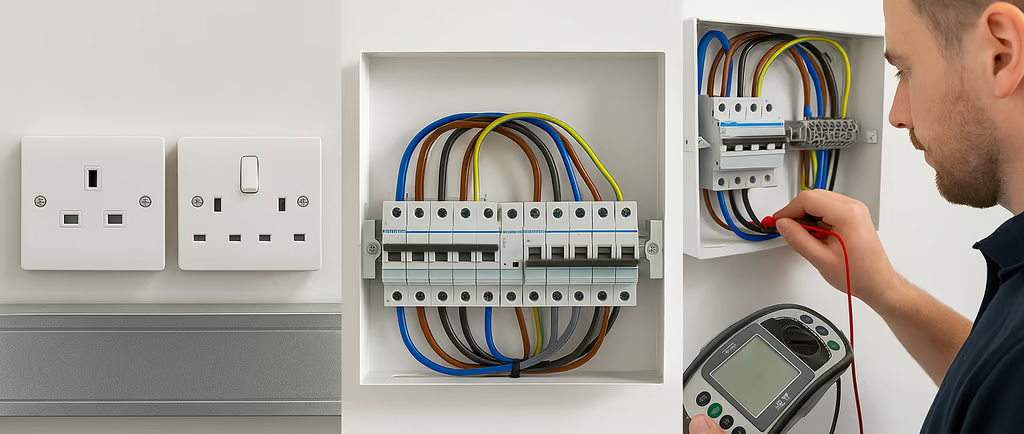
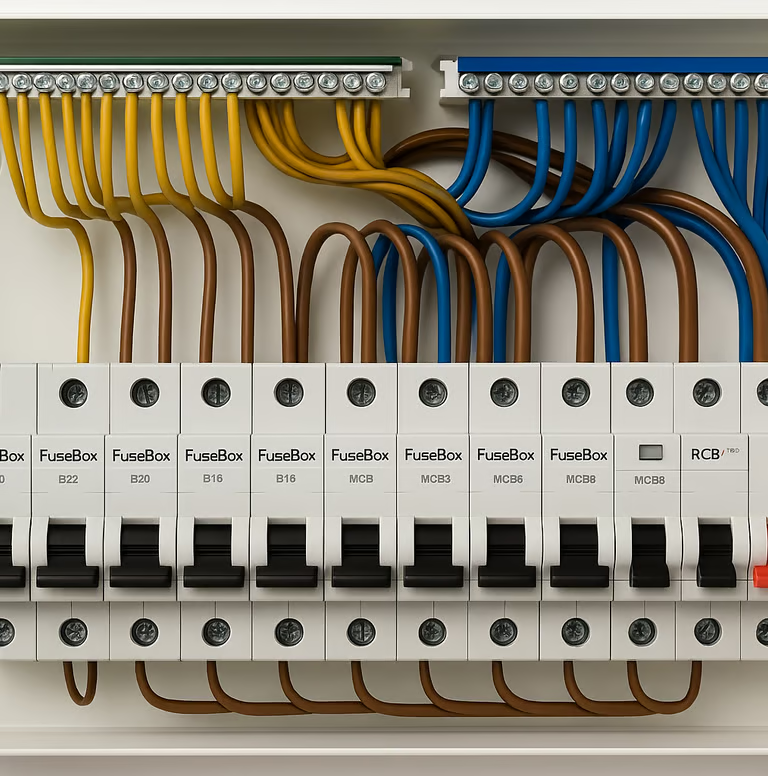
The wiring method for an outdoor passive infrared sensor depends on whether it is controlling a security light, alarm system or another electrical device. A typical mains-powered PIR security light may require permanent live, neutral and switched-live connections, while low-voltage sensors can use completely different wiring.
Because outdoor lighting circuits involve mains electricity, wiring should be carried out by a qualified electrician where required. The manufacturer’s wiring diagram should always be followed because terminal markings and connection arrangements vary between sensor models.
Local Electrical Solution can assess the existing outdoor lighting circuit and install an appropriate PIR sensor safely, including checking the connections and operation after installation.
What Is the Best PIR Sensor Detection Range?
The detection range depends on the sensor’s design, lens, mounting height, detection angle and environmental conditions. Some outdoor PIR sensors are designed for short entrance areas, while others provide wider or longer-range coverage for driveways, gardens and commercial premises.
Do not choose a sensor based only on its advertised maximum distance. The actual detection area depends on how the sensor is positioned and the direction a person approaches it.
For the most reliable detection, position the sensor so people move across its detection zones rather than directly towards the sensor. This allows the infrared changes produced by movement to be detected more effectively.
How Do You Adjust an Outdoor PIR Sensor?
Many PIR sensors have adjustable controls that allow the user or installer to change how the device operates. Depending on the model, these may include:
-
Sensitivity: Adjusts how responsive the sensor is to movement.
-
Time delay: Determines how long the connected light remains switched on.
-
Lux/daylight setting: Controls whether the sensor operates during daylight or mainly at night.
-
Detection angle: Helps determine the area monitored by the sensor.
Start with moderate settings and test the sensor during both daytime and nighttime conditions. Increasing sensitivity too much can result in unnecessary activation, while reducing it excessively may cause genuine movement to be missed.
Why Does an Outdoor PIR Sensor Keep Turning On?
Frequent activation does not always mean the PIR sensor is faulty. False triggers can occur when the sensor detects unexpected heat movement or environmental changes.
Common causes include:
-
Direct sunlight or rapid temperature changes
-
Moving branches, leaves or plants
-
Animals passing through the detection area
-
Heat from vents or external equipment
-
Vehicles moving within the detection zone
-
Poor sensor positioning
-
Excessive sensitivity
-
Water ingress or damaged equipment
Check the sensor’s position and adjustment settings first. If unwanted activation continues, the sensor, wiring or connected lighting circuit may require professional inspection.
What IP Rating Should an Outdoor PIR Sensor Have?
An outdoor sensor should be designed for external conditions and have an appropriate IP rating for its intended location. The IP rating indicates the level of protection provided against solid objects and moisture.
The correct rating depends on whether the sensor is positioned under shelter, on an exposed wall or in another particularly demanding outdoor environment. Always check the manufacturer’s specifications before installation rather than assuming that every PIR sensor is suitable for outdoor use.
A weather-resistant enclosure is particularly important because moisture entering electrical equipment can cause corrosion, malfunction or electrical safety problems.
Does an Outdoor PIR Sensor Work in Winter?
Yes. PIR technology can operate outdoors during cold weather because it detects infrared radiation rather than relying on visible light. However, detection performance can vary with environmental conditions, sensor quality and installation.
Very hot weather, rapidly changing temperatures, direct sunlight and other heat sources can affect how effectively movement is detected. Correct positioning and appropriate sensitivity settings therefore remain important throughout the year.
How Often Should an Outdoor PIR Sensor Be Maintained?
Outdoor PIR sensors require relatively little maintenance, but occasional checks can improve reliability. Keep the lens clean and remove dirt, insects, cobwebs and other obstructions that could affect the detection pattern.
Inspect the housing for cracks or signs of water damage and check whether the sensor has moved from its original position. If a security light starts switching on randomly or stops detecting movement, investigate the cause rather than assuming the sensor needs immediate replacement.
Can a PIR Sensor Be Used With Security Lights?
Yes. PIR security lights are one of the most common applications for outdoor passive infrared technology. When movement is detected, the sensor can activate an external light for a predetermined period.
This can improve visibility around entrances, driveways, garages, pathways and other vulnerable areas. It can also reduce energy consumption because the light operates only when movement is detected rather than remaining illuminated continuously.
However, a PIR light should be considered part of a wider security strategy rather than a complete security system.
When Should You Replace an Outdoor PIR Sensor?
Replacement may be appropriate when the sensor repeatedly produces false triggers, fails to detect movement despite correct positioning, suffers physical or water damage, or develops an electrical fault.
Before replacing it, an electrician can determine whether the actual problem is the sensor, wiring, power supply, connected light or control equipment.
For reliable outdoor motion detection, Local Electrical Solution can help identify suitable sensor positioning and investigate electrical issues affecting PIR lighting systems.
Is Professional PIR Sensor Installation Necessary?
Installing or replacing a mains-powered outdoor PIR sensor involves electrical connections and outdoor equipment, so safety should be the priority. Attempting to modify fixed wiring without the appropriate knowledge can create electric shock, fire or equipment-damage risks.
A qualified electrician can assess the circuit, confirm the sensor is suitable for the environment, make the required connections and test the finished installation.
Local Electrical Solution can provide professional assistance for outdoor PIR sensor and security lighting installations, helping ensure the equipment is correctly positioned, connected and tested for dependable operation.
Main Parts of an Outdoor PIR Sensor
A outdoor passive infrared sensor contains several components:
- Pyroelectric sensing element
- Fresnel lens (splits detection area)
- Amplifier circuit
- Output relay or switch
- Protective weatherproof casing
The internal electronics are shown in a passive infrared sensor circuit diagram, which electricians use during installation.
Benefits of Using an Outdoor Passive Infrared Sensor
A outdoor passive infrared sensor offers many advantages:
- Improves home and business security
- Saves electricity by switching lights only when needed
- Provides automatic outdoor lighting
- Reduces manual switching
- Works in darkness and bad weather
- Affordable and easy to maintain
Example
- A homeowner installs an outdoor passive infrared sensor near the gate.
- Lights activate only when someone arrives, saving energy every night.
Common Uses of Outdoor PIR Sensors
A outdoor passive infrared sensor is used in many environments:
Home Security
- Activates lights and alarms when someone approaches.
Commercial Buildings
- Warehouses use passive infrared sensor alarm systems for night protection.
Smart Homes
- Controls cameras, lights, and doorbells automatically.
Parking Areas
- A long range passive infrared sensor detects vehicle entry.
Example
- A restaurant installs an outdoor passive infrared sensor behind the building to detect movement near storage areas.
Best Locations to Install Outdoor PIR Sensors
Choosing the right position for outdoor PIR sensors is important for accurate motion detection and fewer false alarms. A well-placed sensor improves security, saves energy, and ensures lights or alarms activate only when needed.
One of the best places to install a PIR sensor is above the main entrance of your home. This area receives regular movement, so the sensor can detect visitors, delivery people, or unexpected activity. Mounting it about 2 to 2.5 meters high gives the best detection angle while keeping it safe from tampering.
Another ideal location is near the garage or driveway. Vehicles and people approaching from the street can be detected early, allowing security lights to switch on automatically. This not only improves safety at night but also makes parking easier. For longer driveways, positioning the sensor on a side wall facing across the path works better than pointing it straight outward.
Garden paths and walkways are also excellent spots. Installing sensors along these routes ensures that anyone walking toward the house is detected. This is especially useful in homes with side entrances or backyard access. When placing a PIR sensor here, angle it across the walking direction rather than directly toward it, as side-to-side movement is easier for PIR sensors to detect.
Building corners and exterior walls provide wide coverage and are commonly used for security lighting. A corner position allows one sensor to monitor two sides of the property, increasing protection without needing multiple devices. This setup works well for detached houses, shops, and small warehouses.
Avoid installing PIR sensors facing direct sunlight, reflective surfaces, air vents, or busy roads. Heat waves, moving vehicles, or reflections can cause false triggers. Also, keep sensors away from tree branches or plants that move in the wind, as they may activate the system unnecessarily.
For best performance, always mount sensors on a stable surface, keep lenses clean, and test detection zones after installation. Proper placement ensures the PIR sensor works reliably, providing strong outdoor security while reducing unnecessary light activation.