In an emergency? Call our team for a quick response +447544005547
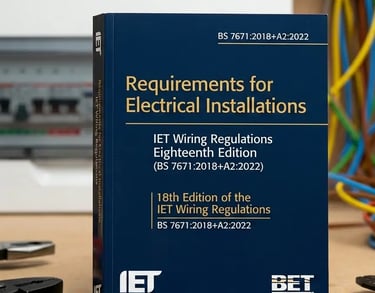
The 18th Edition of IET Wiring Regulations BS 76712018+A22022
Explore the 18th Edition of IET Wiring Regulations BS 7671:2018+A2:2022. Learn key updates, safety rules, and requirements for UK electrical work.
Local Electrical Solution
3/4/20264 min read
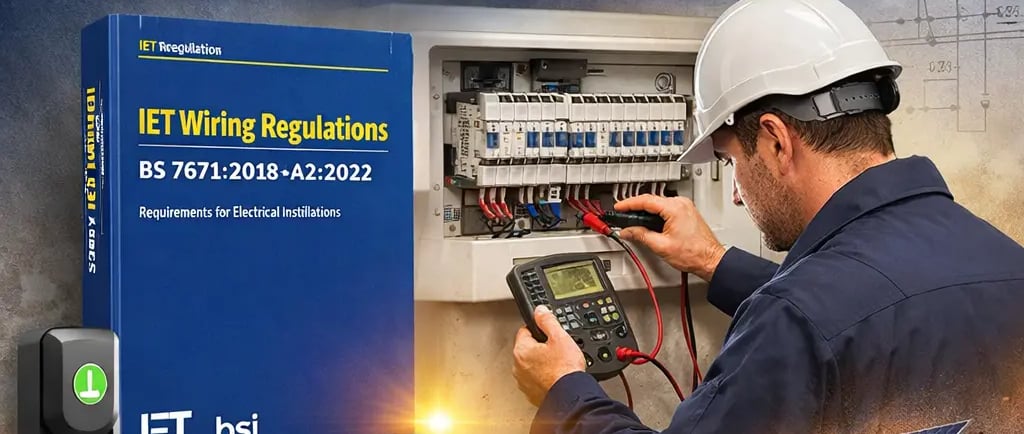
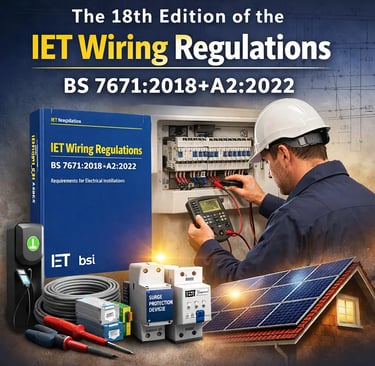
If you work as an electrician in the UK, you already know that wiring regulations are not just “rules in a book.” They are the backbone of safe electrical installations. The 18th Edition of the IET Wiring Regulations – BS 7671:2018+A2:2022 is the current standard that guides how electrical systems should be designed, installed, inspected, and tested across the UK.
But let’s talk about it in real life terms.
This edition is not just paperwork. It directly affects how you install a consumer unit, wire a kitchen, add an EV charger, or even change a socket. It shapes everyday electrical work.
What Is BS 7671?
BS 7671 is the British Standard that sets out the requirements for electrical installations. It is published by the Institution of Engineering and Technology (IET) and forms the foundation of electrical safety in homes, commercial buildings, and industrial sites.
The 18th Edition first came into force in 2018. Later, Amendment 2 (A2) was introduced in 2022, making some important updates — especially around consumer units, RCD protection, and surge protection.
So when someone says “18th Edition,” they really mean BS 7671:2018+A2:2022, which is the version electricians must follow today.
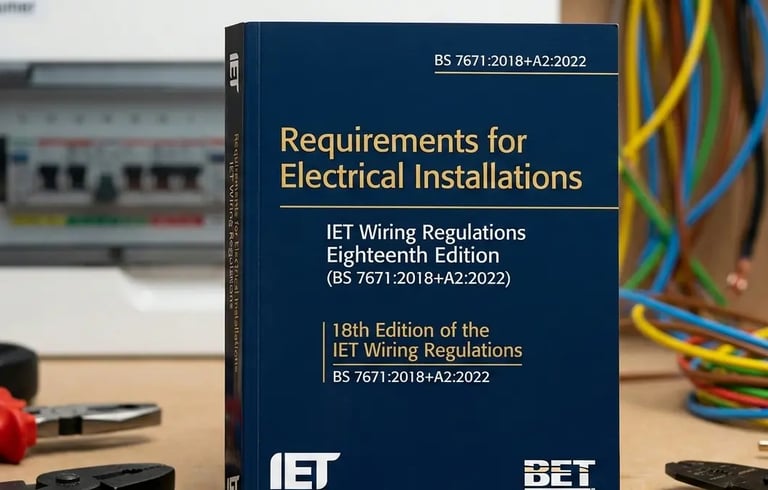
Key Changes Introduced in the 18th Edition
1. Surge Protection Devices (SPDs)
One of the biggest talking points in this edition is surge protection.
In many installations, SPDs are now required unless a risk assessment shows they are not needed.
This is important because modern homes contain expensive electronics:
TVs
Laptops
Smart home systems
Boilers with PCB boards
EV chargers
A power surge can damage thousands of pounds worth of equipment in seconds. The 18th Edition recognises this risk and makes surge protection more common in domestic properties.
2. RCD Protection Almost Everywhere
The 18th Edition strengthened RCD (Residual Current Device) requirements.
Now, most circuits in domestic properties require 30mA RCD protection, including:
Socket outlets
Lighting circuits
Outdoor circuits
Cables buried in walls
This greatly reduces the risk of electric shock and fire.
It also means older consumer units without RCD protection are often non-compliant with current standards — which is why many fuse board upgrades are recommended.
3. Consumer Units Must Be Metal
This change actually started in the 17th Edition Amendment 3, but it remains critical.
Consumer units in domestic premises must be made of non-combustible material — typically metal.
Why?
Because plastic consumer units were contributing to fire spread. Metal enclosures help contain any internal fire and reduce risk.
Today, if you install a plastic board, you are simply not following current regulations.
4. Arc Fault Detection Devices (AFDDs)
Amendment 2 (2022) made AFDD requirements stronger.
AFDDs are designed to detect dangerous arc faults that normal breakers might miss — especially loose connections or damaged cables that could cause fires.
They are particularly required in certain high-risk buildings such as:
Higher-risk residential buildings
Care homes
HMOs
Student accommodation
While not always mandatory in standard homes, AFDDs are becoming more common, especially in new builds.
5. EV Charging Installations
With electric vehicles increasing across the UK, the regulations had to adapt.
The 18th Edition includes specific rules for EV charging points, including:
Proper earthing arrangements
RCD protection (Type A or Type B depending on setup)
Protection against open PEN conductors in TN-C-S systems
This ensures EV installations are safe and reduce shock risks.
For electricians installing EV chargers, understanding these regulations is essential.
6. Improved Fire Safety Considerations
Fire safety is a major focus in this edition.
Some important changes include:
Enhanced cable support requirements (metal clips to prevent collapse in fire)
AFDD recommendations
Metal consumer units
Better inspection requirements
The idea is simple: electrical systems should not contribute to fire spread.
Read More Related Articles
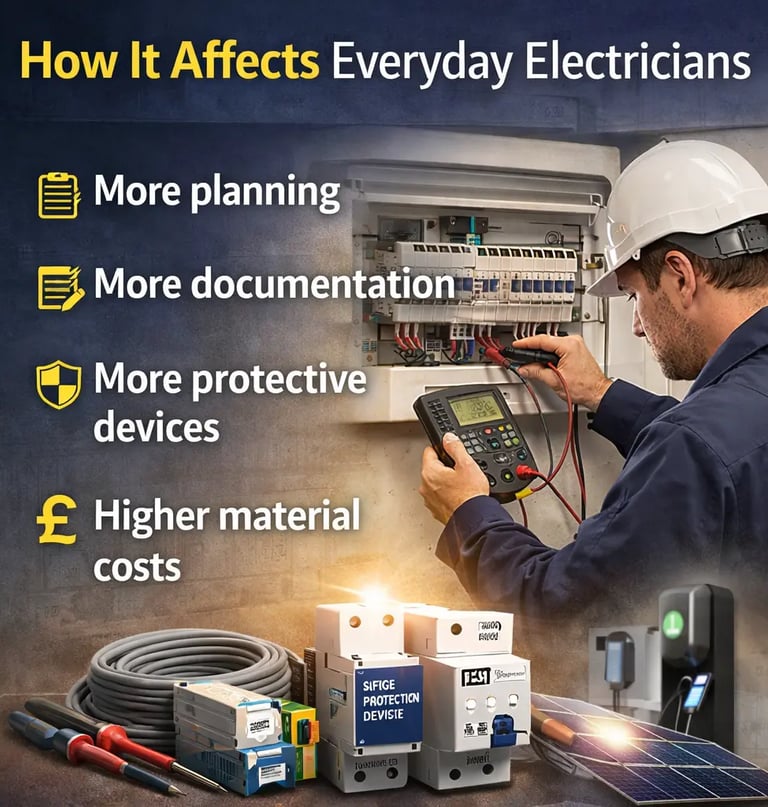
How It Affects Everyday Electricians
For working electricians, this edition means:
More planning before installation
More documentation
More protective devices
Higher material costs
Higher responsibility
Yes, consumer units are now more expensive. Yes, AFDDs add cost. But the focus is safety.
Clients may sometimes question the price. But when you explain the reasoning — protection from fire, shock, and expensive equipment damage — they understand.
The 18th Edition pushes electricians to think not just about “does it work?” but also “is it fully protected?”
Final Thoughts
The 18th Edition of the IET Wiring Regulations – BS 7671:2018+A2:2022 is more than a technical document. It represents a shift toward stronger protection and smarter installations.
For electricians, it means staying updated, investing in better protection devices, and explaining safety clearly to clients.
For homeowners, it means safer properties and reduced risk.
Yes, it can feel more detailed. Yes, it adds cost. But when you understand the reasoning behind each change — it makes sense.
Electricity is invisible. You cannot see the danger. That is why regulations matter so much.
The 18th Edition is about preventing problems before they happen — not fixing them after.
And in electrical work, prevention is everything.
Services
Reliable electrical solutions for homes and businesses.
Contact
Support
+447544005547
© 2026. All rights reserved.
99 Delamere Rd, Bedworth CV12 8SG, United Kingdom
Local Electrical Solution