In an emergency? Call our team for a quick response +447544005547

How long does a consumer unit change take
How long does a consumer unit change take? Learn the average time, key factors affecting installation, and what to expect during a consumer unit replacement.
Local Electrical Solution
3/2/20264 min read
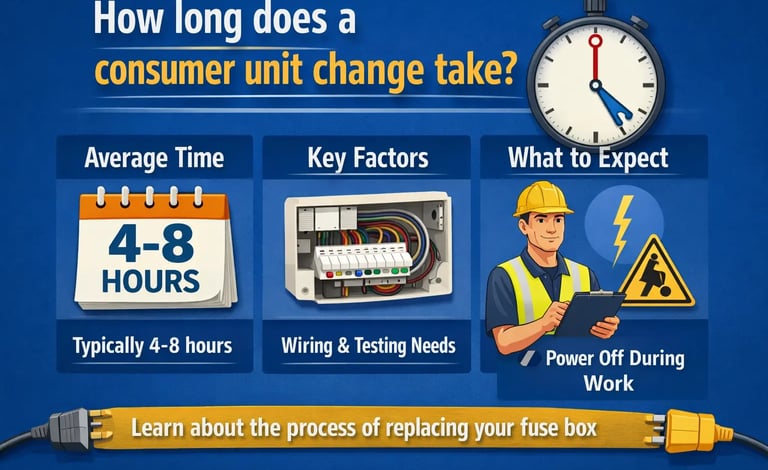
In most homes, a consumer unit change takes between 4 to 8 hours. That’s the simple answer. But like many things in life, the real answer depends on a few important details. If you’ve been told that your consumer unit (also known as a fuse box) needs replacing, one of the first questions that probably comes to mind is: How long is this going to take? It’s a fair question. After all, your power will need to be turned off, and no one enjoys sitting in the dark wondering when the kettle will work again.
Let’s walk through it properly so you know exactly what to expect.
The Average Time – What Happens on a Normal Day
For a typical 2–3 bedroom house with standard wiring, a straightforward consumer unit replacement is usually completed in one working day.
Here’s how that day often looks:
The electrician arrives in the morning.
The power is switched off.
The old fuse box is carefully removed.
The new consumer unit is installed.
Each circuit is tested thoroughly.
Certification is completed.
If everything goes smoothly, you’ll usually have your power back on by late afternoon.
But this is the “ideal” situation. Homes are rarely identical, and that’s where timing can shift.
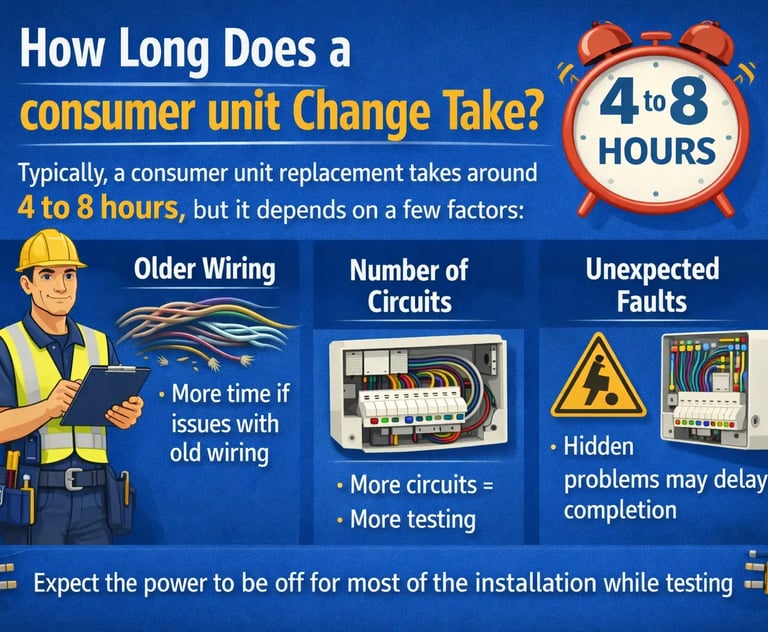
Why Does Consumer Unit Sometimes Take Longer?
1. Older Wiring
In older properties, wiring may be decades old and not designed for today’s electrical demand. Over time, insulation can weaken and cables can become outdated. When replacing a consumer unit, the electrician must carefully inspect this wiring to ensure it is still safe and suitable for continued use.
2. Poor Earthing
Earthing is essential for safety because it protects you from electric shock if a fault occurs. In some older homes, the earthing system may not meet current standards. If it needs upgrading, the electrician must improve it before completing the consumer unit installation and issuing certification.
3. Damaged or Worn Cables
During testing, electricians sometimes discover cables with cracked insulation, heat damage, or signs of wear. Damaged cables cannot simply be ignored. They may need repairing or replacing to ensure the electrical system is safe, which naturally adds extra time to the job.
4. Circuits Not Meeting Current Regulations
Electrical regulations change over time. A circuit that was acceptable 20 years ago may no longer meet modern safety standards. If testing shows non-compliance, adjustments or upgrades may be required before the new consumer unit can be fully connected and certified.
5. High Number of Circuits
Larger homes usually have more circuits for lighting, sockets, appliances, and outdoor power. Each circuit must be individually connected and thoroughly tested. The more circuits there are, the longer the testing and verification process will take to complete properly.
6. Detailed Electrical Testing
A consumer unit replacement involves extensive testing, including insulation resistance checks, earth fault loop impedance testing, continuity testing, and RCD performance checks. These tests ensure the system is safe and reliable. Proper testing takes time and cannot be rushed without compromising safety.
7. Hidden Faults Behind the Old Fuse Box
When the old fuse box is removed, hidden issues sometimes appear. Loose terminals, overcrowded wiring, or signs of overheating may be found. These problems must be corrected before installing the new unit to prevent future electrical risks.
Also Read Our Latest Articles
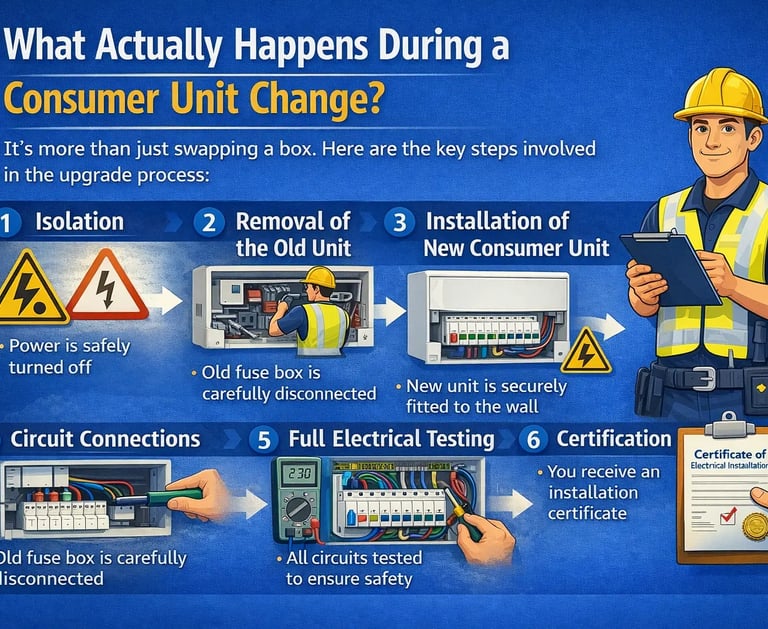
What Actually Happens During a Consumer Unit Change?
Many homeowners think it’s just a quick swap. In reality, it’s a careful, step-by-step process.
Here’s what typically happens:
Step 1: Isolation
The electrician isolates the supply safely. This ensures no live electricity is present during removal.
Step 2: Removal of the Old Unit
The old fuse box is disconnected carefully. All existing circuits are identified and labelled.
Step 3: Installation of the New Consumer Unit
The new metal consumer unit (required under modern UK regulations) is fitted securely to the wall.
Step 4: Circuit Connections
Each circuit is connected into its new breaker (MCB or RCBO).
Step 5: Full Electrical Testing
This is the longest part. Every circuit is tested to ensure it’s safe and compliant.
Step 6: Certification
Once everything passes testing, you receive an Electrical Installation Certificate.
This testing stage is why a consumer unit change isn’t something that should ever be rushed.
Final Thoughts
So, how long does a consumer unit change take?
For most homes, expect around 4 to 8 hours. In straightforward cases, it’s completed within a single day. If issues arise, it may take slightly longer.
The key thing to remember is this: it’s not just about changing a box. It’s about making sure your home’s electrical system is safe, tested, and compliant with current regulations.
A few hours without power is a small inconvenience compared to the long-term safety of your home and family.
If you’re planning a consumer unit replacement, speak to a qualified electrician, ask questions, and make sure full testing and certification are included. That way, you’ll know the job has been done properly — not just quickly.
If you’re planning to install, replace, or repair your consumer unit, we’re here to help. Our experienced electricians provide safe, reliable, and professional electrical services you can trust. Call us today on +44 7544 005547 to discuss your requirements or arrange a visit. You can also contact our head office at 99 Delamere Rd, Bedworth CV12 8SG, United Kingdom, or email us at localelectricalsolution@gmail.com for quick assistance and friendly advice.
Services
Reliable electrical solutions for homes and businesses.
Contact
Support
+447544005547
© 2026. All rights reserved.
99 Delamere Rd, Bedworth CV12 8SG, United Kingdom
Local Electrical Solution