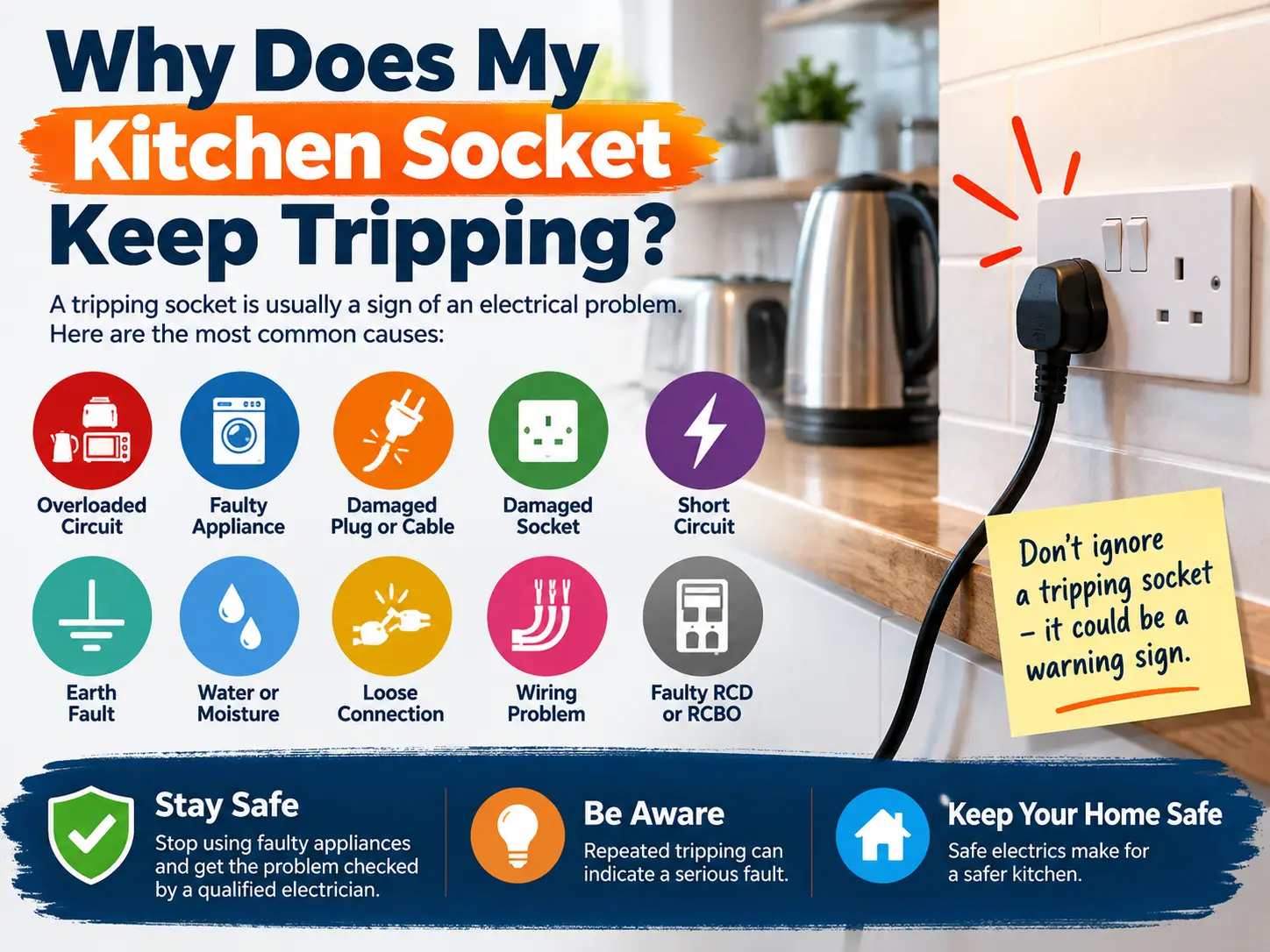
If your kitchen socket keeps tripping, there is usually a reason. The most common causes are an overloaded circuit, a faulty appliance, a damaged plug or socket, a short circuit, an earth fault, moisture, or a problem with the electrical wiring.
A trip is not something you should simply ignore. Your circuit breaker, RCD or RCBO is designed to switch off the electricity when it detects a problem.
In a kitchen, this is especially important because you have water, heat and many high-power appliances in the same area.
Quick answer: If your kitchen socket keeps tripping, unplug the appliances connected to the affected circuit and identify whether one appliance is causing the problem. If the breaker trips again with appliances unplugged, or you notice burning, buzzing, smoke, heat, sparks or a burning smell, leave the circuit switched off and contact a qualified electrician.
For homeowners searching for help with kitchen electrical problems, Local Electrical Solution recommends treating repeated tripping as a warning rather than repeatedly resetting the breaker.
What Does It Mean When a Kitchen Socket Trips?
A socket itself does not normally “trip”. The protective device in your consumer unit trips and cuts power to the circuit supplying the socket.
Depending on your electrical system, this may be an:
- MCB
- RCD
- RCBO
- Other protective device
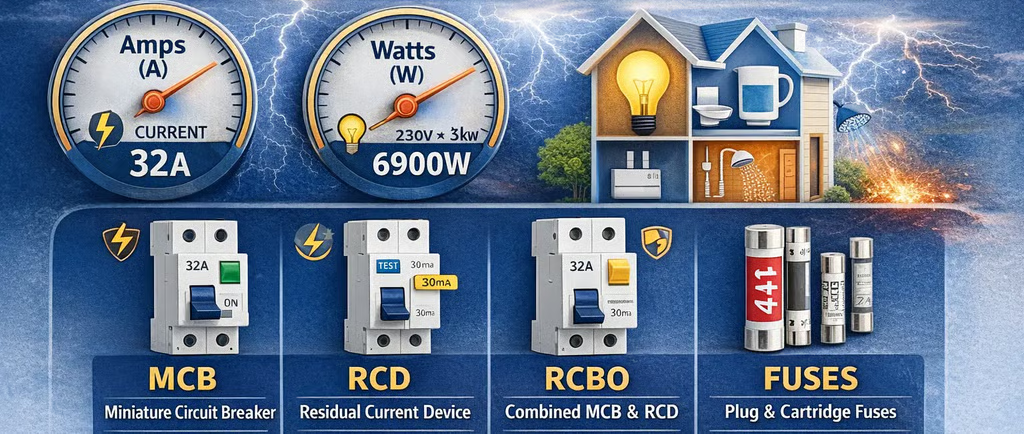
These devices have different jobs.
An MCB mainly protects against excessive current, such as an overload or short circuit.
An RCD detects current leaking away from its normal path and helps protect people from electric shock.
An RCBO combines overcurrent and residual-current protection for an individual circuit.
This is why it is useful to know which switch has moved in your consumer unit.
Kitchen socket tripping: quick explanation
| What happens? | Possible cause | What it may mean |
|---|---|---|
| Trips when many appliances run | Overload | Too much electrical demand |
| Trips when one appliance starts | Faulty appliance | Appliance may have an electrical fault |
| Trips immediately with nothing plugged in | Wiring or earth fault | Professional testing may be needed |
| Trips after water gets near the area | Moisture | Possible leakage to earth |
| Trips after a socket becomes hot | Loose or damaged connection | Possible heat damage |
| Trips after a loud pop | Short circuit | Stop using the affected circuit |
The exact cause cannot always be identified from the trip alone.
Are Your Kitchen Sockets Tripping?
Does your kitchen socket keep tripping when you use the kettle, microwave, oven, dishwasher or other appliances? Repeated tripping can be a sign of an electrical fault or overloaded circuit.
Why Does My Kitchen Socket Keep Tripping?
There are several possible reasons. Here are the most common ones.
1. Your Kitchen Circuit Is Overloaded
An overloaded circuit is one of the simplest reasons for repeated tripping.
Modern kitchens contain many electrical appliances. A kettle, toaster, microwave, air fryer, coffee machine and dishwasher can all use a significant amount of power.
If several high-power appliances are used at the same time, the circuit can become heavily loaded.
The protective device may then trip to protect the circuit.
Example
Imagine you are preparing breakfast.
You have:
- Kettle running
- Toaster running
- Microwave running
- Air fryer running
- Coffee machine running
The problem may not be one faulty appliance. The combined electrical demand may be too high for the circuit at that time.
Electrical Safety First advises against overloading socket outlets and provides guidance on managing electrical loads in the home.
Signs of an overloaded kitchen circuit
You may notice that:
- The circuit works normally when fewer appliances are running.
- The breaker trips during busy cooking times.
- Several high-power appliances are switched on together.
- The problem does not happen when only one small appliance is being used.
2. A Kitchen Appliance May Be Faulty
A faulty appliance is another common reason for a kitchen circuit to trip.
An appliance can develop an internal electrical fault as it gets older.
The problem may be inside:
- The power cable
- Plug
- Heating element
- Motor
- Internal wiring
- Electronic control board
- Other electrical components
Common kitchen appliances that may cause a trip include kettles, toasters, microwaves, dishwashers, washing machines, ovens, fridges and air fryers.
If the breaker trips every time you switch on one particular appliance, that appliance needs attention.
Electrical Safety First advises checking appliances, plugs and cables for damage and not ignoring circuit-breaker trips, burn marks or arcing sounds.
Appliance fault signs
| Sign | What it may indicate | Safe response |
|---|---|---|
| Trips when one appliance starts | Appliance fault | Stop using it |
| Burning smell | Overheating or damage | Unplug if safe |
| Damaged cable | Cable fault | Do not use |
| Black plug | Heat or electrical damage | Stop using |
| Sparks | Electrical fault | Stop using immediately |
| Trips repeatedly | Ongoing fault | Get it checked |
Do not open an appliance to try to repair an electrical fault yourself.
3. A Damaged Plug or Cable Can Cause Tripping
Your appliance may appear to work normally while its plug or cable has become damaged.
Look for visible signs such as:
- Cuts
- Cracks
- Fraying
- Melted plastic
- Black marks
- Loose plug parts
- Exposed wires
A damaged cable can create an electrical fault.
If you see damage, do not continue using the appliance.
Do not tape over serious cable damage and continue using the appliance.
4. The Kitchen Socket May Be Damaged
Sometimes the appliance is fine, but the socket is the problem.
A socket can become damaged through age, impact, heat or a loose connection.
Warning signs include:
- Black marks
- Brown marks
- Cracked plastic
- Burning smell
- Buzzing
- Crackling
- Socket feels unusually hot
- Plug does not fit properly
- Visible sparks
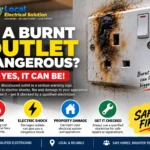
Electrical Safety First says that burn marks, arcing sounds, overheating and circuit-breaker trips should not be ignored.
If the socket itself appears damaged, stop using it.
Do not remove the socket cover to investigate live wiring yourself.
5. A Short Circuit May Be Causing the Trip
A short circuit occurs when electrical conductors make an unintended connection.
This can cause a very high current to flow.
The protective device can respond quickly by switching off the circuit.
A short circuit may happen because of:
- Damaged wiring
- Damaged appliance
- Loose connection
- Damaged socket
- Failed electrical component
- Cable damage
What can a short circuit look like?
You may notice:
- An immediate trip
- A loud pop
- A spark
- Burning smell
- Black marks
- Melted plastic
- The breaker trips every time you try to restore power
If the breaker trips immediately again, do not keep resetting it.
Electrical Testing London also identifies short circuits in sockets, switches and wiring as a reason for immediate tripping and recommends professional diagnosis where a wiring fault is suspected.
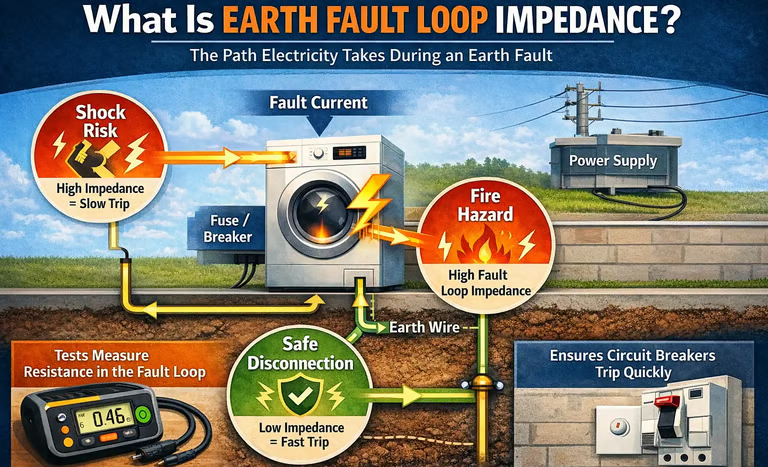
6. An Earth Fault Can Make the RCD Trip
An earth fault is different from a simple overload.
It happens when electrical current finds an unwanted path to earth.
Your RCD or RCBO can detect this problem and disconnect the electricity.
This protection is particularly important in places where electricity and moisture can come close together.
In a kitchen, possible sources include:
- Faulty appliances
- Damaged cables
- Water entering equipment
- Damaged sockets
- Wiring faults
- Moisture around electrical equipment
Legrand explains that ground faults can occur when damaged wiring or water creates an unwanted path for electrical current.
7. Water or Moisture May Be Causing the Trip
Kitchens contain sinks, taps, dishwashers and other sources of water.
Water and electricity are a dangerous combination.
If moisture reaches an electrical fitting or appliance, it may cause leakage current and make an RCD or RCBO trip.
Electrical Safety First recommends keeping socket outlets and switches at a safe distance from sinks and highlights the increased electrical risks created by water and heat in kitchens.
If the trip happens after water gets nearby
Do not assume that letting everything dry automatically makes the installation safe.
The visible water may disappear while an electrical fault remains.
If a kitchen circuit repeatedly trips after water exposure, arrange an electrical inspection.
8. A Dishwasher or Washing Machine Could Be the Cause
Large kitchen appliances deserve special attention because they combine electricity with water.
A dishwasher may develop a fault in:
- Heating element
- Pump
- Internal wiring
- Motor
- Control system
A washing machine located in or near a kitchen can have similar problems.
Electrical Safety First advises not to ignore repeated circuit trips involving appliances and recommends appropriate professional assessment when an appliance is suspected of being unsafe.
If the circuit trips when the dishwasher starts its heating cycle, for example, the fault may only appear after the appliance has been running for some time.
That pattern is useful information for an electrician.
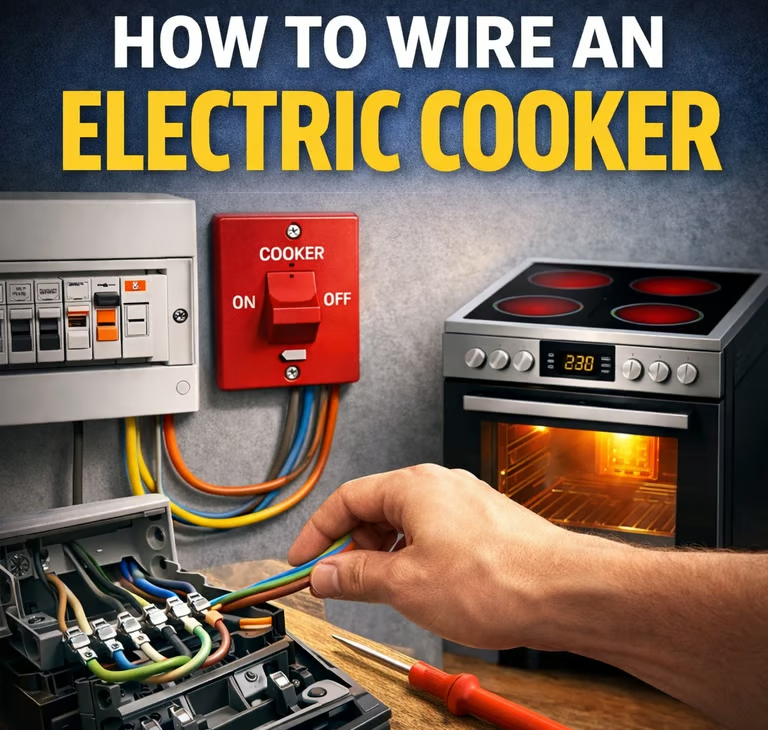
9. Your Oven or Cooker Could Be Causing the Problem
Electric ovens and cookers can draw a large amount of electrical power.
A fault can occur in:
- Heating elements
- Wiring
- Switches
- Terminals
- Internal electrical components
If the kitchen circuit trips whenever the oven heats up, do not repeatedly reset the breaker and continue cooking.
Electrical Safety First specifically advises against installing or repairing an electric oven or grill yourself.
A qualified professional can test the appliance and circuit safely.
10. Your Fridge or Freezer Could Have an Electrical Fault
A fridge or freezer normally runs for long periods and switches its compressor on and off.
An electrical fault may become noticeable when the compressor starts.
Possible signs include:
- Breaker trips when the compressor starts
- Repeated tripping
- Unusual noises
- Burning smell
- Damaged cable or plug
Electrical Safety First recommends not plugging a fridge freezer into an extension lead and advises checking plugs, sockets and cables for warning signs.
11. Too Many Appliances May Be Sharing One Circuit
The problem is not always the number of plugs in one socket.
The important issue is the electrical load placed on the circuit.
For example, several sockets around your kitchen may be supplied by the same circuit.
This means appliances plugged into different physical sockets can still contribute to the total load on that circuit.
Kitchen appliance examples
| Appliance | Typical reason it may contribute to tripping |
|---|---|
| Kettle | High power demand |
| Toaster | Heating elements |
| Microwave | High electrical demand |
| Air fryer | Heating element |
| Dishwasher | Motor and heating cycle |
| Oven | High electrical demand |
| Washing machine | Motor and heating |
| Fridge freezer | Compressor fault or electrical fault |
The actual electrical load depends on the appliance and installation, so these examples should not be treated as exact current ratings.
12. A Loose Electrical Connection May Be Causing Heat
A loose electrical connection can create resistance.
Resistance can produce heat.
Over time, excessive heat can damage electrical components and create a safety risk.
A loose connection may be located inside:
- A socket
- Switch
- Junction point
- Consumer unit
- Other electrical connection
This is not something you should try to repair yourself.
Electrical Testing London highlights loose connections and heat damage as possible causes of intermittent circuit tripping.
Why Does My Kitchen Socket Trip Immediately?
An immediate trip gives an important clue.
If the protective device trips as soon as you switch on an appliance, possible causes include:
- Faulty appliance
- Short circuit
- Earth fault
- Damaged plug
- Damaged socket
- Wiring problem
However, the timing alone cannot prove the exact fault.
Immediate trip vs delayed trip
| Trip pattern | Possible cause |
|---|---|
| Immediately after appliance is switched on | Appliance fault or short circuit |
| After several appliances start | Overload |
| After several minutes | Appliance heating or developing fault |
| When dishwasher heats water | Appliance fault possible |
| During or after water exposure | Earth leakage possible |
| Randomly with nothing plugged in | Wiring/protective-device fault possible |
This pattern is useful information to record before an electrician visits.
Why Does My Kitchen Socket Trip When Nothing Is Plugged In?
If nothing is plugged into the affected sockets but the circuit still trips, an appliance overload becomes less likely.
Possible causes include:
- Wiring fault
- Damaged socket
- Earth leakage
- Moisture
- Loose connection
- Fault inside another permanently connected appliance
- Fault with protective equipment
A fault can exist in wiring that you cannot see.
If a breaker or RCD trips with nothing connected, do not repeatedly reset it to see if it will “fix itself”.
Electrical Testing London notes that a trip with nothing connected can point away from a simple overload and towards a more serious electrical fault.
Why Does My Kitchen RCD Keep Tripping?
An RCD trips when it detects an imbalance that suggests current is leaking away from its intended path.
Possible causes include:
- Faulty appliance
- Damaged cable
- Moisture
- Damaged socket
- Earth leakage
- Wiring fault
The RCD is doing an important safety job.
Do not remove or bypass the RCD because it keeps tripping.
Legrand explains that ground-fault protection is designed to interrupt electricity when current takes an unintended path.
What Should I Do If My Kitchen Socket Keeps Tripping?
You can carry out a few basic observations without opening electrical equipment.
Step 1: Stop using the affected equipment
If an appliance appears to cause the trip, stop using it.
Step 2: Look for obvious warning signs
Check from the outside for:
- Burn marks
- Smoke
- Sparks
- Melted plastic
- Damaged cables
- Burning smell
- Unusual heat
- Buzzing or crackling
Do not touch a damaged electrical fitting.
Step 3: Think about when the trip happens
Ask:
- Does it happen when one appliance starts?
- Does it happen when several appliances are running?
- Does it happen after the appliance gets hot?
- Does it happen after water is used?
- Does it happen when nothing is plugged in?
Step 4: Do not repeatedly reset the breaker
One reset may be part of normal operation after an overload, but repeated trips mean the cause needs attention.
Step 5: Get professional help when the cause is not obvious
Local Electrical Solution advises homeowners not to guess when a kitchen circuit continues to trip without a clear and safe explanation.
What Not To Do When a Kitchen Socket Keeps Tripping
Electrical faults should not be treated like normal appliance problems.
Avoid:
- Repeatedly resetting the breaker
- Removing the socket faceplate
- Touching exposed wires
- Opening the consumer unit
- Repairing damaged wiring yourself
- Using a damaged appliance
- Using a damaged plug
- Covering burn marks and continuing to use the socket
- Bypassing an RCD or RCBO
- Using an extension lead to work around a faulty socket
Electrical Safety First advises that damaged plugs and sockets, arcing, overheating and repeated tripping should not be ignored.
When Is a Tripping Kitchen Socket an Emergency?
Not every trip means there is an emergency, but some warning signs require urgent attention.
| Warning sign | What you should do |
|---|---|
| Smoke | Move away and seek emergency help if there is a fire |
| Burning smell | Stop using the affected circuit/appliance |
| Sparks | Stop using the equipment |
| Blackened socket | Do not use it |
| Melted plastic | Keep it out of use |
| Exposed wires | Do not touch them |
| Water near damaged electrical equipment | Stay clear and seek professional help |
| Breaker trips immediately every time | Do not keep resetting it |
If there is an active electrical fire, do not use water on it. Move to a safe place and contact the emergency services.
How Does an Electrician Find the Cause?
Finding the cause is more than simply changing the breaker.
An expert electrician may first identify which protective device is tripping.
They can then inspect the affected circuit and carry out suitable electrical tests.
Depending on the problem, testing may include:
- Visual inspection
- Circuit testing
- Insulation resistance testing
- Earth fault testing
- RCD/RCBO testing
- Socket testing
- Wiring checks
- Appliance testing
Electrical Testing London describes using insulation resistance, earth loop impedance and RCD/RCBO testing as part of electrical fault diagnosis.
The exact tests depend on the symptoms and the electrical installation.
Kitchen Socket Troubleshooting Checklist
Use this checklist to record what is happening.
| Question | Your observation |
|---|---|
| Which socket loses power? | |
| Which breaker/RCD/RCBO trips? | |
| Does it trip immediately? | |
| Does it happen after a few minutes? | |
| Which appliance was running? | |
| Were several appliances running? | |
| Was water recently used nearby? | |
| Is there a burning smell? | |
| Are there black or brown marks? | |
| Does it trip with everything unplugged? |
These details can help an electrician understand the problem more quickly.
Kitchen Appliances That Can Cause Repeated Tripping
A useful way to understand the problem is to look at the appliance involved.
Kettle
A kettle uses a heating element and can place a high load on a kitchen circuit.
If the circuit trips only when the kettle is used, the kettle or circuit needs further investigation.
Toaster
A damaged toaster can develop an electrical fault.
Never use metal objects to remove trapped toast while the toaster is plugged in. Electrical Safety First specifically warns against this because live parts can be present inside.
Microwave
A microwave may cause tripping because of an internal electrical fault or because the overall circuit is heavily loaded.
Air Fryer
Air fryers use electrical heating elements and can add significant load to a kitchen circuit.
If an air fryer causes repeated trips while other appliances are running, the total load should be considered.
Dishwasher
A dishwasher can trip during different parts of its cycle.
The fault may not appear immediately when the appliance starts.
Oven
An oven can draw a high electrical load and should be installed and repaired correctly.
Fridge Freezer
A fault may become noticeable when the compressor starts.
Washing Machine
A washing machine can cause tripping because of a fault in its heating, motor or other electrical parts.
How Can You Prevent Kitchen Socket Tripping?
You cannot prevent every electrical fault, but good habits can reduce avoidable problems.
1. Avoid overloading sockets
Do not connect too many high-power appliances to the same circuit.
2. Keep electrical equipment away from water
Keep plugs, sockets and appliances dry.
3. Check appliance cables
Look for visible damage before use.
4. Do not use damaged sockets
Burn marks and cracks are warning signs.
5. Avoid damaged extension leads
Do not use an extension lead as a permanent solution for an overloaded kitchen circuit.
6. Do not ignore repeated trips
Repeated tripping means something needs investigation.
7. Keep the consumer unit accessible
Do not block access to your consumer unit.
8. Get older installations checked
If your kitchen has old wiring or you are unsure about its condition, an electrical inspection can identify problems that are not visible.
Can an Overloaded Kitchen Socket Cause a Fire?
An overloaded electrical circuit can create excessive heat and place stress on electrical equipment.
That is why protective devices are important.
Do not assume that a breaker tripping means there is no danger. The trip is a warning that something has caused the protective device to operate.
Electrical Safety First highlights the fire risks associated with electrical faults and specifically warns against ignoring overheating, arcing and circuit-breaker trips.
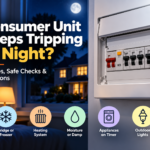
Why Does My Kitchen Socket Keep Tripping at Night?
If the problem happens mainly at night, think about what appliances are operating at that time.
For example:
- Dishwasher
- Fridge freezer
- Cooker
- Washing machine
- Tumble dryer
- Kitchen appliances left on standby
The timing may provide a clue, but it does not prove the cause.
If the circuit trips when a specific appliance starts, that appliance should be investigated.
If it trips with no obvious appliance starting, a wiring or electrical fault may need professional testing.
Why Does My Kitchen Socket Trip When I Use the Kettle and Toaster?
This can happen when several high-power appliances place a large load on the same circuit.
A kettle and toaster both use heating elements.
If other high-demand appliances are also running, the total load can become higher.
Try to avoid running many high-power kitchen appliances at the same time.
If the breaker continues to trip even when only one appliance is being used, the cause may not be simple overload.
Why Does My Kitchen Socket Trip When I Use the Dishwasher?
A dishwasher can cause a trip because of an appliance fault, moisture, damaged wiring or another electrical problem.
If it trips at the same point in every cycle, make a note of that pattern.
For example:
“The dishwasher starts normally but the circuit trips after about 20 minutes.”
This information can help identify when the fault occurs.
Do not repeatedly restart the dishwasher after the circuit trips.
Why Does My Kitchen Socket Trip When I Use the Air Fryer?
An air fryer uses electrical heating and can place a high load on a circuit.
If the trip occurs only when the air fryer runs together with other high-power appliances, circuit loading may be involved.
If the air fryer causes the breaker to trip every time it is switched on, even when other appliances are not running, the appliance itself may need testing.
Why Does My Kitchen Socket Keep Tripping After Rain?
Rain may not directly affect an indoor kitchen socket, but moisture can affect electrical equipment or circuits elsewhere in the property.
For example, a circuit may also supply:
- Outdoor sockets
- Garden lighting
- Garage equipment
- External wiring
If the RCD trips after rain, moisture or water ingress may be involved.
Electrical Testing London identifies moisture and outdoor electrical circuits as possible causes of RCD tripping.
Do not assume that the problem is safe just because the circuit works again after the area dries.
What If Only One Kitchen Socket Keeps Tripping?
If only one socket appears to have a problem, possible causes include:
- Faulty appliance
- Damaged socket
- Loose connection
- Local wiring fault
- Moisture
- Plug problem
Try to identify whether the same appliance causes the issue elsewhere, but do not use another socket if the appliance itself appears damaged.
If the socket has visible damage, stop using it.
What If All Kitchen Sockets Stop Working?
If several kitchen sockets lose power at the same time, check whether a protective device has operated at the consumer unit.
Do not open the consumer unit.
If the breaker can be safely identified and has tripped, the important question is why it tripped.
If it trips again, leave the affected circuit off and arrange professional assistance.
Local Electrical Solution recommends recording which circuit has lost power and what appliances were running before the trip.
How Electricians May Solve Kitchen Socket Trips with Smart Devices in the Future
In the future, electricians may use more smart devices to find and solve kitchen socket problems. These devices can make fault finding faster and easier.
A smart circuit monitor may watch the electricity used by kitchen appliances. It could show when the power becomes too high. For example, if a kettle, microwave and air fryer are being used together, the device could warn that the circuit is under heavy load.
Smart sockets may also help. A smart socket could record when an appliance starts, how much power it uses and when the circuit trips. This information may help an electrician find which appliance is causing the problem.
Future smart RCDs and RCBOs may give more information when they switch off the power. Instead of only showing that a trip happened, the device may record the time, type of fault and circuit activity. An electrician could then use this information during a visit.
Another useful device could be a smart thermal sensor. It may detect unusual heat around a socket, plug or electrical connection. If a socket starts getting too hot, the homeowner could receive an alert on a phone before the problem becomes worse.
Smart moisture sensors could also be useful in kitchens. They may detect water near electrical equipment and send an early warning.
In the future, electricians may also use portable smart testing tools. These tools could collect electrical readings and send the results to a phone or tablet. This may help electricians compare readings and locate faults more quickly.
For homeowners, this technology could provide early warnings instead of waiting for a socket to keep tripping.
However, smart devices should not replace proper electrical testing. A repeated trip can still be caused by a serious fault in an appliance, socket or wiring. A qualified electrician will need to check the problem safely.
Local Electrical Solution can use modern electrical testing methods as technology develops, helping homeowners understand why their kitchen sockets are tripping and what needs to be checked.
Is It Safe to Keep Resetting a Tripping Breaker?
No.
A breaker should not be repeatedly reset without understanding why it is tripping.
If the problem is a simple temporary overload, removing the excessive load may solve it.
But if the cause is a short circuit, earth fault, damaged socket, faulty appliance or wiring problem, repeated resetting can leave the underlying fault unresolved.
The correct response depends on the cause.
Kitchen Socket Tripping: Simple Decision Guide
| What you notice | Possible explanation | Recommended action |
|---|---|---|
| Trips with many appliances | Overload | Reduce load and monitor |
| Trips with one appliance | Appliance fault possible | Stop using appliance |
| Trips with nothing connected | Wiring/earth fault possible | Professional inspection |
| Burning smell | Heat or electrical damage | Stop using affected equipment |
| Black socket | Heat/arcing damage | Do not use socket |
| Water exposure | Earth leakage possible | Keep area safe and seek help |
| Loud pop | Short circuit possible | Keep circuit off |
| Repeated random trips | Fault needs investigation | Arrange electrical testing |
This table is a guide, not a diagnosis.
What Information Should You Give an Electrician?
Before professional help arrives, write down:
- Which socket was affected.
- Which appliances were running.
- Which appliance was switched on last.
- Whether the trip happened immediately.
- Whether the trip happened after several minutes.
- Whether water was being used.
- Whether there was a burning smell.
- Whether there were sparks or unusual sounds.
- Whether the breaker trips again after resetting.
- Whether other sockets are also affected.
This can make fault finding easier.
Kitchen Electrical Safety in the UK
UK kitchens need particular care because electrical equipment is often used close to sinks, water and heat.
Electrical Safety First recommends that kitchen socket outlets and switches are positioned at a safe distance from sinks, with its guidance stating at least 30 cm horizontally. It also recommends RCD protection and warns against using electrical equipment with wet hands.
Always follow the requirements that apply to your property and installation.
If electrical work is needed, use a suitably qualified electrician.
Frequently Asked Questions
Why does my kitchen socket keep tripping?
The most common possibilities are an overloaded circuit, faulty appliance, damaged socket, short circuit, earth fault, moisture or a wiring problem.
Why does my kitchen breaker trip when I use the kettle?
The kettle may be adding a high electrical load to the circuit. If it trips even when other appliances are off, the kettle or circuit may have a fault.
Why does my kitchen RCD keep tripping?
An RCD can trip when it detects current leaking to earth. A faulty appliance, damaged cable, moisture or wiring problem can cause this.
Why does the breaker trip with nothing plugged in?
This can indicate a wiring fault, earth leakage, damaged socket, moisture or another fault on the circuit.
Can a faulty appliance trip the whole kitchen?
Yes. A faulty appliance can cause the protective device supplying the circuit to trip.
Should I keep resetting my kitchen breaker?
No. Repeated tripping should not be ignored. If the breaker trips again, investigate the cause safely or arrange professional assistance.
Can water cause a kitchen socket to trip?
Yes. Moisture can create an unwanted path for electrical current and cause protective devices such as RCDs or RCBOs to operate.
Why does my socket trip when I use two appliances?
The combined load may be too high for the circuit, although a faulty appliance or wiring problem is also possible.
Why does my socket trip after a few minutes?
A fault may only appear after an appliance heats up, starts a particular cycle or operates under load. An overload can also develop after several appliances run together.
Why does my dishwasher keep tripping the electrics?
Possible causes include an appliance fault, heating element problem, moisture, wiring fault or another electrical issue.
Why does my oven keep tripping the breaker?
Possible causes include a faulty heating element, wiring problem, connection issue or another internal appliance fault.
Why does my fridge trip the breaker?
A fault in the compressor, wiring, plug or another component can cause a fridge or freezer to trip a protective device.
Can a damaged plug cause tripping?
Yes. Damaged plugs and cables can create electrical faults.
Is a buzzing kitchen socket dangerous?
Buzzing can indicate an electrical problem. Do not ignore it, especially if the socket is also hot or shows burn marks.
Is a hot kitchen socket dangerous?
A socket that feels unusually hot should not be ignored. Stop using it and have the cause investigated.
What does a black kitchen socket mean?
Blackening can indicate overheating, arcing or electrical damage. Do not continue using the socket.
Why does my kitchen socket trip after rain?
Moisture can sometimes cause earth leakage, particularly where outdoor circuits or damp electrical fittings are involved.
Can an old consumer unit cause kitchen trips?
An older consumer unit or electrical installation may have limitations or faults, but testing is needed to determine whether it is responsible for the tripping.
Do I need an electrician if the socket only trips once?
A single trip can sometimes result from a temporary overload. However, if you notice damage, heat, burning smell, sparks or repeated trips, professional attention is appropriate.
How can I stop my kitchen sockets from tripping?
First identify whether the problem is an overload, appliance fault or electrical fault. Do not simply keep resetting the protective device. If the cause is unclear or the trip continues, have the circuit checked.
Final Answer: Why Does My Kitchen Socket Keep Tripping?
Your kitchen socket may keep tripping because of:
- An overloaded circuit
- A faulty appliance
- A damaged plug or cable
- A damaged socket
- A short circuit
- An earth fault
- Moisture
- A dishwasher or washing machine fault
- An oven or cooker fault
- A loose or damaged electrical connection
- A problem with wiring
- A problem with a protective device
The pattern of the trip is important. A trip when many appliances run can point towards an overload. A trip when one appliance starts can point towards that appliance. A trip with nothing plugged in can indicate a circuit or earth fault.
Most importantly, do not ignore repeated electrical trips.
If you see burning, smoke, sparks, black marks, melted plastic, exposed wiring, unusual heat or a burning smell, stop using the affected equipment and seek appropriate professional help.