
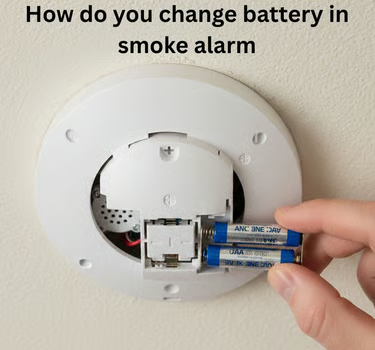
Learn how to change battery in a smoke alarm with simple steps, safety tips, battery types, and solutions for beeping alarms to keep your home protected.
Smoke alarms are one of the most important safety devices in UK homes. To change the battery in a smoke alarm, first you need to turn off the smoke alarm.
You have to remove the smoke alarm from the wall or ceiling, and after this step, you have to open the compartment of the alarm, then remove the old battery, and after that, insert the new battery, then close the compartment and refit the alarm to the place and in the last most important step is test the alarm is it working perfectly or not.
This is the quick intro for how do you change battery in smoke alarm and in this article we will discuss all about how to change the AAA battery in smoke alarm in detailed with UK safety and regulations of BS 50291.
Why Is It Important to Change Your Smoke Alarm Battery?
Changing the battery in a smoke alarm is most important due to a weak or dead battery. If the battery is in a poor or dead condition, then the alarm will not work during the time of the fire.
In the UK, fire safety guidance strongly recommends for homes, flats, warehouses, shops, and many more commercial and domestic places.
The best quality smoke alarm in good working condition will decrease the risk of injury and fire in the house, which is very important for the property value and the lives of the homeowners and neighbors.
A Good quality working alarm provides you with early warning, which gives you more time to escape from the property during the time of fire, so we, Local Electrical Solution recommends you to keep checking the batteries of your smoke alarm twice a year.
What Should You Do If Your Smoke Alarm Still Beeps After Changing the Battery?
If your smoke alarm continues to beep after you have installed a new battery, do not assume that the new battery is faulty. First, check that you have fitted the correct battery and that the positive (+) and negative (-) terminals are positioned correctly.
If the battery is correctly installed, press and hold the test or reset button according to the manufacturer’s instructions. This can clear a low-battery warning on some models.
You should also check the alarm for dust, insects, corrosion or other visible contamination. A build-up of dust inside the sensor can cause nuisance alarms or intermittent sounds.
If the alarm continues to beep after cleaning and fitting a new battery, check its age. Smoke alarms have a limited service life, and an older unit may need complete replacement rather than another battery.
For a mains-powered alarm, do not interfere with electrical wiring if you are unsure how the unit is connected. A qualified electrician can inspect the alarm and determine whether the problem is with the battery, power supply, wiring or the alarm itself.
How Do You Know Which Battery Your Smoke Alarm Needs?
The correct battery depends on the make and model of your smoke alarm. Common types include 9V batteries, AA batteries and lithium batteries, but you should never choose a replacement based only on appearance.
Check the battery compartment, manufacturer’s instructions or model number printed on the alarm. The replacement battery should match the specification recommended by the manufacturer.
If your smoke alarm has a sealed lithium battery, you normally cannot replace the internal battery yourself. Instead, the complete smoke alarm should be replaced when the battery reaches the end of its service life.
Can You Change the Battery in a Mains-Powered Smoke Alarm Yourself?
Some mains-powered smoke alarms have a replaceable backup battery, but the procedure depends on the model.
If you are only accessing the designated battery compartment and the manufacturer allows user battery replacement, follow the manufacturer’s instructions carefully.
However, if removing the alarm exposes electrical connections or you are unsure whether the power is isolated, do not attempt electrical work yourself. Turn off the relevant circuit where appropriate and contact a qualified electrician.
A battery change should never involve disconnecting or altering fixed electrical wiring unless the work is being carried out by someone suitably qualified.
What If Your Smoke Alarm Has a Sealed 10-Year Battery?
A sealed 10-year smoke alarm is designed with a built-in battery that normally cannot be removed or replaced by the homeowner.
When the battery reaches the end of its service life, the entire smoke alarm should be replaced. Do not attempt to open the alarm or remove the sealed battery.
Check the manufacturer’s instructions and the date marked on the alarm. Replacing an old unit also gives you an opportunity to make sure the new alarm is suitable for its location and installation requirements.
What Should You Do If the Smoke Alarm Does Not Sound During the Test?
If your smoke alarm does not sound when you press the test button, first check that the battery is correctly installed and that it is the correct type.
If the alarm is mains-powered, check whether it has a backup battery and whether the mains supply indicator appears normal. Do not open electrical components or alter wiring unless you are qualified to do so.
If the alarm still fails its test after fitting the correct battery, it may be faulty or have reached the end of its service life. In this situation, replacing the alarm or having it inspected by a qualified professional may be necessary.
Never rely on an alarm that fails its test button check.
What If Your Home Has Interconnected Smoke Alarms?
Some smoke alarms are interconnected so that when one alarm detects smoke, several alarms sound at the same time.
If one interconnected alarm begins beeping, changing its battery may not always resolve the problem. Other alarms in the system may also need to be checked, and some systems require a specific reset procedure.
Always follow the manufacturer’s instructions for interconnected alarms. Do not disconnect an alarm from the system simply to stop a warning sound.
If you cannot identify which alarm is causing the problem, a qualified electrician can inspect the system and identify the faulty unit.
Who Is Responsible for Smoke Alarm Batteries in a Rented Property?
Responsibility can depend on the type of property, tenancy and the applicable UK regulations.
In England, relevant landlords must provide required smoke alarms and ensure they are in proper working order at the start of a new tenancy. Landlords must also repair or replace faulty smoke and carbon monoxide alarms when they are informed of the fault and the alarm is found not to be working properly.
Tenants should test their alarms regularly and can replace batteries where necessary. If an alarm remains faulty after replacing the battery, or the tenant cannot safely replace it, the issue should be reported to the landlord.
The specific legal requirements can differ between England, Wales, Scotland and Northern Ireland, so property owners and tenants should check the rules that apply to their location.
Where Should a Smoke Alarm Be Installed?
Smoke alarms should be positioned according to the manufacturer’s instructions and applicable fire-safety guidance.
In many homes, smoke alarms are installed on ceilings in circulation areas such as hallways and landings. Avoid locations where cooking fumes, steam or other conditions could cause repeated false alarms.
Do not remove an alarm simply because it produces nuisance alarms. If the alarm is repeatedly triggered, investigate its location, cleanliness, age and condition and consider whether it needs professional assessment or replacement.
Smoke Alarm Battery Replacement Safety Checklist
Before finishing the battery replacement, check the following:
- Make sure you have the correct battery for the alarm.
- Check the positive and negative terminals before inserting it.
- Do not use a damaged, leaking or unsuitable battery.
- Secure the battery compartment properly.
- Refit the alarm correctly to its mounting base.
- Press the test button and confirm that the alarm sounds.
- Check for visible damage, corrosion or excessive dust.
- Do not disable the alarm simply because it is beeping.
- Do not interfere with fixed electrical wiring unless suitably qualified.
- Replace the complete unit if it has reached the end of its recommended service life.
When Should You Call an Electrician?
You should consider contacting a qualified electrician if your smoke alarm is mains-powered and you are unsure how it is connected, if the alarm repeatedly malfunctions after a battery replacement, if there are visible wiring or electrical faults, or if an interconnected system is not operating correctly.
A professional can check the alarm, power supply, connections and installation and determine whether the battery, alarm or electrical system needs attention.
For homeowners and landlords who need professional smoke alarm installation, replacement or troubleshooting, Local Electrical Solution can provide assistance with domestic and commercial electrical requirements.
UK Smoke Alarm Regulations: What Homeowners and Landlords Should Know
Smoke alarm requirements depend on the type of property and where it is located in the UK.
For example, in England, relevant private and social rented properties must have at least one smoke alarm on each storey where there is a room used as living accommodation. Relevant landlords must also provide a carbon monoxide alarm in rooms used as living accommodation where a fixed combustion appliance is present, excluding gas cookers. Faulty alarms must be repaired or replaced when the landlord is informed and the alarm is found to be faulty.
These requirements should not be presented as applying identically across the whole of the UK. Scotland, Wales and Northern Ireland have their own fire-safety requirements.
For rented properties, landlords should make sure they understand the regulations applicable to their property and tenancy rather than relying solely on general battery-changing advice.
How Often Should You Change a Smoke Alarm Battery?
- Replace standard batteries once a year
- Test smoke alarms once a month
- Replace the entire smoke alarm unit every 10 years
Some modern smoke detectors come with sealed 10-year lithium batteries. These do not require annual replacement but the whole unit must be replaced once the battery expires.
From our personal recommendation, please check the battery twice a year for safety.
Need Electrician To Fit Smoke Alarm
In case you need an electrician to install a smoke alarm, our electrician team is fully qualified and certified to install smoke alarms for domestic and commercial places call +447544005547 for fast service.
Step-by-Step Guide: How Do You Change Battery In Smoke Alarm?
Step 1: Turn Off the Power (If Applicable)
If your smoke alarm is hardwired, switch off the power at the consumer unit before removing the alarm.
Step 2: Remove the Smoke Alarm from the Ceiling or Wall
Twist the alarm gently anti-clockwise or unclip it from the mounting bracket.
Step 3: Open the Battery Compartment
Locate the battery drawer or compartment on the back of the alarm.
Step 4: Remove the Old Battery
Take out the old battery and check for corrosion or leakage.
Step 5: Insert the New Battery Correctly
Insert the new battery, ensuring the positive and negative terminals match the markings.
Step 6: Close the Compartment and Refit the Alarm
Secure the battery compartment and reattach the alarm to its base.
Step 7: Test the Smoke Alarm
Press and hold the test button until the alarm sounds loudly.
Frequently Asked Questions For How To Change The Battery Of Smoke Detector Alarms
1. How do you change battery in a smoke alarm safely?
To change the battery safely, first ensure the alarm is switched off or removed from its base. If it is mains-powered, turn off the power at the consumer unit. Open the battery compartment, remove the old battery, and insert a new one following the polarity markings. Close the compartment securely and refit the alarm. Always press the test button to confirm the smoke alarm is working correctly after replacing the battery.
2. How often should you change a smoke alarm battery in the UK?
In the UK, it is recommended to change standard smoke alarm batteries at least once every 12 months. Many people choose a fixed date, such as when the clocks change, to remember. If your smoke alarm has a sealed 10-year battery, you do not need to replace the battery, but the entire unit must be replaced at the end of its lifespan to maintain fire safety standards.
3. Why does my smoke alarm keep beeping after changing the battery?
If your smoke alarm continues to beep after a battery change, it may not be fitted correctly or the battery connection could be loose. Dust or debris inside the alarm can also cause chirping. In some cases, the alarm may have reached the end of its life. Cleaning the unit and resetting it usually helps, but replacement may be required.
4. What type of battery does a smoke alarm use?
Smoke alarms commonly use 9V, AA, or lithium batteries depending on the model. Always check the manufacturer’s instructions printed inside the alarm or in the user manual. Using the wrong battery type can cause poor performance or frequent beeping. Lithium batteries generally last longer and provide more consistent power compared to standard alkaline batteries.
5. Can I use rechargeable batteries in a smoke alarm?
Rechargeable batteries are not recommended for smoke alarms. They often provide a lower and less stable voltage, which can cause the alarm to malfunction or beep continuously. Smoke alarms are designed to work with specific battery types, usually alkaline or lithium. Using the correct battery ensures reliable operation and reduces the risk of the alarm failing during an emergency.
6. How do I stop my smoke alarm from chirping every minute?
A chirping sound every minute usually means the battery is low or incorrectly installed. Replace the battery with a new one, ensuring it is fitted properly. Press and hold the test button for several seconds to reset the alarm. If chirping continues, clean the alarm with a soft brush or replace the unit if it is over ten years old.
7. Do smoke alarms work during a power cut?
Yes, battery-powered smoke alarms and mains-powered alarms with battery backup continue to work during a power cut. This is why battery maintenance is so important. Without a working battery, a mains smoke alarm may fail when electricity is lost. Regular battery checks ensure continuous protection even during outages or electrical faults.
8. How long does a smoke alarm battery last?
Standard smoke alarm batteries usually last between six and twelve months, depending on usage and battery quality. Sealed lithium batteries can last up to ten years. Frequent testing, poor-quality batteries, or extreme temperatures may reduce battery life. Always replace the battery as soon as the alarm starts chirping to maintain effective fire detection.
9. When should I replace the smoke alarm instead of the battery?
You should replace the entire smoke alarm if it is more than ten years old, continues to beep after battery replacement, or fails the test button check. Smoke sensors degrade over time, making old alarms less reliable. The manufacture date is usually printed on the back of the unit. Replacing old alarms improves safety and reduces false alarms.
10. Is it a legal requirement to have smoke alarms in the UK?
Yes, UK law requires smoke alarms to be installed on every storey of rented properties. Landlords are responsible for ensuring alarms are fitted and working at the start of a tenancy. Homeowners are strongly advised to install smoke alarms for safety. Regular battery replacement is essential to comply with safety guidance and protect occupants.
11. Where should smoke alarms be installed in a home?
Smoke alarms should be installed on ceilings in hallways, landings, living rooms, and near staircases. It is recommended to have at least one smoke alarm on each floor of the property. Avoid placing alarms too close to kitchens or bathrooms, as steam and cooking fumes can trigger false alarms and reduce reliability.
12. How do I test my smoke alarm after changing the battery?
After replacing the battery, press and hold the test button on the smoke alarm until it sounds loudly. This confirms the battery is working and the alarm is functioning correctly. If no sound is produced, recheck the battery installation or replace the battery. Testing should be carried out monthly to ensure continued protection.
13. What does a red flashing light on a smoke alarm mean?
A red flashing light usually indicates that the smoke alarm is receiving power and functioning normally. Some models flash every 30–60 seconds. Rapid flashing or combined beeping may signal a fault, low battery, or alarm activation. Always check the manufacturer’s guidance to understand the specific light signals for your smoke alarm model.
14. Can dust cause a smoke alarm to beep?
Yes, dust and insects inside a smoke alarm can interfere with the sensor and cause false alarms or chirping. Regular cleaning helps prevent this issue. Use a vacuum cleaner with a soft brush attachment or a dry cloth to remove dust from vents. Cleaning should be done every six months for optimal performance.
15. What is a sealed 10-year battery smoke alarm?
A sealed 10-year battery smoke alarm contains a built-in lithium battery designed to last the life of the unit. These alarms do not require battery replacement but must be replaced entirely after ten years. They offer reduced maintenance and are popular in UK homes, especially rental properties, due to their long-term reliability.
16. Why does my smoke alarm go off randomly?
Random alarms can be caused by low batteries, dust buildup, steam, or changes in temperature. In some cases, electrical interference or ageing sensors may be responsible. Replacing the battery, cleaning the alarm, and ensuring correct placement often resolves the issue. If random alarms persist, replacing the unit is recommended.
17. Should I turn off power before changing a smoke alarm battery?
If the smoke alarm is mains-powered, it is safer to turn off the power at the consumer unit before removing the alarm. This reduces the risk of electric shock and prevents false alarms. Battery-only alarms do not require power isolation, but care should still be taken when removing and refitting the unit.
18. Can a smoke alarm battery cause false alarms?
Yes, a weak or failing battery can cause false alarms or intermittent beeping. As the battery voltage drops, the alarm may behave unpredictably. Replacing the battery promptly helps prevent nuisance alarms and ensures the device operates correctly. Using high-quality batteries also reduces the risk of false activations.
19. How can I remember to change my smoke alarm battery?
Many people choose to change smoke alarm batteries on a set date each year, such as when the clocks change in spring or autumn. Setting reminders on your phone or calendar can also help. Regular monthly testing will alert you early if the battery needs replacing before it fails completely.
20. Who should I contact if my smoke alarm keeps malfunctioning?
If your smoke alarm continues to malfunction after battery replacement and cleaning, it may need professional inspection. A qualified electrician or fire safety professional can assess the issue and recommend replacement if necessary. Ensuring your smoke alarms work correctly is essential for protecting lives and property.







One Response