In an emergency? Call our team for a quick response +447544005547

How Many Sockets Do I Need in a Kitchen?
Discover how many sockets you need in a kitchen, with expert tips on placement, safety, and appliance requirements for a modern home.
Local Electrical Solution
3/21/20264 min read
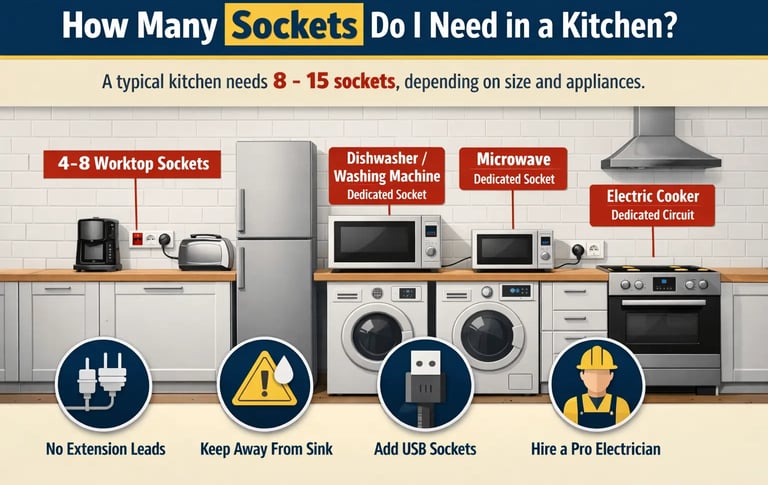
A kitchen typically needs 8–15 sockets, depending on size, appliances, and layout, ensuring convenience, safety, and avoiding extension leads. Designing a modern kitchen is not just about cabinets and appliances—it’s also about smart electrical planning.
One of the most common questions homeowners ask is: how many sockets do I need in a kitchen? The answer depends on your kitchen size, layout, and the number of appliances you use daily. In today’s homes, kitchens are filled with electrical devices, from kettles and toasters to dishwashers and microwaves.
Poor planning can lead to overloaded sockets, messy extension leads, and even safety risks. Whether you’re renovating your kitchen in Bedworth, upgrading in Nuneaton, or planning a new installation in Coventry or Birmingham, getting the socket layout right is essential. A well-designed kitchen ensures convenience, safety, and future-proofing for additional appliances.
Key considerations when planning kitchen sockets:
Kitchen size and layout (small vs large kitchen)
Number of appliances used daily
Future appliance upgrades
Safety regulations and wiring standards
Accessibility and ease of use
Avoiding extension leads
Energy efficiency and load distribution
Understanding Kitchen Socket Requirements
Modern kitchens typically require 8 to 15 sockets, depending on usage. Unlike older homes, today’s kitchens rely heavily on electricity.
From cooking to charging devices, sockets are used constantly. It’s important to ensure that each appliance has proper access to power without overloading a single circuit.
Many homeowners in Bedworth and Nuneaton often underestimate their needs, leading to inconvenience later. Planning ahead helps avoid costly changes after installation.
A professional electrician will assess your kitchen layout and recommend the right number of sockets based on your lifestyle. Remember, it’s always better to install extra sockets than to fall short.
Typical socket requirements include:
Worktop sockets for daily appliances
Dedicated sockets for large appliances
Hidden sockets for built-in units
USB sockets for charging devices
Island sockets for modern kitchens
Spare sockets for future use
Separate circuits for heavy loads
Read Latest Blog Posts
Worktop Sockets: The Most Important Area
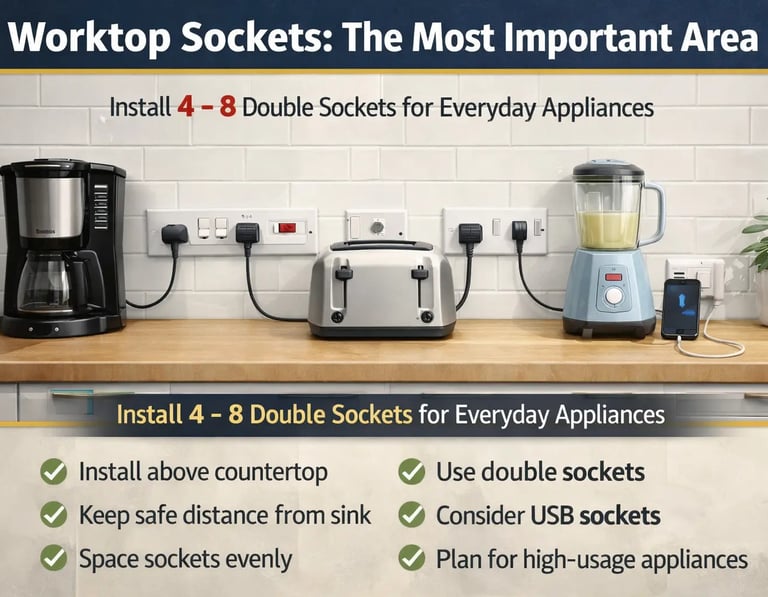
Worktop sockets are the most frequently used in any kitchen. These sockets power everyday appliances such as kettles, toasters, blenders, and coffee machines. Ideally, you should install at least 4 to 8 double sockets along your worktop, depending on its length.
In cities like Coventry and Birmingham, modern kitchens are designed with convenience in mind, ensuring sockets are evenly spaced and easily accessible. Positioning is key—sockets should be installed above the countertop but away from water sources.
This setup not only improves usability but also enhances safety. A clutter-free kitchen starts with proper socket placement.
Best Practices For Worktop Sockets
Install sockets above the countertop
Keep safe distance from sink and hob
Space sockets evenly across the wall
Use double sockets for efficiency
Consider USB-integrated sockets
Avoid overcrowding one area
Plan for high-usage appliances
Dedicated Sockets for Kitchen Appliances
Large kitchen appliances require their own dedicated sockets to function safely and efficiently. Appliances such as refrigerators, washing machines, dishwashers, and ovens draw significant power and should not share sockets.
In areas like Bedworth and Coventry, electricians often recommend separate connections to prevent circuit overload. Dedicated sockets also make maintenance easier and improve the lifespan of your appliances.
If you’re planning a kitchen renovation, ensure that each major appliance has a designated power source. This is especially important in modern homes where multiple appliances run simultaneously.
Appliances that need dedicated sockets
Fridge and freezer
Washing machine
Dishwasher
Electric oven
Microwave
Cooker hood
Tumble dryer (if applicable)
Cooker and Hob Electrical Requirements
Cookers and electric hobs are among the most power-hungry appliances in a kitchen. Unlike regular appliances, they usually require a dedicated circuit rather than a standard plug socket. This ensures safe operation and prevents overheating.
In Nuneaton and Birmingham, many homeowners upgrading their kitchens often need to install new cooker circuits to meet modern demands. It’s important to consult a qualified electrician for proper installation, as incorrect wiring can be dangerous. Induction hobs, in particular, require specific electrical setups for optimal performance.
Important cooker installation points
Requires dedicated circuit
Installed by qualified electrician
Correct cable size is essential
Isolation switch must be accessible
Avoid using standard sockets
Follow UK wiring regulations
Ensure proper load calculation
Socket Placement and Safety Guidelines
Proper placement of sockets is just as important as the number of sockets. Incorrect positioning can lead to safety hazards, especially in kitchens where water and electricity are close together.
In Coventry and Bedworth, electricians follow strict guidelines to ensure safe installations. Sockets should never be placed too close to sinks or hobs. Maintaining the correct distance reduces the risk of electric shocks. Additionally, all kitchen circuits should be protected by an RCD (Residual Current Device) for extra safety.
Kitchen Socket Safety Tips
Keep at least 300mm from sink
Avoid placing sockets behind appliances
Install RCD protection
Use splash-proof sockets if needed
Ensure easy accessibility
Avoid overloading circuits
Follow UK safety standards
Final Thoughts
So, how many sockets do you need in a kitchen? The simple answer is: as many as you need for convenience, safety, and future use. A modern kitchen typically requires between 8 and 15 sockets, depending on your lifestyle and appliance usage.
Whether you’re upgrading in Nuneaton, renovating in Birmingham, or designing a new kitchen in Coventry or Bedworth, proper planning is key. Investing in a well-thought-out electrical layout will save you time, money, and hassle in the long run. Always consult a professional electrician to ensure your kitchen meets all safety standards and functions efficiently.
Services
Reliable electrical solutions for homes and businesses.
Contact
Support
+447544005547
© 2026. All rights reserved.
99 Delamere Rd, Bedworth CV12 8SG, United Kingdom
Local Electrical Solution