In an emergency? Call our team for a quick response +447544005547

What Electrical Work Is Required for a New Kitchen?
Planning a new kitchen? Learn what electrical work is required, including wiring, circuits, sockets, lighting, and safety regulations for a safe and efficient setup.
Local Electrical Solution
3/24/20264 min read
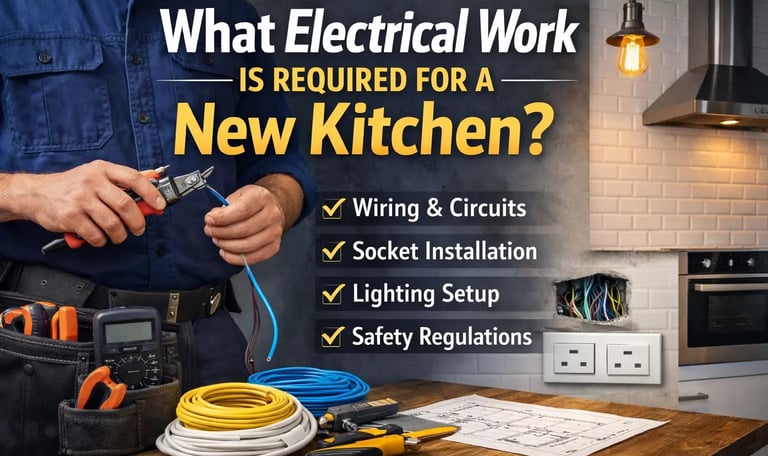
Electrical work for a new kitchen includes installing dedicated circuits, wiring for appliances, socket placement, lighting setup, consumer unit upgrades, and ensuring compliance with safety regulations. Proper planning by a qualified electrician ensures efficiency, safety, and long-term reliability. A well-designed electrical system not only improves functionality but also increases the value of your property and ensures compliance with safety standards.
Importance of Kitchen Electrical Planning
Electrical planning is the foundation of a safe and efficient kitchen. It helps distribute power evenly across all appliances and prevents potential hazards such as short circuits or overheating. Proper planning also allows you to future-proof your kitchen, making it easier to upgrade appliances or add new features later without major electrical changes.
Ensures safe and reliable use of all appliances
Prevents circuit overload and unexpected power failures
Improves overall energy efficiency
Supports modern and smart kitchen technologies
Enhances daily convenience and usability
Reduces the risk of electrical fires and hazards
Helps in proper load distribution across circuits
Ensures compliance with electrical safety regulations
Improves lifespan of appliances and wiring
Allows better placement of sockets and switches
Minimises the need for extension leads
Enhances overall kitchen layout and design efficiency
Saves future repair and upgrade costs
Read Our Latest Articles
How long does a consumer unit change take
Wiring and Rewiring
Wiring is the backbone of your kitchen’s electrical system, and it must be designed to handle the load of multiple appliances running simultaneously. In new kitchen installations or renovations, upgrading or replacing old wiring is often necessary to meet modern standards. Proper wiring ensures consistent power supply and reduces the risk of electrical faults or fire hazards.
Installation of high-quality electrical cables
Replacement of outdated or damaged wiring
Correct cable sizing based on load requirements
Safe routing through walls, floors, and ceilings
Planning for future appliance upgrades
Dedicated Circuits for Appliances
Modern kitchens include several high-powered appliances that require dedicated circuits to function safely and efficiently. Sharing circuits between multiple appliances can lead to overloading and reduced performance. Dedicated circuits ensure each appliance gets the required power without affecting others.
Separate circuit for electric cooker or oven
Dedicated supply for induction hobs
Independent circuits for dishwasher and washing machine
Refrigerator connected to a stable power source
Microwave with its own socket
Socket Installation and Placement
Proper socket placement is crucial for both convenience and safety in a kitchen. A well-thought-out layout allows easy access to power while keeping cables organized and away from water sources. It also ensures that you have enough outlets to support all your appliances without relying on extension leads.
Worktop sockets for everyday appliances
Dedicated sockets for large appliances
USB sockets for charging devices
Pop-up sockets for kitchen islands
Safe positioning away from sinks and water areas
Lighting Installation
Lighting plays an important role in making your kitchen both functional and visually appealing. A combination of different lighting types ensures that all areas are well-lit for cooking, cleaning, and socializing. Proper lighting design can also enhance the overall look and atmosphere of your kitchen.
Ceiling lights for overall illumination
Under-cabinet lighting for better visibility
LED strip lighting for modern aesthetics
Pendant lights for kitchen islands
Task lighting for specific work areas
Consumer Unit Upgrade
A new kitchen often increases the electrical load on your home, making it necessary to upgrade the consumer unit. This ensures your electrical system can handle additional circuits and provides better protection against electrical faults. An upgraded unit also improves the overall safety and reliability of your home’s electrical system.
Installation of a modern fuse board
Addition of new circuits for appliances
RCD protection to prevent electric shocks
Increased capacity to handle higher loads
Clear labeling for easy identification
Appliance Installation and Connections
Each appliance in your kitchen must be installed and connected properly to ensure safe and efficient operation. Incorrect installation can lead to electrical issues, damage to appliances, or safety risks. Professional installation ensures everything works correctly from the start.
Safe connection of electric cookers and ovens
Installation of extractor fans
Wiring for integrated appliances
Use of isolation switches for safety
Testing all connections after installation
Electrical Safety Measures
Safety is especially important in kitchens due to the presence of water, heat, and multiple electrical devices. Implementing proper safety measures reduces the risk of accidents and ensures a secure environment for daily use.
Installation of RCD protection devices
Proper earthing and bonding
Safe distance between sockets and water sources
Use of moisture-resistant fittings
Protection against circuit overload
Compliance with Regulations
All electrical work in a kitchen must comply with local safety and building regulations. This ensures that the installation is legally approved and safe for use. Hiring a qualified electrician helps ensure all standards are met and proper certification is provided.
Compliance with national wiring standards
Certified and approved installations
Inspection and testing of electrical systems
Issuance of safety certificates
Use of high-quality approved materials
Additional Modern Electrical Features
Modern kitchens often include advanced electrical features that improve convenience, efficiency, and overall user experience. These features can make your kitchen more functional and aligned with current lifestyle needs.
Smart home integration systems
Wi-Fi-enabled kitchen appliances
Built-in charging stations
Underfloor heating systems
Advanced ventilation and extractor systems
Common Mistakes to Avoid
Mistakes in kitchen electrical planning can lead to inconvenience, safety risks, and additional costs. Understanding these common errors can help you avoid problems and ensure a smooth installation process.
Installing too few sockets
Overloading circuits with multiple appliances
Ignoring the need for dedicated circuits
Poor lighting layout
Attempting DIY electrical work without expertise
Benefits of Hiring a Professional Electrician
Hiring a professional electrician ensures that all work is completed safely, efficiently, and in compliance with regulations. Their expertise helps prevent errors and ensures long-term reliability of your kitchen’s electrical system.
Expert planning and system design
Safe and compliant installation
Proper testing and certification
Reduced risk of electrical faults
Long-lasting and reliable setup
Cost Factors for Kitchen Electrical Work
The cost of electrical work for a new kitchen can vary depending on several factors. Understanding these factors helps you plan your budget effectively and avoid unexpected expenses during the project.
Size and layout of the kitchen
Number and type of appliances
Extent of wiring or rewiring required
Type and complexity of lighting systems
Need for consumer unit upgrades
Final Thoughts
Electrical work is a critical part of any new kitchen installation and should never be overlooked. A properly designed system ensures safety, efficiency, and convenience while supporting modern appliances and future upgrades. Investing in professional electrical services not only improves functionality but also adds long-term value to your home.
Enhances safety and reduces risks
Supports efficient appliance performance
Minimizes future maintenance issues
Increases property value
Ensures compliance with safety standards
Services
Reliable electrical solutions for homes and businesses.
Contact
Support
+447544005547
© 2026. All rights reserved.
99 Delamere Rd, Bedworth CV12 8SG, United Kingdom
Local Electrical Solution