What Is a Weatherproof Junction Box?
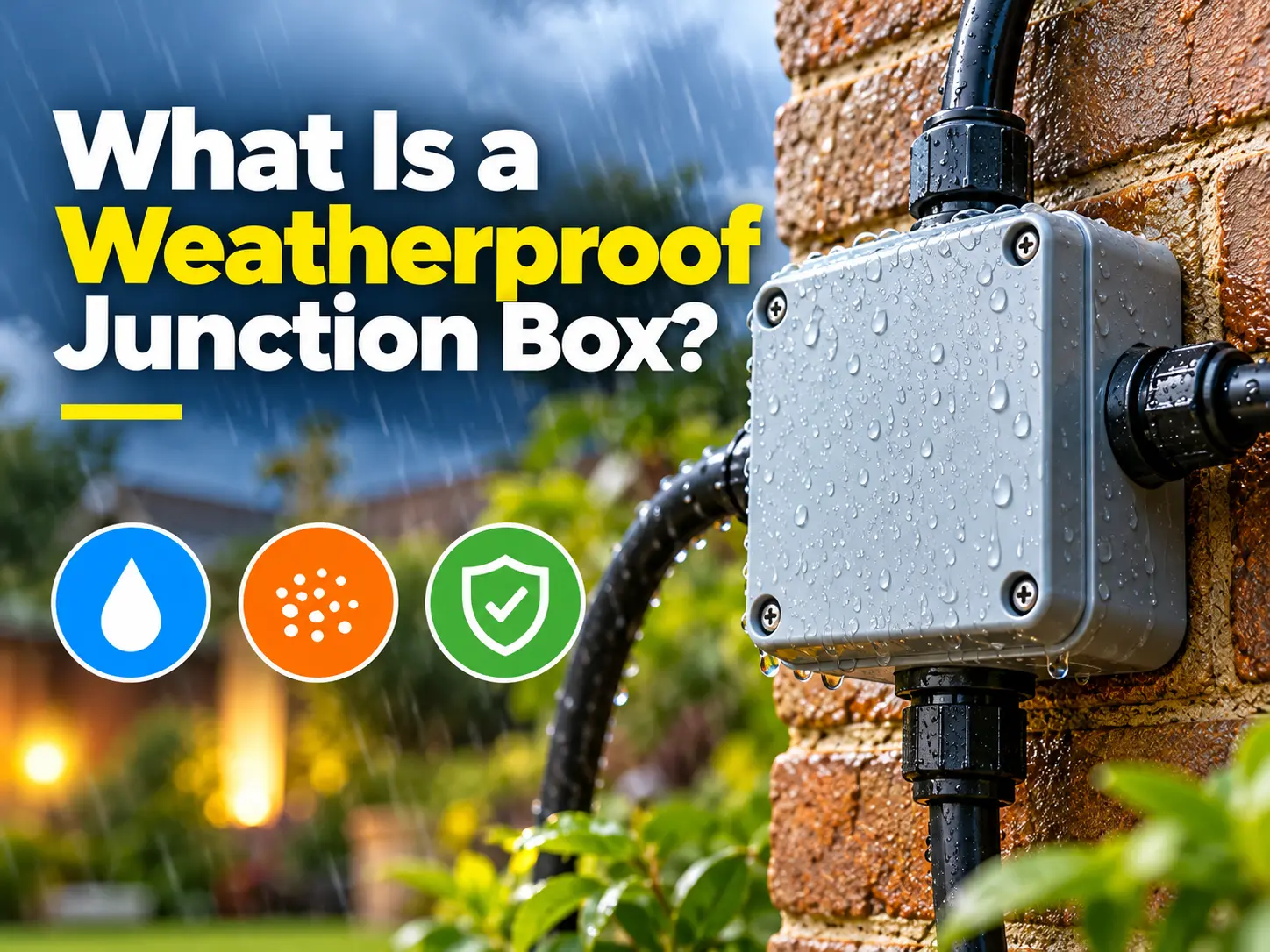
A weatherproof junction box is a sealed electrical box. It joins, protects, and organises electrical cables in wet or dusty areas. It keep cable connections safe and reduces the risk of water reaching live electrical parts.
People commonly use a weatherproof junction box for outdoor lights, garden power, pumps, CCTV, and other external electrical work.
Depending on the installation, you may also see other terms. These include outdoor termination box, adaptable box, and maintenance–free junction box. Choose a box with the correct IP rating for its location and install it properly.
What Does a Weatherproof Junction Box Do?
The main job of a weatherproof junction box is to protect electrical cable connections from the outside environment.
Inside the box, certified electricians can safely join or terminate cables. The enclosure helps protect these connections from:
- Rain and water
- Dust and dirt
- Damp conditions
- Accidental contact
- Physical damage
- Outdoor weather
For example, an outdoor light may need a cable connection between the main supply and the light fitting. Instead of leaving the connection exposed, an electrician can place it inside a suitable weatherproof box.
A good box also makes future inspection and maintenance easier.
How Does a Weatherproof Junction Box Work?
A weatherproof junction box has a strong case, sealed cable entries, and a tight lid. It keep water and dirt away from electrical connections.
The exact level of protection depends on the IP rating. An enclosure with a higher IP rating can protect better against water and dust. The installation location and method determine the right rating for the box.
Cable glands, seals, and correctly fitted covers are also important. A weatherproof box cannot protect properly if the cable entries are open. It also cannot protect properly if you do not secure the lid.
What IP Rating Should a Weatherproof Junction Box Have?
The IP rating shows how well an electrical enclosure protects against solid objects and water.
For outdoor electrical work, the installation location determines the required IP rating. It also depends on how much rain, splashes, dust, and other conditions expose it.
For example, a box under a sheltered area may need different features than one exposed to heavy rain.
Do not choose a box just because the label says “waterproof.” Check the complete IP rating and make sure it is suitable for the installation.
Common IP Protection Levels
IP Rating Example: Protection Information: Typical Consideration
IP44: Protects against solid objects and water splashes. Use in sheltered areas.
IP55: Gives higher protection from dust and water jets. Use in more exposed areas.
IP65: Is dust-tight and protects against water jets. Use in many outdoor applications.
IP66: Is dust-tight and protects against stronger water jets. Use in more exposed locations.
These examples are for general understanding. Always select the correct rating for the actual installation.
Where Are Weatherproof Junction Boxes Used?
Many outdoor electrical installations use weatherproof junction boxes.
Common examples include:
- Garden lighting
- Outdoor wall lights
- Security lights
- CCTV systems
- Garden pumps
- External sockets
- Garage electrical supplies
- Garden buildings
- Outdoor heating equipment
- Cable extensions
- Electrical equipment exposed to weather
Commercial and industrial places can also use them. Electrical connections there may need extra protection from moisture and dust.
Weatherproof Junction Box for Garden Lighting
Garden lighting often needs electrical connections outside the main building. A suitable weatherproof junction box can help protect these connections from rain and damp conditions.
Position the box carefully and install it according to the manufacturer’s instructions. Properly seal the cable entries, and keep the enclosure securely closed.
If there are several outdoor electrical circuits, an electrician may also use other equipment.
This may include a rotary isolator switch when you require isolation.
Weatherproof Junction Boxes and Distribution Boards
A weatherproof junction box is not the same as a distribution board.
A distribution board distributes electrical power to different circuits and normally contains protective devices. People mainly use a junction box to contain cable connections or joints.
For example, a domestic installation may have a distribution board supplying an outdoor circuit. The circuit may then run to an outdoor electrical point, where you use a suitable junction box to connect the cable.
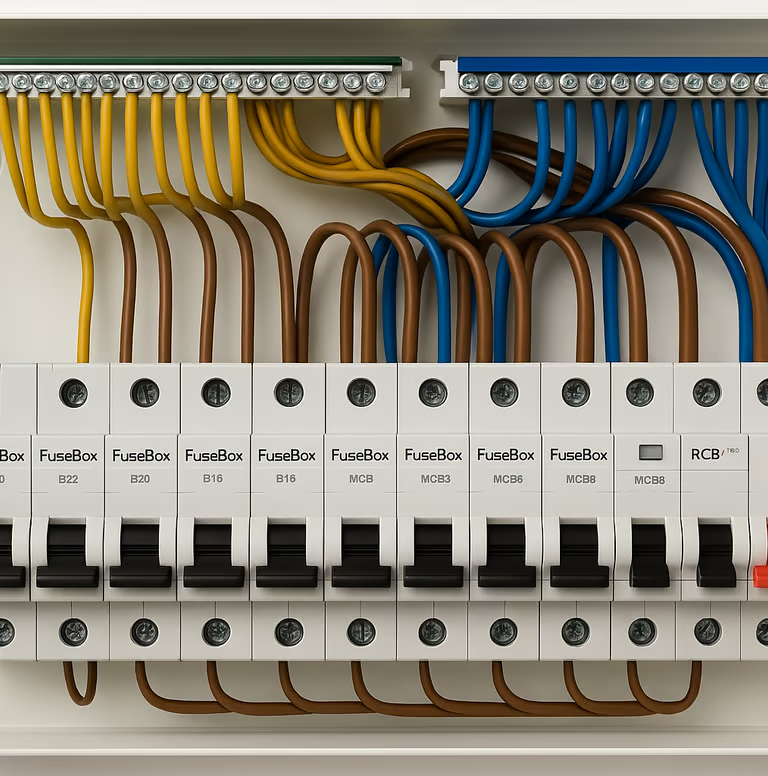
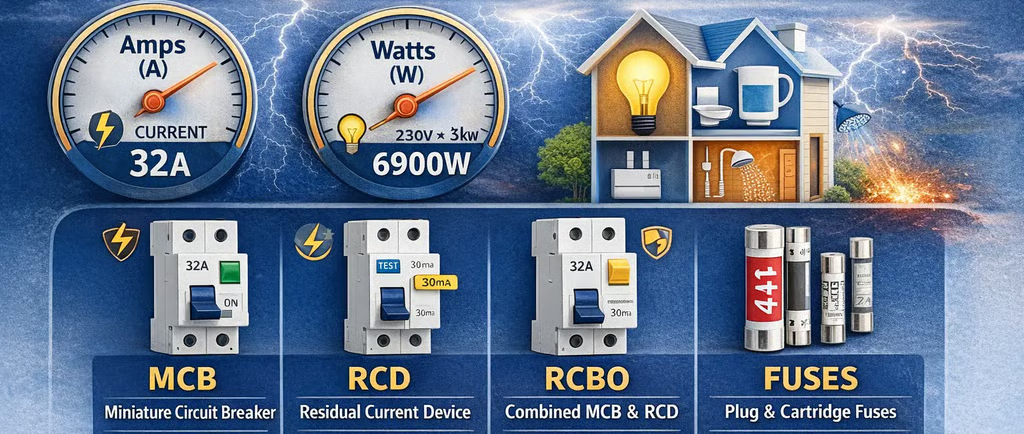
A fusebox RCBO may also be relevant to circuit protection, depending on the electrical installation and design.
These products perform different jobs and should not be treated as interchangeable.
What other electrical boxes can you use?
The type of enclosure required depends on the installation.
An adaptable box provides space for electrical connections, and electricians can use it in different types of electrical work. People commonly use a metal back box behind switches and sockets. The manufacturer designs the maintenance–free junction box for maintenance-free connections when you follow its requirements.
For some commercial or industrial installations, electricians use metal trunking or metal conduit systems to protect and route cables.
The choice depends on the cable type, location, environment, protection requirements, and installation method.
Cable Management Around a Weatherproof Junction Box
Good cable management is important for a safe and neat installation.
Cable ties, or zip ties, can help organise cables. Use metal tie wraps when you need a stronger fixing method. However, you should not use cable ties as a replacement for correct cable support.
In some buildings, installers may route cables through dado trunking, metal trunking, conduit, or other suitable containment systems.
The cable should not place excessive pressure on the junction box or its cable glands.
Can a Weatherproof Junction Box Be Used With Outdoor Sockets?
Yes, a suitable weatherproof junction box may be part of an outdoor electrical installation. However, it does not replace the need for a suitable outdoor socket.
An outdoor socket must be appropriate for its location and protected by the correct electrical protection. A floor socket and socket floor installation are different applications and may require different products and installation methods.
A commando socket is another type of electrical socket commonly used for robust equipment connections.
Always ensure the complete installation—not just the junction box—is suitable for the environment.
Wiska Box and Weatherproof Electrical Connections
A Wiska box is a common term used when discussing weather-resistant electrical enclosures and junction boxes. Wiska manufactures electrical connection products and cable management equipment for different applications.
When selecting a Wiska box or another weatherproof enclosure, check:
- IP rating
- Size
- Cable entry method
- Cable gland compatibility
- Material
- Temperature range
- Installation environment
- Manufacturer instructions
The product should be selected based on the actual electrical installation rather than simply choosing the largest or cheapest box.
Weatherproof Junction Box and Metal Trunking
Outdoor and commercial electrical systems may use different forms of cable containment.
Metal trunking can protect and organise cables, while metal conduit electrical systems can provide mechanical protection and a neat route for cables.
Where cables enter a junction box, the entry must be suitable for the enclosure and cable. If the enclosure is designed for cable glands, the correct glands and seals should be used.
A storm guard door seal is another type of weather protection product, but it is not a replacement for an electrical junction box. Products such as seals and electrical enclosures have different purposes.
Common Problems With Weatherproof Junction Boxes
A weatherproof junction box may fail to protect a connection if it is incorrectly installed.
Common problems include:
- Damaged seals
- Loose covers
- Incorrect cable glands
- Open cable entries
- Cracked enclosures
- Wrong IP rating
- Poor cable support
- Water collecting around the box
- Incorrect cable joints
- Incorrect installation location
If water has entered an electrical enclosure, do not touch potentially live parts. Switch off the appropriate supply only if it is safe to do so and contact a qualified electrician.
Do You Need an Electrician to Install a Weatherproof Junction Box?
Outdoor electrical work can involve additional risks because water and electricity can create a dangerous combination.
The correct enclosure, cable, protection, isolation, cable routing, and connections all need to be considered. Work should follow applicable UK electrical requirements and the manufacturer’s instructions.
If you are unsure about an outdoor electrical connection, use a qualified electrician rather than attempting to repair or modify live electrical equipment yourself.
Local Electrical Solution can help homeowners and businesses with suitable electrical installation, testing, repair, and outdoor electrical work in their service areas.
Weatherproof Junction Box Safety Tips
Follow these basic safety points:
- Never open an electrical box when the circuit may be live.
- Check the IP rating before installation.
- Use suitable cable glands and seals.
- Keep unused cable entries properly sealed.
- Do not use a damaged enclosure.
- Keep the lid securely closed.
- Avoid placing the box where water can collect.
- Do not overload the box.
- Use suitable electrical protection.
- Ask a qualified electrician if you are unsure.
Weatherproof Junction Box FAQs
1. What is a weatherproof junction box used for?
A weatherproof junction box is used to protect electrical cable joints and connections from rain, water, dust, and other outdoor conditions. It is commonly used for garden lights, external sockets, CCTV, pumps, and outdoor electrical equipment. The box must have a suitable IP rating and be installed correctly with compatible cable glands, seals, and covers to provide the expected protection.
2. Can a weatherproof junction box be used outside?
Yes, a weatherproof junction box can be used outside when it has an appropriate IP rating for its location. The installation should also use suitable cable entries, glands, seals, and fixings. A box exposed directly to rain may need more protection than one installed in a sheltered area. Always check the manufacturer’s instructions before using an enclosure outdoors.
3. What does the IP rating on a junction box mean?
The IP rating describes the protection provided by an electrical enclosure against solid objects and water. The first number relates mainly to protection from solid particles, while the second number relates to water protection. A higher number generally means greater protection against that particular type of exposure. The correct IP rating depends on where and how the box will be installed.
4. Is a Wiska box the same as a weatherproof junction box?
A Wiska box can be a type of electrical enclosure designed for protecting electrical connections, depending on the specific product. However, not every box has the same specifications. You should check its IP rating, size, material, cable-entry system, and manufacturer’s instructions. The term “weatherproof junction box” describes the function, while Wiska is a manufacturer associated with electrical connection products.
5. Can I use a weatherproof junction box for garden lights?
Yes, a suitable weatherproof junction box can be used as part of a garden lighting installation. It can protect cable connections from outdoor conditions when correctly selected and installed. The box should have an appropriate IP rating and suitable cable entries. The complete lighting circuit also needs correct electrical protection and installation. Outdoor electrical work should be completed by a qualified person.
6. What is an outdoor termination box?
An outdoor termination box is an enclosure designed to protect electrical cable termination points or connections in an outdoor environment. Its suitability depends on its construction and IP rating. It may be used for certain external electrical equipment, but it is not automatically suitable for every location. Always check the manufacturer’s specifications and installation instructions before selecting an outdoor termination box.
7. Can a junction box stop water completely?
A suitable weatherproof junction box can provide strong protection against water when its IP rating and installation method are appropriate. However, no enclosure should be treated as automatically waterproof in every situation. Incorrect cable glands, damaged seals, open entries, or poor installation can allow water inside. The box must be correctly selected, installed, maintained, and used within its specified conditions.
8. What is a maintenance free junction box?
A maintenance free junction box is designed so that suitable cable connections can remain enclosed without requiring normal access for inspection, provided the product and installation meet the relevant requirements. It must be installed according to the manufacturer’s instructions. Not every standard junction box is maintenance free. The correct product should be selected for the cable type, installation method, location, and electrical requirements.
9. Can I install a weatherproof junction box myself?
This depends on the type of electrical work and your knowledge, but outdoor electrical installations can present serious risks. Water, incorrect connections, poor cable protection, and inadequate circuit protection can create electric shock or fire hazards. If you are not competent to carry out the work safely, use a qualified electrician. Never work on an electrical connection that may still be live.
10. How do I protect a junction box from heavy rain?
Choose an enclosure with an IP rating suitable for the level of exposure and install it according to the manufacturer’s instructions. Use compatible cable glands and make sure all covers and seals are correctly fitted. Position the box so water does not collect around it. Regularly check for cracks, damaged seals, loose covers, or other signs that could reduce its protection.
Local Electrical Solution can provide advice and electrical services for suitable outdoor electrical installations, including work involving external lighting, sockets, isolation, testing, and electrical connections.
Source: wikipedia