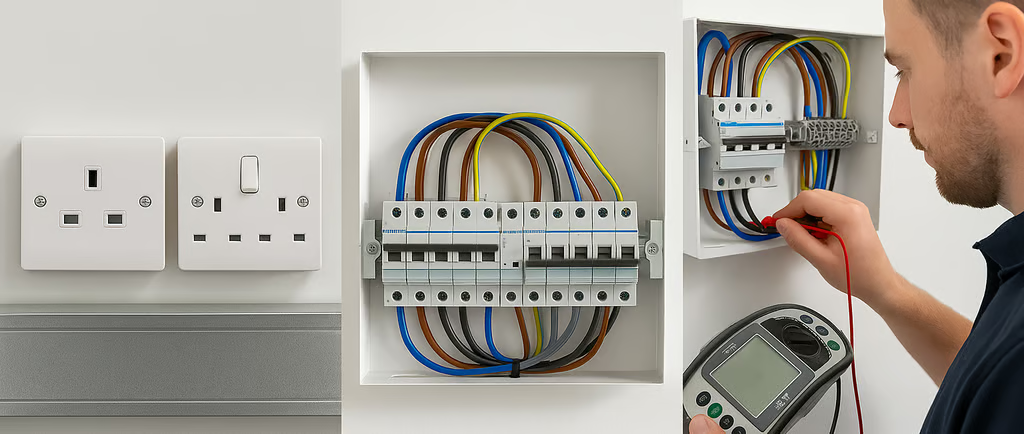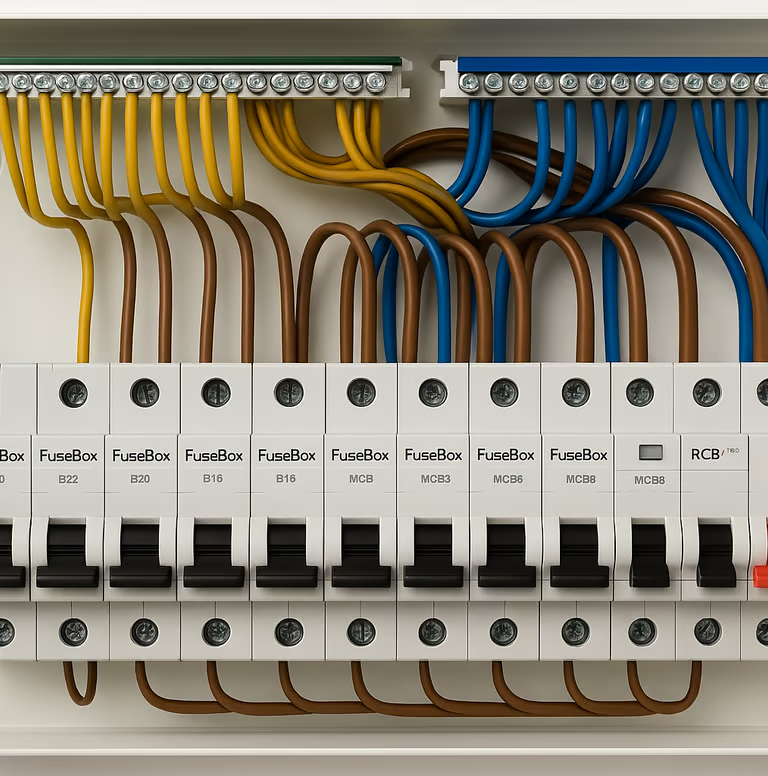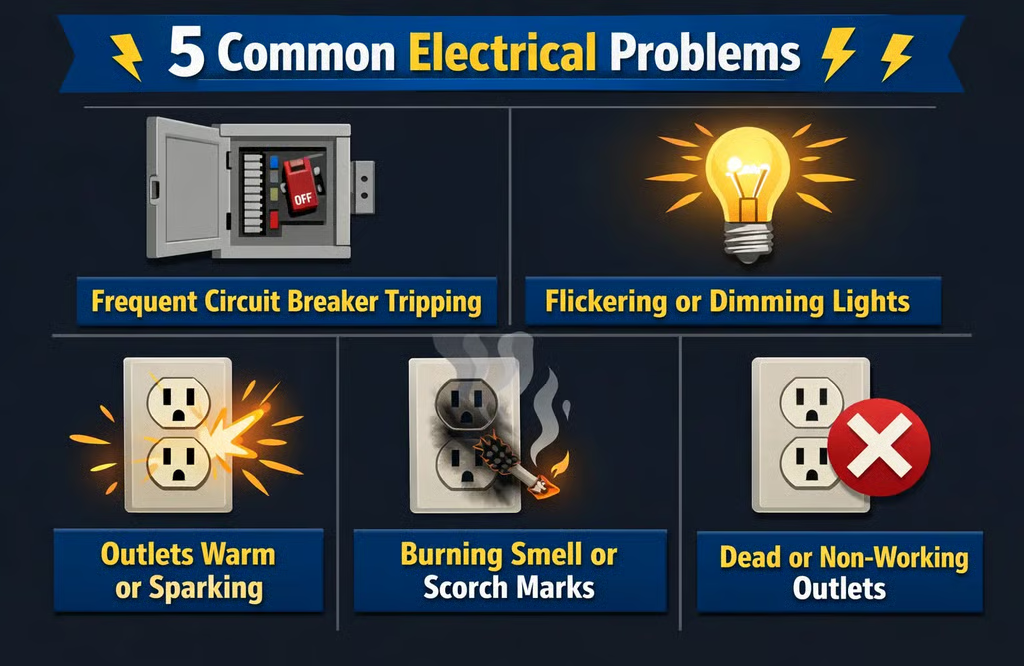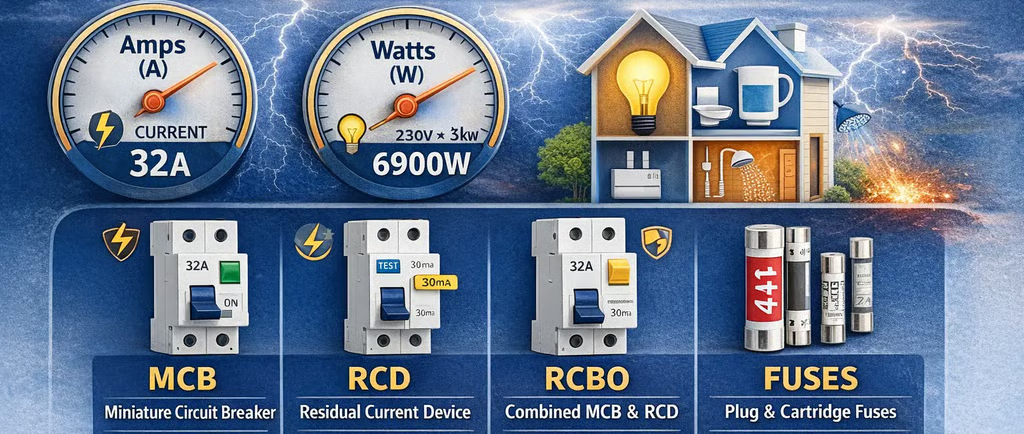
If your sockets have suddenly stopped working, first check your consumer unit. A circuit breaker, RCD or RCBO may have tripped.
Other possible causes include a faulty appliance, overloaded circuit, damaged socket, loose wire, broken cable, moisture or another electrical fault.
If your lights still work but your sockets do not, you may only have a problem with the socket circuit.
First, find out whether one socket, several sockets or all sockets have stopped working. This can give you an important clue about where the fault may be.
Do not remove socket covers or touch electrical wiring. If you notice burning, heat, smoke, sparks, buzzing, crackling or melted plastic, stop using the affected socket or circuit.
Plug Sockets Not Working: Quick Fault Checker
Use the symptoms to understand what may have happened.
Table 1: Why Have My Sockets Stopped Working?
What has happened? | Possible cause | First check |
One socket stopped working | Faulty socket or connection | Test another socket |
Several sockets stopped | Tripped breaker | Check consumer unit |
All sockets are dead | RCD or circuit problem | Check consumer unit |
Lights work but sockets don’t | Socket circuit fault | Check RCD/RCBO/MCB |
Breaker is ON but sockets are dead | Wiring or connection fault | Electrician may need to test |
Socket is hot | Poor connection or overload | Stop using socket |
RCD keeps tripping | Appliance or electrical fault | Unplug appliances |
Outdoor socket stopped | Moisture or equipment fault | Stop using damaged equipment |
Common Reasons Why Electrical Sockets Suddenly Stop Working
Electrical sockets can stop working when the electricity cannot travel normally through the circuit.
The problem may be at the socket itself, somewhere along the electrical wiring or at the consumer unit.
Common causes include:
- tripped circuit breaker;
- RCD or RCBO tripping;
- faulty electrical appliance;
- overloaded electrical circuit;
- faulty wall socket;
- loose electrical connection;
- burnt connection;
- damaged electrical cable;
- broken ring circuit;
- failed fused connection unit;
- short circuit;
- earth fault;
- neutral fault;
- water or moisture;
- consumer unit fault.
The number of sockets affected can help narrow down the cause.
Sockets Not Working but Lights Are Still On
If your sockets are not working but your lights are, you probably have not lost all electricity to your home.
Lighting and socket circuits are normally protected separately.
This means the lights can continue working when a protective device has switched off power to the socket circuit.
Check your consumer unit.
Look for an RCD, RCBO or circuit breaker that is in a different position from the others.
If something has tripped, unplug appliances from the affected circuit before trying one reset.
If it trips again, stop resetting it.
There may be an electrical fault that needs investigation.
Tripped Circuit Breaker Causing Dead Sockets
A circuit breaker is designed to disconnect a circuit when certain electrical problems happen.
When it trips, the sockets connected to that circuit can lose power.
Switch off and unplug appliances from the affected sockets.
You can then check the consumer unit.
If a circuit breaker has tripped, it may be reset once after the appliances have been disconnected.
If the breaker immediately trips again, leave it off.
Do not keep switching it back on.
Table 2: Circuit Breaker and Socket Problems
Breaker condition | Socket condition | What it could mean |
Breaker OFF | Sockets dead | Circuit has tripped |
Breaker resets | Power returns | Appliance/load may be involved |
Breaker trips again | Power goes off | Electrical fault possible |
Breaker ON | One socket dead | Local socket fault |
Breaker ON | Several sockets dead | Wiring/connection fault |
RCD OFF | Several circuits dead | RCD has operated |
RCD Keeps Tripping and Sockets Have No Power
An RCD, or residual current device, is an important electrical safety device.
It can disconnect electricity when it detects certain leakage of current to earth.
Possible causes include:
- faulty appliances;
- damaged electrical cables;
- wet outdoor equipment;
- faulty sockets;
- damaged wiring;
- insulation faults.
Unplug appliances from the affected circuit.
Try resetting the RCD once.
If it stays on, appliances can be reconnected carefully one at a time.
If one appliance makes the RCD trip again, stop using that appliance.
If the RCD will not stay on even with appliances disconnected, the circuit may need electrical testing.
LES can carry out fault finding when an RCD or socket circuit continues to trip.
One Plug Socket Not Working but Others Are
If one plug socket is not working but the others are, the problem may be local to that socket.
Possible causes include:
- worn socket contacts;
- faulty switch;
- damaged socket;
- loose connection;
- failed spur;
- damaged cable.
Try the appliance in another known working socket first.
If the appliance works there, the original socket may need further investigation.
Remember that a socket can still have live electricity connected to it even when it appears dead.
Do not remove the socket faceplate to investigate it yourself.
Several Sockets Not Working at the Same Time
Several dead sockets normally give a different clue from one dead socket.
If many sockets stopped at exactly the same time, look for a shared cause.
This might include an RCD, RCBO, circuit breaker, damaged circuit connection or wiring fault.
Table 3: Number of Dead Sockets and Possible Causes
Sockets affected | Possible fault |
One socket | Socket/local connection |
One double socket | Internal socket problem |
Two nearby sockets | Local circuit connection |
One room | Socket circuit problem |
Several rooms | Shared circuit/RCD problem |
Outdoor sockets | Outdoor circuit/moisture |
All sockets | Consumer unit or supply issue |
All power | Possible wider power cut |
This simple check can save time during electrical fault finding.
Sockets Stopped Working but Fuse Has Not Tripped
This is an important situation.
A socket can stop working even when the fuse, MCB or circuit breaker has not tripped.
A protective device normally operates when particular fault conditions occur. A broken conductor or failed connection can sometimes simply interrupt the electrical path.
Possible causes include:
- loose wire;
- broken cable;
- faulty socket;
- failed junction-box connection;
- failed spur;
- neutral fault;
- damaged ring-final circuit.
If several sockets have no electricity but everything looks normal at the consumer unit, proper circuit testing may be required.
LES can trace hidden socket and wiring faults when there is no obvious tripped breaker.
Faulty Appliance Making Sockets Trip
Sometimes the wall socket is not the problem.
A faulty electrical appliance can cause the circuit protection to operate.
Think about what you switched on immediately before the sockets went off.
Possible appliances include:
- kettle;
- toaster;
- washing machine;
- dishwasher;
- tumble dryer;
- electric heater;
- microwave;
- fridge or freezer;
- garden equipment.
Unplug the appliances.
If the protective device resets normally, reconnect appliances carefully one at a time.
If one appliance repeatedly causes the power to trip, stop using it.
Overloaded Socket Circuit and Extension Leads
An overloaded electrical circuit can cause protective equipment to operate.
This can happen when several high-powered appliances are being used together.
Be particularly careful with extension leads.
Do not connect one extension lead into another.
High-powered appliances such as heaters, kettles, toasters and air fryers can place a large load on an extension lead or circuit.
Reducing the load may solve an overload problem, but repeated tripping needs investigation.
Loose Electrical Connection Behind a Socket
A loose electrical connection can cause more than a dead socket.
It can also create heat.
Warning signs can include:
- socket working sometimes;
- power cutting in and out;
- buzzing;
- crackling;
- burning smell;
- heat;
- brown marks;
- black marks;
- melted plastic.
The loose connection may not be inside the socket that has stopped working.
It could be at another point supplying it.
That is why electrical testing can be necessary to locate the real source of the fault.
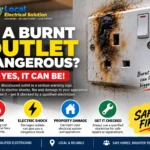
Burnt Socket, Hot Plug or Burning Smell
A hot or burnt electrical socket should not be ignored.
Stop using the affected socket.
Do not keep testing different appliances in it.
Table 4: Dangerous Socket Warning Signs
Warning sign | Possible problem | What to do |
Burning smell | Overheating | Stop using socket |
Hot faceplate | Poor connection/overload | Stop using |
Brown marks | Heat damage | Arrange inspection |
Melted plastic | Serious overheating | Isolate if safe |
Buzzing | Connection problem | Stop using |
Crackling | Possible arcing | Stop using |
Sparks | Electrical fault | Stop using immediately |
Electric shock | Safety fault | Stop using immediately |
Smoke, significant sparking, severe overheating or electric shock should be treated seriously.
Broken Ring Circuit and Socket Wiring Faults
Many UK homes have sockets connected to a ring-final circuit, although radial circuits are also used.
A ring-final circuit can develop a broken or loose conductor.
This can create a fault that is not always obvious to the householder.
Some sockets may even continue working.
Simply plugging in a lamp does not prove the complete circuit is safe.
An electrician can carry out continuity and other electrical tests to check the circuit correctly.
Neutral Fault Causing Sockets to Stop Working
A neutral conductor is part of the electrical circuit.
If a neutral connection becomes loose, burnt or broken, one or more sockets may stop working or behave strangely.
A neutral fault may occur at:
- a socket;
- junction box;
- consumer unit;
- damaged cable;
- another connection on the circuit.
These faults cannot normally be found just by looking at the consumer unit.
Electrical testing is needed to locate the problem.
Failed Spur or Fused Connection Unit
Some sockets are supplied as a spur from another part of a circuit.
If the connection supplying that spur fails, the socket can lose electricity while other sockets continue working.
Some appliances and sockets can also be supplied through a fused connection unit (FCU).
This is common around kitchens and utility areas.
If a nearby FCU has been switched off or its fuse has failed, the connected socket or appliance may stop working.
Do not dismantle the FCU to investigate internal wiring.
Damaged Electrical Cable Inside a Wall
Electrical cables are often hidden inside walls, floors and ceilings.
They can sometimes be damaged by:
- drilling;
- nails;
- screws;
- renovation work;
- crushing;
- rodents;
- previous poor electrical work.
A broken conductor may cause a socket or group of sockets to lose power without an obvious circuit breaker trip.
The damaged section may need to be located using electrical test equipment.
Faulty Junction Box and Dead Sockets
Electrical circuits can contain junction points.
If a connection inside a junction box becomes loose, damaged or overheated, sockets further along the circuit may lose power.
The difficult part is that the junction may be hidden beneath a floor or in another location.
You should not start lifting floors or opening electrical connections yourself.
An expert electrician can test the circuit and work towards the point where electricity is being lost.
One Side of a Double Socket Not Working
Sometimes one side of a double socket works while the other does not.
This can point towards an internal problem with the socket accessory.
The contacts or switching mechanism may be damaged or worn.
Do not assume the dead side is electrically safe.
If the other side still works, electricity is likely still reaching the accessory.
Stop using the damaged socket and have it inspected.
Kitchen Sockets Suddenly Stopped Working
Kitchen sockets supply many electrical appliances.
If your kitchen sockets suddenly go off, think about what was operating at the time.
Kettles, washing machines, dishwashers, tumble dryers, microwaves, toasters and other appliances may help identify when the fault began.
Check the consumer unit and unplug equipment from the affected circuit.
Do not repeatedly reset a breaker that continues to trip.
Outdoor Socket Suddenly Stopped Working
Outdoor sockets and electrical equipment face rain, condensation and changing weather.
Moisture can contribute to RCD tripping and electrical faults.
If an outdoor socket is wet, cracked or damaged, do not use it.
Also consider connected equipment such as:
- garden lights;
- extension leads;
- lawn equipment;
- water features;
- outdoor appliances.
Disconnect damaged equipment and do not keep resetting the RCD if the problem continues.
Why Do My Sockets Work and Then Suddenly Stop?
An intermittent electrical fault deserves attention.
Sockets that work sometimes and then stop may have:
- loose connections;
- worn contacts;
- damaged wiring;
- faulty appliances;
- heat-related problems.
Notice when the problem happens.
Does the power fail when you move a plug?
Does it happen when a certain appliance starts?
Does it happen when it rains?
These details can help locate the fault.
Can a Plug-In Socket Tester Find the Problem?
A basic plug-in socket tester can provide useful information, but it cannot prove that an electrical circuit is completely safe.
Some wiring problems require proper electrical testing.
A simple tester may not identify every loose connection, ring-final circuit problem, insulation fault or fault that only appears under electrical load.
Do not treat a normal-looking tester result as proof that a faulty socket circuit is safe.
What Should I Check When My Sockets Stop Working?
Keep your checks simple.
Table 5: Safe Socket Troubleshooting Steps
Step | What to check | What it can tell you |
1 | Do the lights work? | Whole supply or socket circuit? |
2 | Test another socket | One socket or several? |
3 | Check another room | Shows size of problem |
4 | Unplug appliances | Removes possible appliance fault |
5 | Check consumer unit | Look for tripped protection |
6 | Reset once if safe | See whether fault returns |
7 | Look for heat or damage | Identifies warning signs |
8 | Problem remains | Electrical testing may be needed |
Never open fixed electrical wiring as part of basic household troubleshooting.
When Should I Call an Electrician for Dead Sockets?
You should arrange electrical fault finding if:
- several sockets remain dead;
- the RCD will not reset;
- the breaker keeps tripping;
- sockets are dead while the breaker remains on;
- the problem keeps returning;
- a socket becomes hot;
- there are scorch marks;
- you smell burning;
- you hear buzzing or crackling;
- there has been water near electrical equipment.
LES can investigate socket faults, tripping circuits, damaged accessories and hidden electrical problems to find the cause rather than guessing which component has failed.
Frequently Asked Questions About Sockets Suddenly Stopping Working
- Why have my sockets suddenly stopped working?
Your sockets may stop working because an RCD, RCBO or circuit breaker has operated. Other possible causes include a faulty appliance, overloaded circuit, damaged socket, loose electrical connection or wiring fault. First check whether one or several sockets are affected. Then check the consumer unit. If protection repeatedly trips, stop resetting it and arrange electrical fault finding.
- Why are my sockets not working but my lights are?
Lights and electrical sockets can be supplied by different circuits. A problem affecting the socket circuit can therefore leave your lighting working normally. Check your consumer unit for a tripped RCD, RCBO or circuit breaker. If all protective devices appear on but the sockets remain dead, there could be a connection or wiring fault requiring proper electrical testing.
- Why is only one socket not working?
If only one socket has stopped working, the problem may be local to that accessory or its supply connection. First test the appliance in another known working socket. If the appliance works normally, stop using the dead socket. A worn mechanism, loose connection, damaged cable or failed spur could be responsible and may require electrical testing.
- Why are several sockets not working?
Several sockets failing together often suggests a shared electrical problem. An RCD, RCBO or circuit breaker may have operated, or a circuit connection may have failed. Check the consumer unit and unplug appliances from affected sockets. If everything appears switched on but several sockets remain dead, the wiring should be investigated rather than assuming every socket has failed separately.
- Why are my sockets dead but the breaker is still on?
A breaker does not operate for every type of electrical fault. A broken conductor, loose connection, failed spur, faulty socket or damaged cable may interrupt the electrical path without causing the breaker to trip. If several sockets remain dead while the consumer unit looks normal, do not open them yourself. Electrical circuit testing may be needed.
- Can a faulty appliance cause my sockets to stop working?
Yes. A faulty appliance can cause an RCD, RCBO or circuit breaker to operate and disconnect the socket circuit. Think about what was switched on immediately before the power disappeared. Disconnect appliances before attempting one reset. If connecting one particular appliance repeatedly causes the circuit to trip, stop using that appliance until it has been properly checked.
- Why does my RCD keep tripping?
An RCD may trip because it has detected electrical leakage to earth. Possible causes include a faulty appliance, damaged cable, moisture or a fault in the fixed wiring. Disconnect appliances from affected circuits before attempting one reset. If the RCD trips again or will not stay on, leave the affected circuit off and arrange professional electrical fault finding.
- Why does my circuit breaker keep tripping?
A circuit breaker can operate because of excessive current or an electrical fault. Unplug equipment from the affected circuit and attempt only a sensible reset. If the breaker immediately trips again, stop resetting it. A faulty appliance, overloaded circuit, damaged cable or another wiring problem may be causing the protective device to disconnect the electricity.
- Can a loose wire stop my sockets working?
Yes. A loose electrical connection can interrupt the supply to one socket or several sockets. It may also create heat, buzzing, crackling or intermittent power. The faulty connection might be at another socket or junction point rather than the dead socket itself. Because these connections may remain live, safe isolation and proper electrical testing are normally required.
- Why does my socket smell like burning?
A burning smell can indicate overheating electrical components or connections. Stop using the socket and connected appliance immediately. Do not remove the socket faceplate to investigate. Look for other warning signs such as heat, discolouration or melting without touching damaged parts. Where safe, isolate the affected circuit and arrange an electrical inspection as soon as possible.
- Why is my electrical socket getting hot?
A socket should not become unusually hot during normal use. Excessive heat can indicate a poor connection, damaged socket, faulty plug or excessive electrical load. Stop using a hot socket. If you also notice brown marks, melting, buzzing or a burning smell, isolate the affected circuit where safe and have the socket and circuit properly inspected.
- Why is my plug socket buzzing or crackling?
Buzzing or crackling can be a warning sign of a poor electrical connection, damaged socket or electrical arcing. Stop using the affected socket rather than plugging appliances into it to test the noise. If it is safe, isolate the circuit at the consumer unit. The accessory and electrical connections should be inspected before the socket is used again.
- Can extension leads make my sockets trip?
Yes. A damaged extension lead or excessive electrical load can cause problems. Avoid connecting several high-powered appliances to one extension block and never plug one extension lead into another. Disconnect the extension lead before checking whether the circuit resets. If the breaker or RCD continues operating after it has been removed, another electrical problem may be present.
- Why have my kitchen sockets stopped working?
Kitchen circuits often supply several high-powered appliances. Check whether an RCD, RCBO or circuit breaker has operated and think about what appliance was running when the electricity disappeared. Unplug appliances before attempting a reset. If the protection continues tripping, or the sockets remain dead while the breakers are on, further electrical fault finding may be needed.
- Why has my outdoor socket stopped working?
Outdoor sockets can be affected by rain, condensation, damaged seals and faulty garden equipment. Moisture or an equipment fault may cause RCD protection to operate. Stop using any socket or equipment that appears wet or damaged. Disconnect outdoor appliances where safe. If the RCD continues to trip afterwards, the electrical installation may need professional inspection and testing.
- Should I keep resetting an RCD that trips?
No. Disconnect appliances on the affected circuit and try one reset where appropriate. If the RCD immediately trips again, stop resetting it. The device may be responding to an electrical fault. Repeatedly switching it back on does not repair the cause and can repeatedly restore electricity to equipment or wiring that still contains an unresolved problem.
- Why does my socket work sometimes and then stop?
Intermittent socket power can indicate a loose connection, worn socket, damaged cable or appliance problem. Notice whether moving a plug, switching on an appliance or wet weather affects the fault. Do not ignore the problem simply because the electricity returns. A loose connection can potentially generate heat and should be investigated before the fault becomes more serious.
- Can drilling into a wall make sockets stop working?
Yes. Electrical cables can run behind walls near sockets and switches. A drill or screw can damage a cable and cause loss of power, circuit tripping or intermittent faults. If your socket problem began after drilling, fitting shelves, mounting a television or other building work, stop using the affected circuit and tell the electrician exactly what happened.
- How do I know if my wall socket is faulty?
Possible signs include no power, intermittent operation, unusual heat, buzzing, crackling, looseness, discolouration, scorch marks or melting. One side of a double socket may also stop working. However, the actual problem could be in the wiring supplying the socket. Visual checks alone cannot confirm the cause, so electrical testing may be needed before replacement.
- When is a dead socket an electrical emergency?
Treat the problem urgently if you notice smoke, significant sparks, melting, severe heat, burning smells, electric shock or signs of electrical arcing. Stop using the equipment and keep people away from damaged electrical parts. Isolate the affected circuit only if it is safe to do so. Do not repeatedly reset protective devices when serious warning signs are present.
How Can We Stop Sockets Suddenly Stopping Working in Future?
Do not overload sockets or extension leads. Never daisy-chain extension leads. Keep electrical appliances, plugs and cables in good condition. Protect outdoor sockets from water and replace damaged electrical accessories.
Do not ignore a socket that becomes hot, loose, noisy or discoloured.
If an RCD or circuit breaker starts tripping regularly, find the cause instead of repeatedly resetting it.
Be careful when drilling or fixing screws into walls because electrical cables may be hidden behind the surface.
Have unexplained electrical problems investigated early. Regular electrical inspection can also identify damaged accessories, poor connections and deteriorating wiring before they cause complete power loss.
You can also check your consumer unit for a tripped breaker, but never remove its cover. If you notice a burning smell, sparks, unusual heat, or buzzing sounds, stop using the affected socket and seek professional electrician help.
Local Electrical Solution can help identify electrical faults and provide reliable socket repairs. Always prioritise electrical safety to protect your home and family.